The short answer
A chimney inspection is a top-to-bottom check of your fireplace or heating flue to find cracks, blockages, creosote buildup, and water damage before they cause a fire or carbon monoxide problem. The NFPA 211 standard calls for an inspection once a year, and a deeper level of inspection when you change appliances or fuel, buy or sell a home, or a hidden problem is suspected.
A chimney inspection tells you whether your fireplace, wood stove, or heating flue is safe to use before you light it again or before your boiler starts working hard for the winter. PrimeFlue Chimney Services inspects chimneys in New York City and nearby cities, from brownstone fireplaces to masonry chimneys on detached homes and the flues that serve oil and gas heating systems. Our certified technicians check the firebox, damper, smoke chamber, flue liner, crown, cap, and flashing, then walk you through what they found in plain terms. If everything is in good shape, you'll know that. If something needs attention, you'll see it in photos and get a clear explanation of your options. You decide what happens next.
Signs you need a chimney inspection
Most chimney problems build slowly, so the early signs are easy to dismiss. If you notice any of the following, schedule an inspection before your next fire or before the heating season begins.
- A smoky or tar-like creosote smell, often stronger on humid days or when the air conditioning is running
- Poor draft: smoke rolling into the room, fires that are hard to start, or fires that smolder instead of burning cleanly
- Debris, crumbled mortar, or flakes of brick or clay tile collecting in the firebox
- White, chalky staining on the outside brick or on the chimney breast inside the house
- Scratching, chirping, or fluttering sounds coming from inside the flue
- Water, rust, or damp ash in the firebox after a rain
- A new stove, insert, or boiler, a switch from oil to gas, or a home you're about to buy or sell
What a chimney inspection includes
Every inspection covers the full system, inside and out, to the extent the chimney can be reached safely. Here is what our technicians check on a standard visit.
- Firebox walls, floor, and mortar joints for cracks, gaps, and heat damage
- Damper operation: whether it opens fully, closes, and seals
- Smoke chamber and smoke shelf for buildup, debris, and the condition of the parging
- Flue liner for cracks, missing mortar, gaps between tiles, and the amount of creosote
- Visible clearances between the chimney and nearby wood framing
- Connector pipes and venting for wood stoves, inserts, furnaces, and boilers
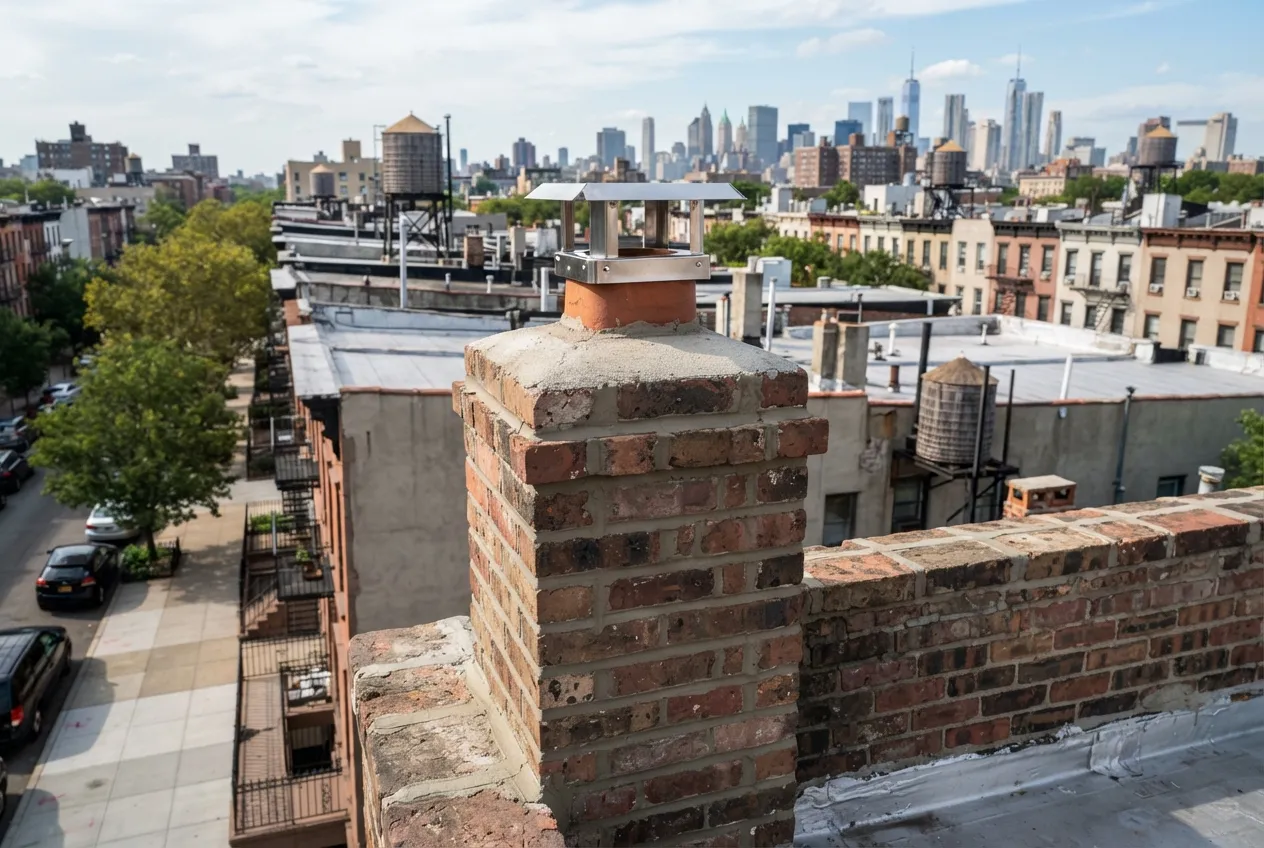
- Chimney crown, cap, and spark screen
- Exterior brick and mortar for spalling, loose units, and open joints
- Flashing where the chimney meets the roof
- Nests, animals, or other blockages in the flue
- A written summary of findings with photos
How our crew works inside your home and on the roof
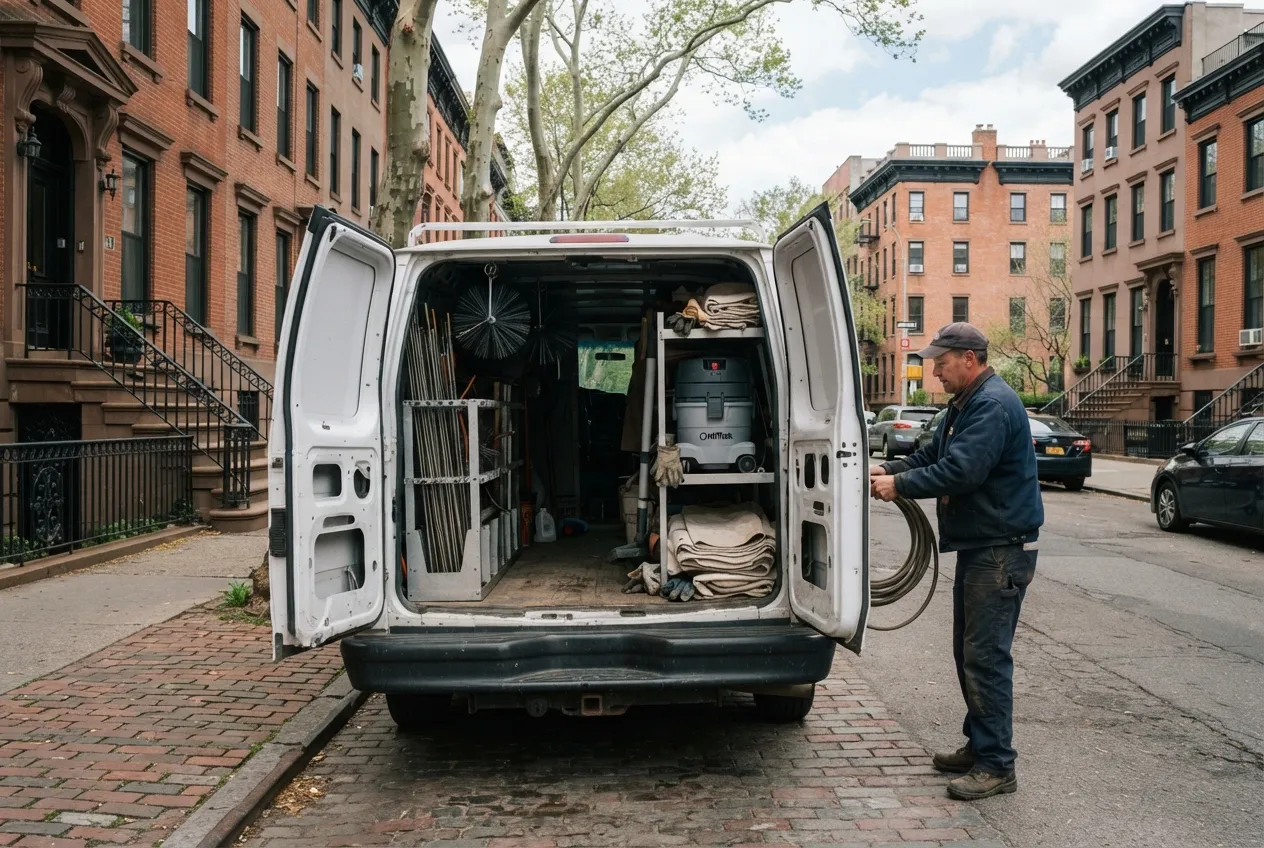
Inside, the technician lays drop cloths from the entry door to the fireplace and covers the hearth before opening anything. HEPA vacuums run whenever soot or debris is disturbed, so fine particles stay out of your living space. If heavy creosote is hiding the liner, we can sweep the flue with rotary brushes so the surface can actually be seen, and we'll tell you before doing that work.
Where it fits, we run a camera up the flue to see joints, cracks, and offsets that can't be seen with a flashlight. This is the most reliable way to check a liner in a tall or bent chimney.
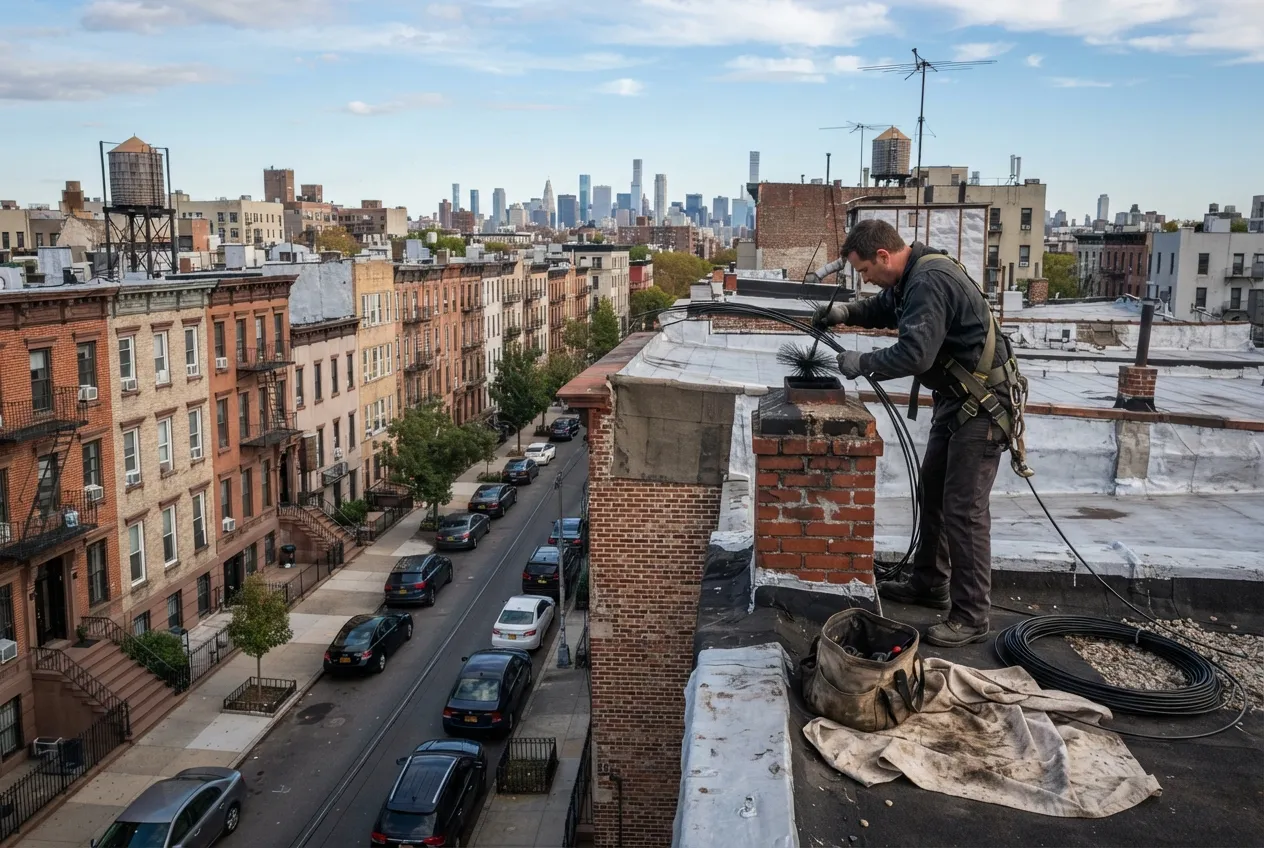
On the roof, the technician examines the crown, cap, flashing, and the top of the flue, and looks down the chimney from above. If roof access isn't safe or isn't available, as is common in some city buildings, we inspect from below with the camera and note anything we couldn't reach.
Time for your annual chimney check?
The standard we follow
Our inspections follow NFPA 211, a national standard that calls for chimneys, fireplaces, and vents to be inspected once a year. Chimney professionals use three inspection levels, and we'll tell you which one your situation calls for.
A Level 1 inspection is the yearly check when nothing about the system has changed. A Level 2 inspection is needed when the system changes, such as a new appliance or a switch of fuel, or when the home is sold. It includes a camera look at the flue. A Level 3 inspection is reserved for cases where a hidden hazard has to be reached by opening part of the chimney or the building.
If your building is converting its boiler from oil to gas, the chimney has to be evaluated as part of that work in New York City. A new liner is often needed, because gas exhaust produces acidic condensate that can corrode a masonry flue. New York City's heat season runs from October 1 through May 31. Scheduling your inspection before October gives you time to handle repairs before the heat has to be on.
What affects the price
Every chimney is different, so we price the work after we understand your setup. These are the main factors:
- Chimney height and how difficult the roof is to reach
- Fuel type: wood, gas, or oil
- Flue size, shape, and the condition of the liner
- How much creosote, soot, or debris has built up
- Whether a camera inspection is needed
- Whether repairs or a sweep are needed to complete the inspection
How a visit works
We keep the process simple and explain each step as we go.
- You tell us what kind of fireplace or appliance you have, when it was last used, and any signs you've noticed.
- We schedule a time and ask about roof access or building rules ahead of the visit.
- On arrival, the technician protects your floors and hearth, then inspects the system from the firebox up.
- The roof is checked when it is safe to reach, and the camera is used where it's needed.
- Before leaving, we review findings and photos with you and leave a written summary.
- If repairs are needed, we explain what's urgent, what can wait, and what each option involves.
Chimney Inspection by city
- Chimney Inspection in Lenox Hill
- Chimney Inspection in Roosevelt Island
- Chimney Inspection in Upper East Side
- Chimney Inspection in Yorkville
- Chimney Inspection in Carnegie Hill
- Chimney Inspection in Queensbridge
- Chimney Inspection in Ravenswood
- Chimney Inspection in Dutch Kills
- Chimney Inspection in Old Astoria
- Chimney Inspection in Hallets Point
- Chimney Inspection in East Midtown
- Chimney Inspection in Turtle Bay