The short answer
Yes, PrimeFlue serves all of East Midtown, about a mile from our Manhattan office, including ZIP codes 10017 and 10022. We handle chimney sweeping, inspections, repairs, liners and rebuilding, plus dryer vent and air duct cleaning. Booking before the October 1 start of heat season gives time to finish any repairs.
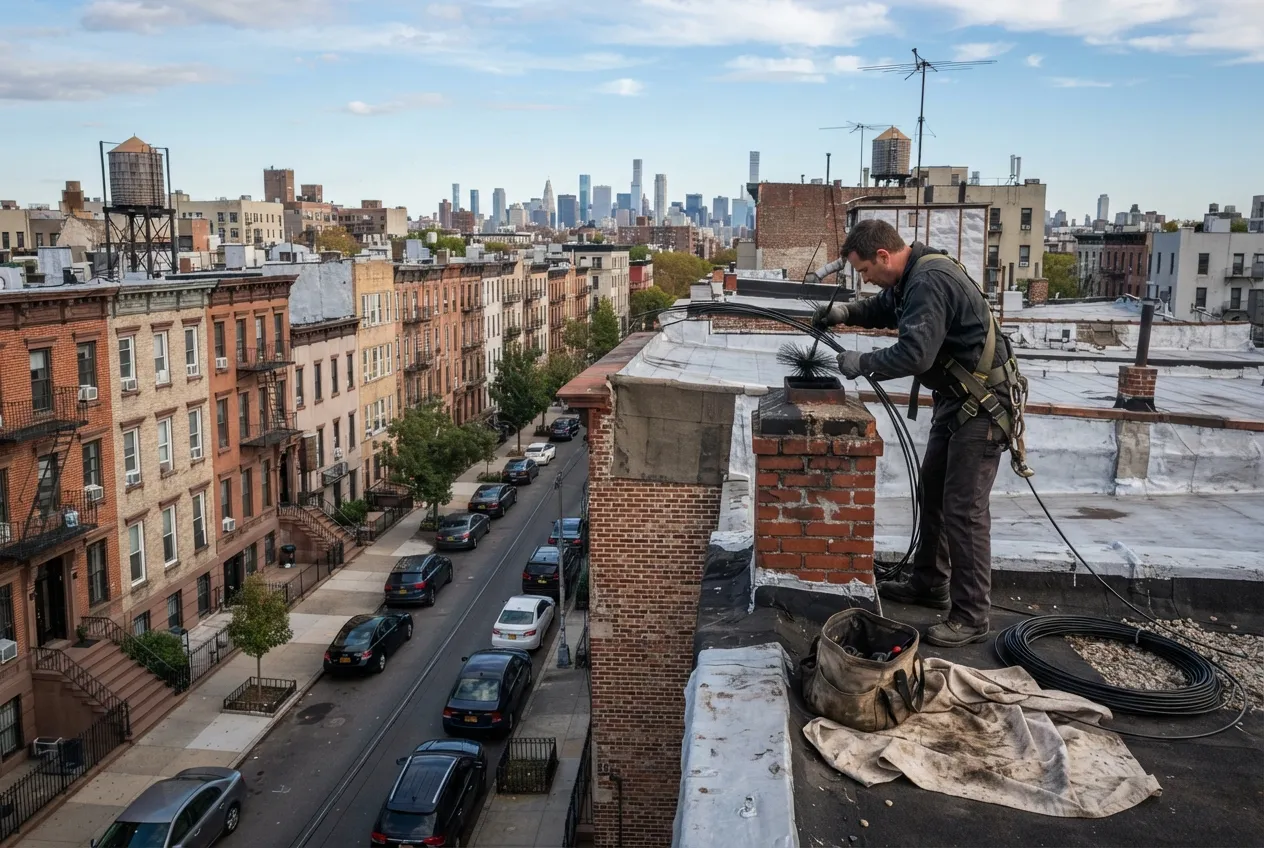
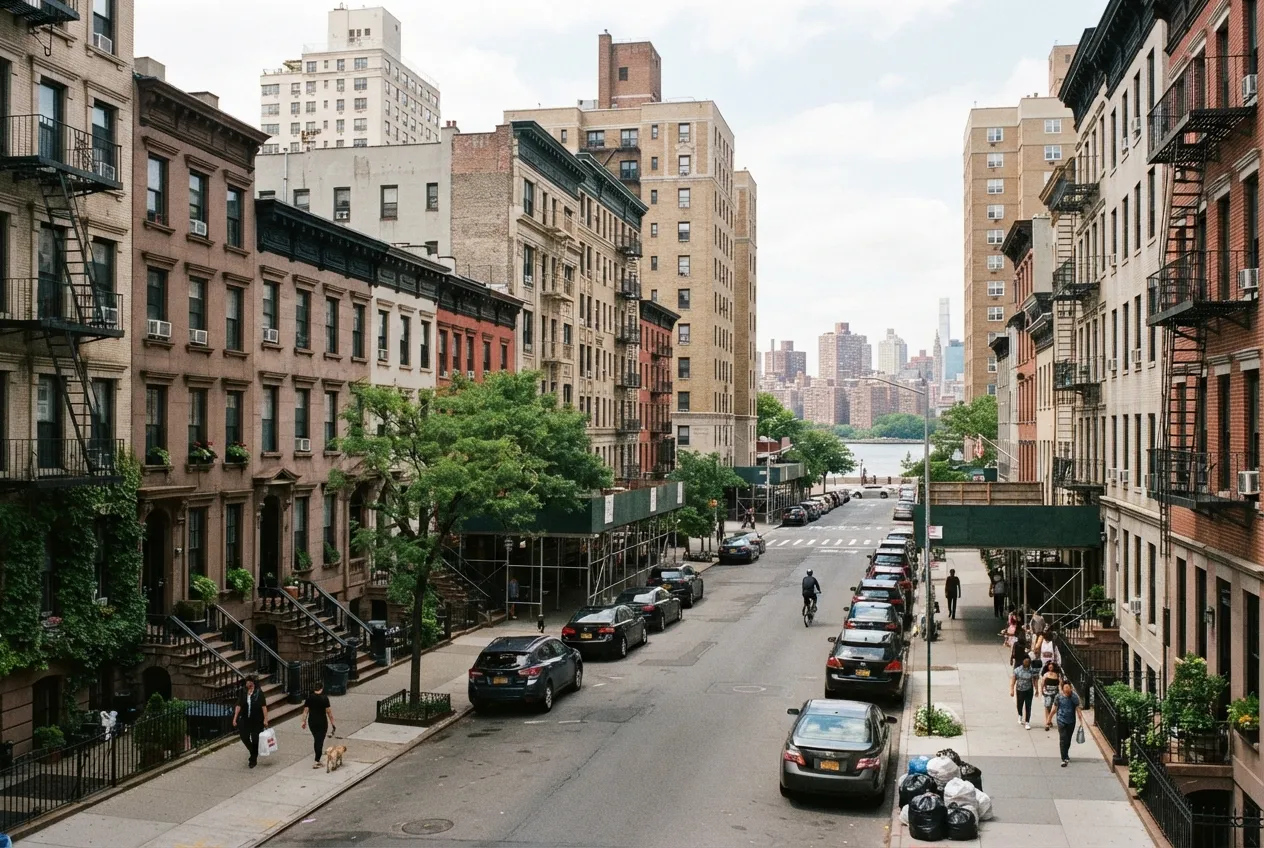
East Midtown packs a lot of venting into a small area. It has pre-war apartment buildings with masonry flues, high-rise co-ops and condos with central boilers, and some townhouses with working wood-burning fireplaces. PrimeFlue Chimney Services is based in Manhattan about a mile from East Midtown, so the neighborhood is close to home for our crews. Our certified technicians sweep, inspect, repair and reline chimneys. They also clean dryer vents and air ducts for homeowners, co-op boards and building managers in ZIP codes 10017 and 10022 and the building-specific ZIP codes nearby.
Chimney and Fireplace Service for East Midtown Homes
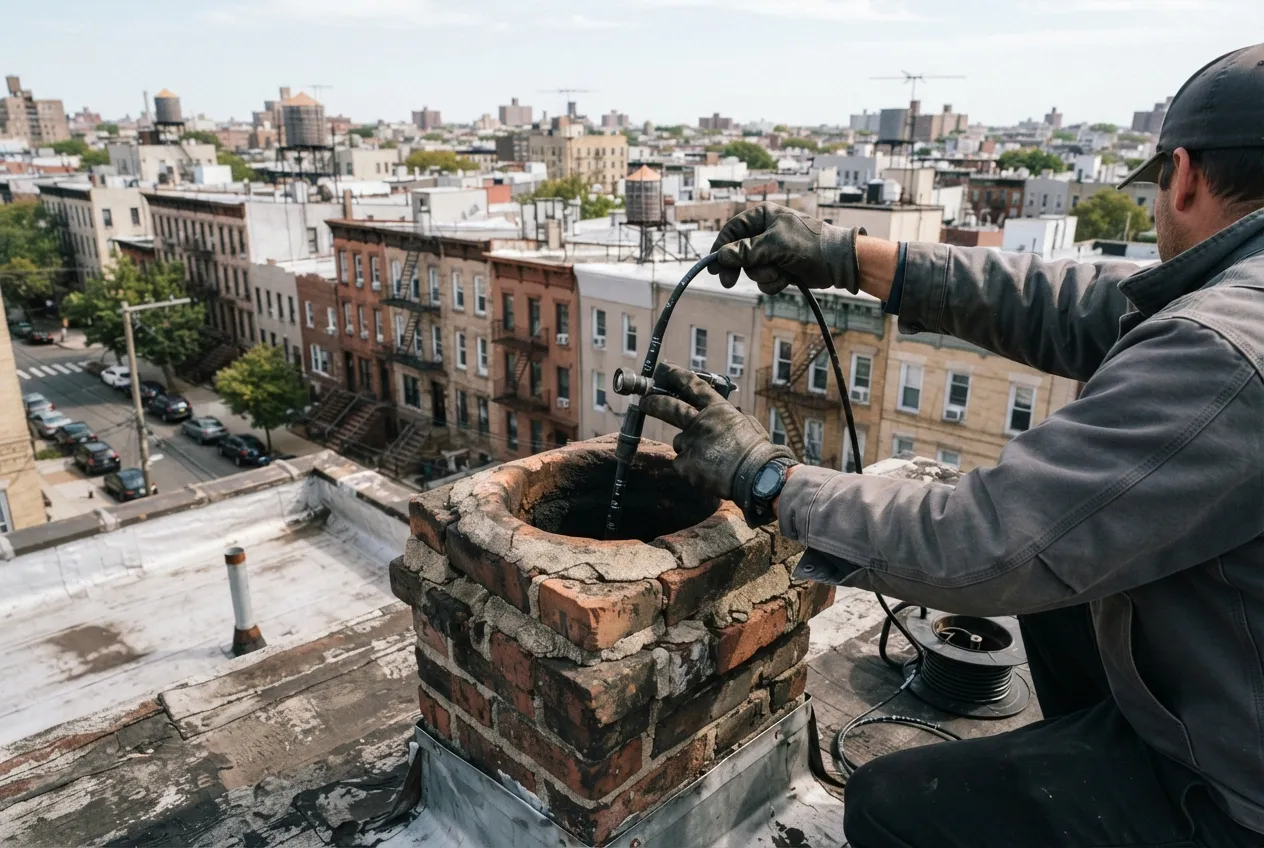
Most fireplaces in East Midtown are in older townhouses and pre-war apartments. In these buildings the original masonry flue may have been patched, only partly lined, or left unused for years. Before you use a fireplace again, we sweep out creosote and soot and check the damper and firebox. We also look for cracked flue tiles, gaps in the mortar, and debris such as nesting material. If something needs attention, we explain what we found and walk you through your options.
- Chimney sweep for wood-burning fireplaces and appliance flues
- Fireplace and damper repair, including stuck, rusted or warped dampers
- Chimney repair for loose bricks, failed mortar joints and cracked crowns
- Chimney rebuilding when masonry above the roofline is too deteriorated to patch
Inspections Timed Around Heat Season
The NFPA 211 standard calls for chimneys, fireplaces and vents to be inspected once a year. In New York City, heat season runs from October 1 through May 31. During those months, building owners must keep apartments heated to the city's minimum temperatures, so boiler flues work hard for eight months straight. Late summer and early fall are good times to inspect, because any repairs can be finished before the heat has to stay on.
Chimney professionals use three inspection levels. A Level 1 inspection fits a system that hasn't changed. A Level 2 inspection is called for when something changes, such as a new appliance or a switch of fuel, or when the home is sold. That makes it common for co-op and condo sales here. A Level 3 inspection is needed only when a hidden hazard can be reached only by opening part of the chimney or building.
Oil-to-Gas Conversions and Chimney Liners
Many East Midtown buildings have moved, or are planning to move, from oil-fired boilers to gas. When a New York City building converts from oil to gas, the chimney has to be evaluated as part of the work. A new liner is often needed because gas exhaust produces acidic condensate that can corrode a masonry flue. A conversion is also a change of fuel, so it calls for a Level 2 inspection. We evaluate the existing flue, size and install a new liner when needed, and coordinate with the boiler contractor and building management to keep the project on schedule.
Time for your annual chimney check?
Protecting Masonry From New York Weather
Manhattan winters bring repeated freeze-thaw cycles, and nor'easters drive rain sideways against rooftop chimneys. Water that soaks into brick expands when it freezes. Over time this loosens mortar and causes brick faces to flake and spall. Humid summers can make a damp flue smell musty inside the apartment. Keeping water out of the masonry is the most effective way to slow this damage.
- Chimney cap and chase cover installation to keep rain, snow, birds and debris out of the flue
- Chimney waterproofing with a vapor-permeable sealer that still lets the masonry dry
- Crown repair so water drains away from the flue instead of into it
Dryer Vent and Air Duct Cleaning
According to the U.S. Fire Administration, failure to clean is the leading factor in home clothes dryer fires. In Midtown apartments, dryer vents often take long horizontal runs to an exterior wall or a shared shaft, and lint builds up along the way. Watch for clothes that take longer to dry or a laundry area that feels unusually hot. Either one is a sign the vent needs cleaning.
For air ducts, the U.S. EPA advises cleaning when there is substantial visible mold growth, vermin, or excessive dust and debris. The agency also notes that duct cleaning has not been shown to prevent health problems. We inspect first and tell you honestly whether cleaning is warranted. Following EPA guidance, we are careful about chemical treatments. We also encourage you to research the process before responding to very cheap advertised offers.
Where We Work In and Around East Midtown
We serve all of East Midtown, including ZIP codes 10017, 10022, 10152, 10154, 10167, 10169, 10170, 10171, 10172 and 10174. Our crews also work in the neighboring areas of Turtle Bay, Lenox Hill, Roosevelt Island, the Upper East Side and Carnegie Hill. If you manage several properties across these neighborhoods, we can plan inspections and cleanings on a combined schedule.
ZIP codes we serve
- 10017
- 10022
- 10152
- 10154
- 10167
- 10169
- 10170
- 10171
- 10172
- 10174
Services in East Midtown
- Chimney Sweep in East Midtown
- Chimney Inspection in East Midtown
- Chimney Repair in East Midtown
- Air Duct Cleaning in East Midtown
- Chimney Liner Installation in East Midtown