The short answer
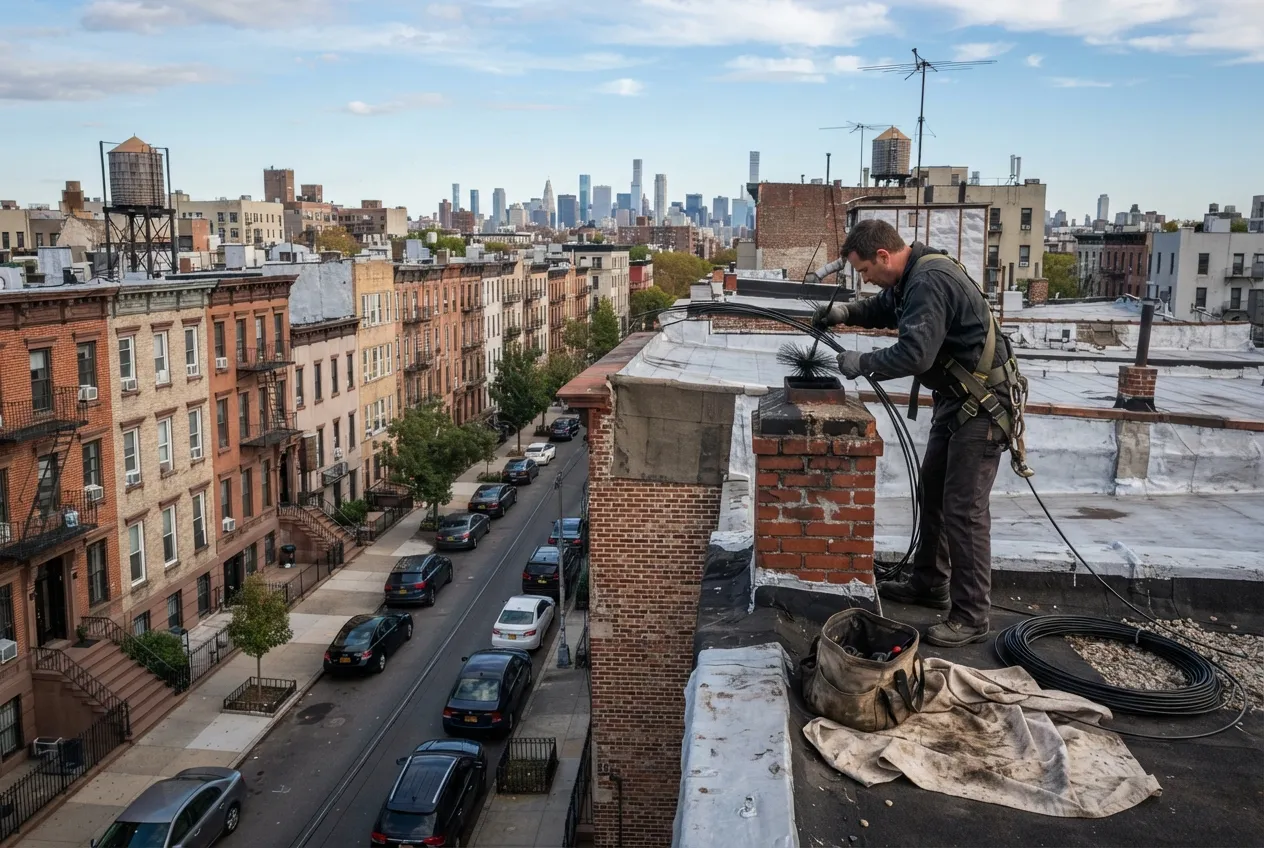
A chimney inspection on Roosevelt Island checks whether a building's boiler flue or a home's fireplace and vents can safely carry exhaust out of the building. NFPA 211 calls for a yearly inspection, and a more detailed Level 2 inspection when a system changes, such as an oil-to-gas boiler conversion, or when a home is sold.
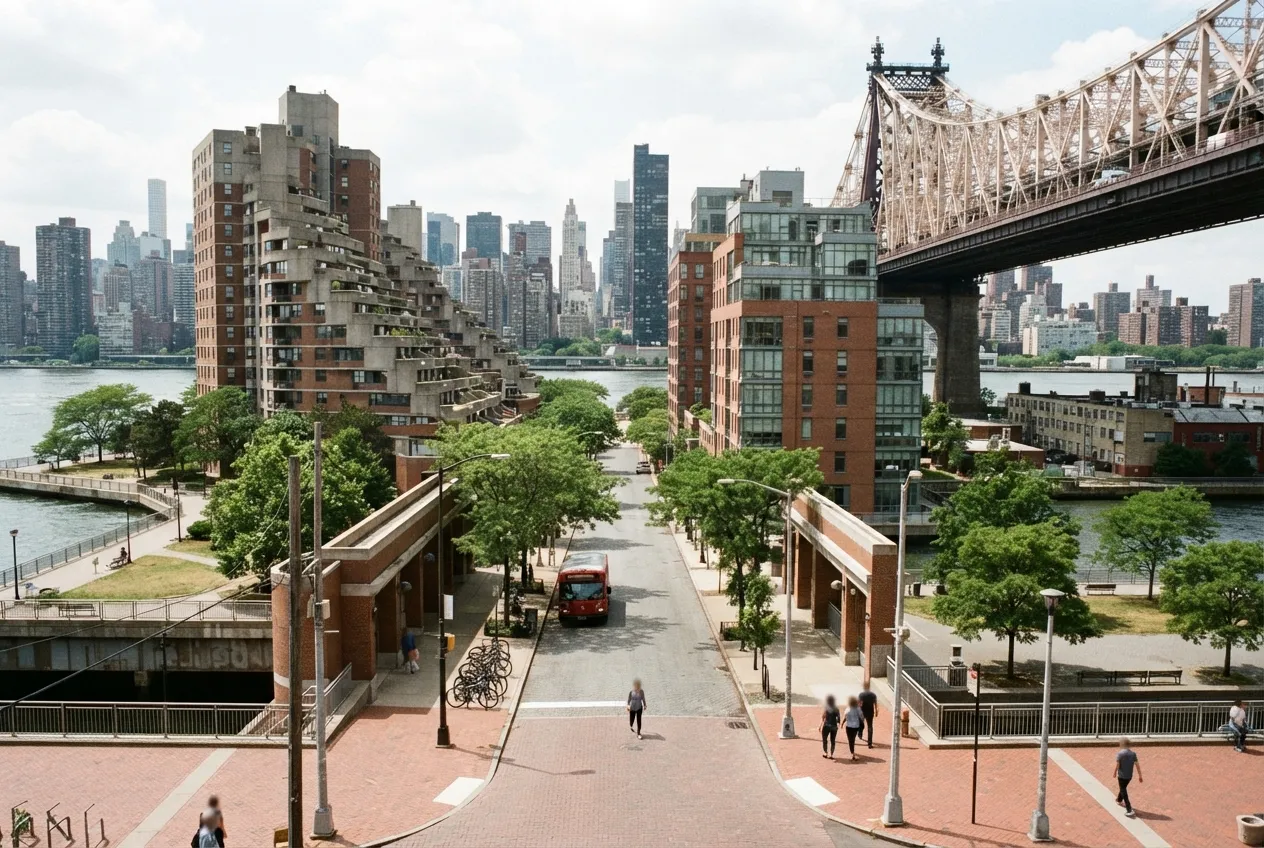
Roosevelt Island is mostly apartment living. That means the chimney that matters to you may not be a fireplace flue in your own unit. It may be the masonry or metal flue that carries exhaust from your building's boiler. PrimeFlue Chimney Services inspects both: shared flues serving central heating plants, and the fireplaces and appliance vents found in individual homes. Our certified technicians follow the NFPA 211 standard, which calls for chimneys, fireplaces and vents to be inspected once a year. We work from our Manhattan office and cover Roosevelt Island (ZIP 10044) along with nearby Lenox Hill, the Upper East Side, Carnegie Hill, Yorkville and East Midtown.
What we look at in Roosevelt Island buildings
Most housing on the island is in multi-unit apartment buildings, where one or more flues serve a central boiler or water heater. Those flues run the full height of the building, and problems can sit far from where anyone looks day to day. An inspection traces the path of the exhaust from the appliance connection to the top of the chimney.
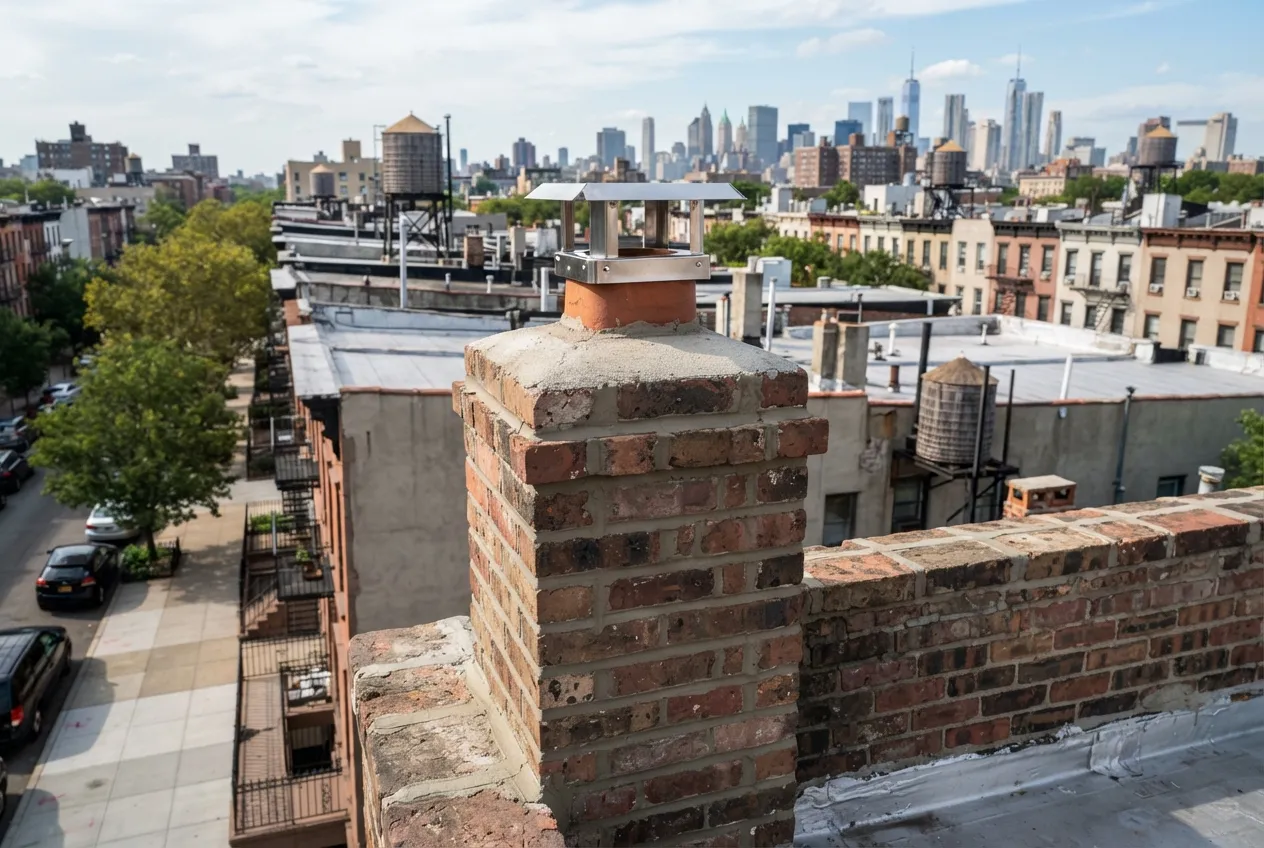
In homes with a working fireplace or a vented appliance, we check the firebox, damper, smoke chamber, flue and cap. We also look at clearances to nearby wood and finishes.
- Flue liner condition: cracks, gaps, corrosion or missing sections
- Soot, creosote or debris that narrows the flue
- Breaching and connector pipes between the boiler and chimney
- Masonry, mortar joints and crown at the top of the chimney
- Caps and screens that keep out rain, birds and debris
- Signs of water entry, staining or spalling brick
Which inspection level you need
NFPA 211 describes three levels of inspection. Choosing the right one keeps you from paying for more than you need, or settling for less than the situation calls for.
- Level 1: for a system that hasn't changed and is used the same way as before. We examine the readily accessible parts of the chimney and appliance connection.
- Level 2: when something changes, such as a new boiler, a switch from oil to gas, or a relined flue. It also applies when a home or building is sold. It usually includes a camera inspection of the flue's interior.
- Level 3: only when a hidden hazard is suspected and the only way to reach it is to open part of the chimney or the building around it.
Oil-to-gas conversions and flue liners
When a New York City building converts its boiler from oil to gas, the chimney must be evaluated as part of the work. Gas exhaust produces acidic condensate, which can eat into the mortar and clay of an older masonry flue. For that reason a new liner is often needed.
If your building is planning a conversion, an inspection before the work begins tells the owner, board or managing agent what the flue can handle. We document the liner's condition and size with photos and camera footage. That record helps everyone involved plan the conversion with real information rather than assumptions.
Time for your annual chimney check?
Timing around heat season
New York City's heat season runs from October 1 through May 31. During those months, building owners must keep apartments heated to the city's minimum temperatures. A boiler flue that is blocked or failing in January leaves little room to fix it without disrupting residents.
Late spring and summer are the easiest times to inspect a boiler chimney. If repairs or a new liner turn out to be necessary, there is time to complete them before heat must be on again in the fall. For fireplaces in individual homes, an inspection before the first fire of the season works the same way.
What you get after the inspection
We explain what we found in plain terms, with photos of the problem areas, so you can see the same thing we saw. If the flue needs cleaning, we tell you. If it needs repair, relining or further investigation, we explain why and what the options are. If everything checks out, you get a clear record of that too, which is useful for building files, insurance questions or a future sale.
We do not recommend work that the inspection doesn't support. Many inspections simply confirm that a system is in good shape and should be checked again next year.
More services in Roosevelt Island
- Chimney Sweep in Roosevelt Island
- Chimney Repair in Roosevelt Island
- Air Duct Cleaning in Roosevelt Island
- Chimney Liner Installation in Roosevelt Island