The short answer
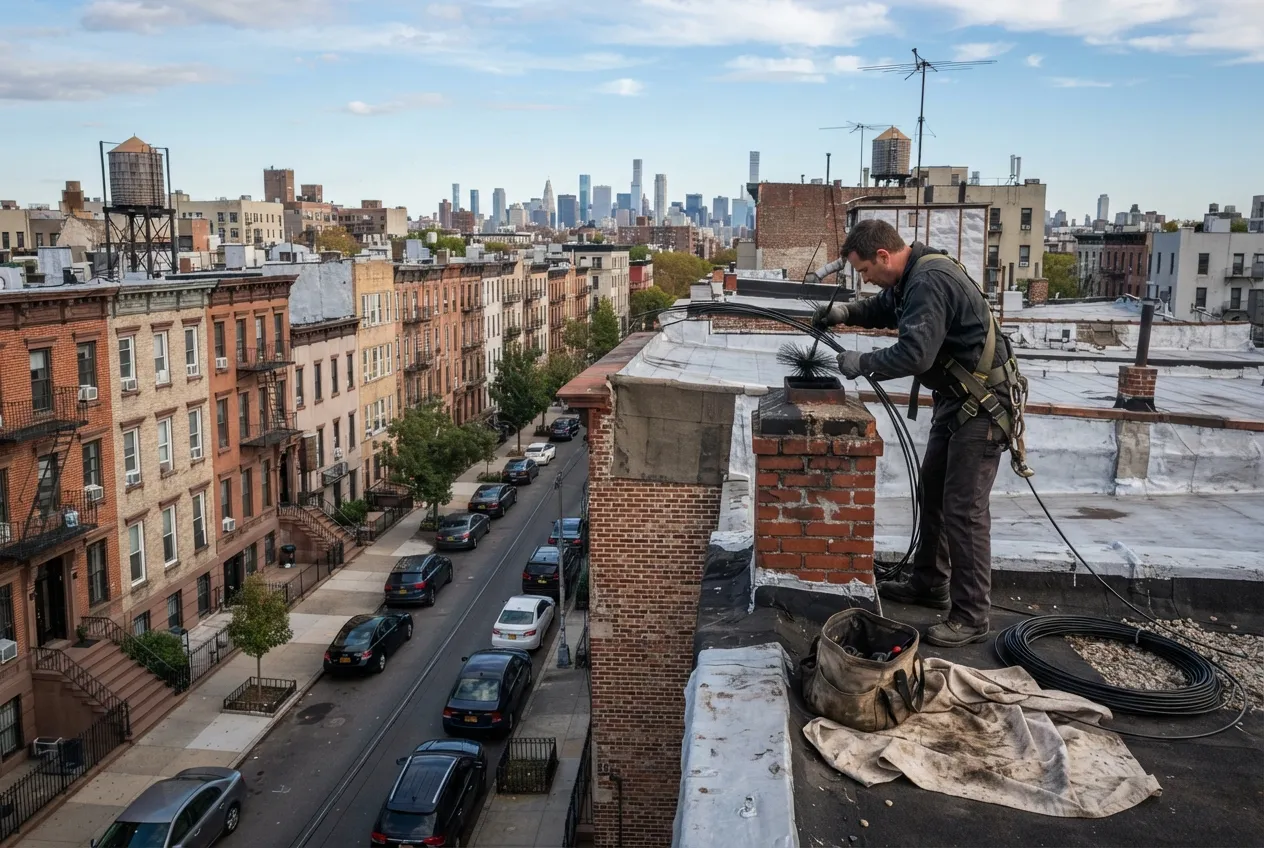
The NFPA 211 standard calls for chimneys, fireplaces and vents to be inspected once a year, and that applies to Ravenswood homes and buildings too. Most chimneys need a Level 1 inspection, while a Level 2 is called for after a fuel switch, a new appliance or a home sale, which is common when Queens buildings convert from oil to gas.
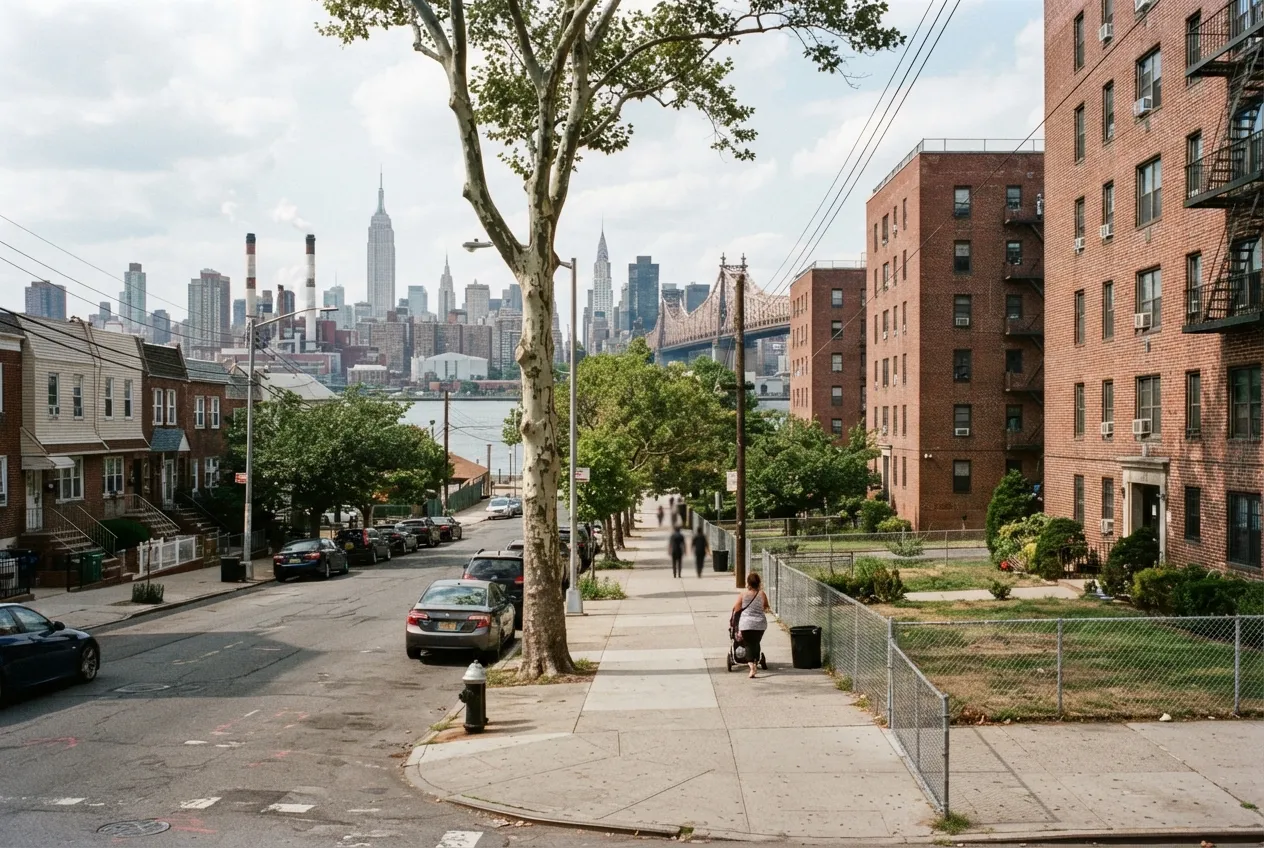
Ravenswood sits just across the East River from our Manhattan office, about a mile away, so homeowners and building owners in 11106 are close neighbors to us. The housing here is a real mix: older attached rowhouses, two- and three-family homes, pre-war apartment buildings with shared boiler chimneys, and newer construction with modern venting. Each one vents smoke or exhaust differently, and each one can develop problems you can't see from the street or the living room. A chimney inspection from PrimeFlue gives you a clear picture of what's happening inside your flue, what condition the masonry and liner are in, and whether anything needs attention before you light a fire or the boiler runs hard all winter.
Why a Yearly Inspection Matters for Ravenswood Homes
The NFPA 211 standard calls for chimneys, fireplaces and vents to be inspected once a year. That recommendation holds whether you burn wood in a fireplace a few times each winter or rely on a gas boiler that runs for months straight.
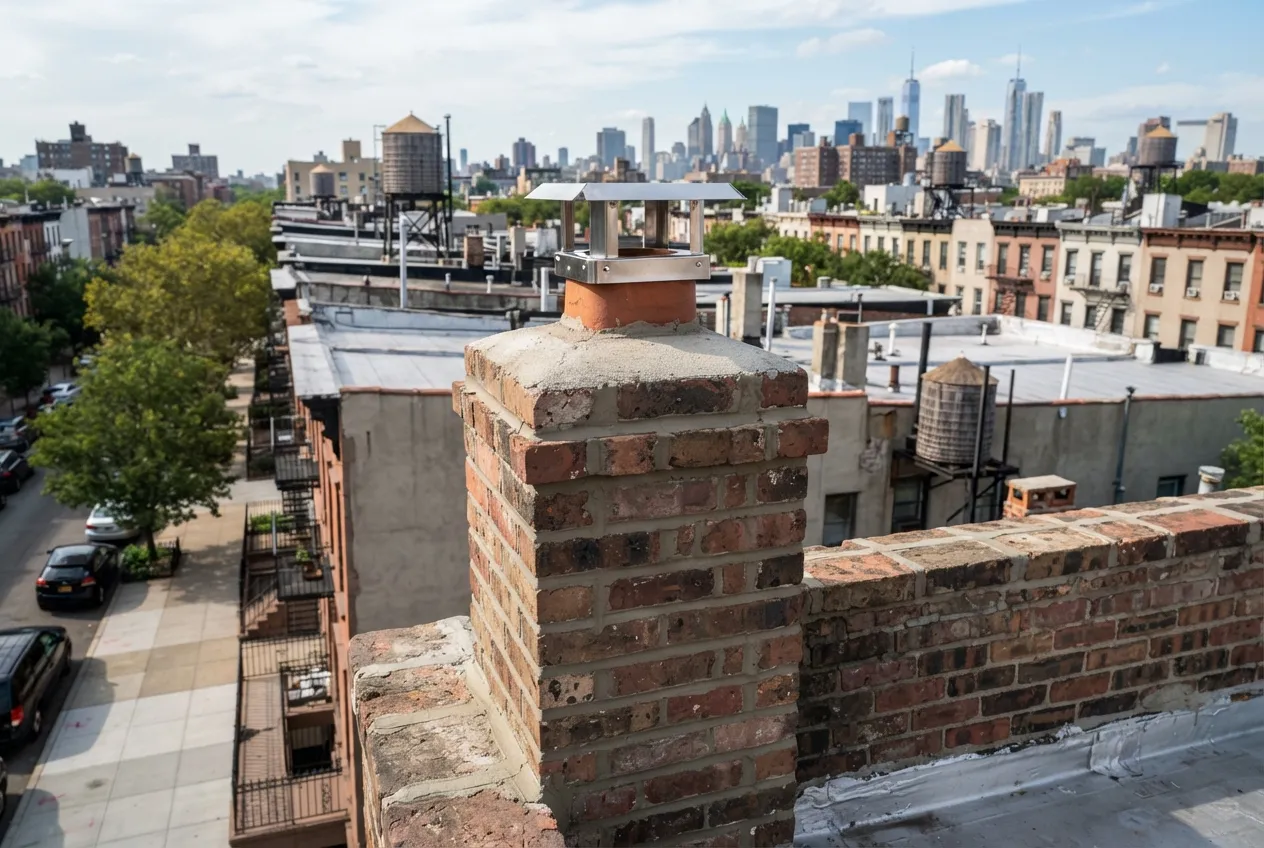
Many chimneys in this part of Queens are decades old. Mortar joints wear down, flue tiles crack, and liners can deteriorate quietly over time. In attached rowhouses and multi-family buildings, a problem in one flue can affect neighbors who share a wall or a chimney stack. An annual inspection catches issues like blockages, cracked tiles, loose bricks and damaged crowns while they are still manageable, rather than after smoke or exhaust has started finding its way into living space.
Which Inspection Level Does Your Chimney Need?
Chimney professionals use three inspection levels. Our certified technicians will recommend the right one based on your home's situation, and we'll explain why before any work starts.
- Level 1: For chimneys where nothing has changed since the last inspection. We check the accessible parts of the chimney, the flue, the firebox or appliance connection, and look for obstructions and buildup.
- Level 2: For when the system changes, such as a new boiler, furnace or insert, a switch of fuel, or when a home is being sold. This includes a closer look at the flue interior, often with a camera, plus accessible areas like attics and basements.
- Level 3: For when a hidden hazard has to be reached by opening part of the chimney or the building. This is only recommended when a Level 1 or Level 2 inspection points to a serious concern that can't be evaluated any other way.
Converting From Oil to Gas in Queens
Many older buildings in and around Ravenswood still heat with oil, and owners are steadily converting their boilers to gas. When a New York City building converts its boiler from oil to gas, the chimney has to be evaluated as part of that work.
This matters because gas exhaust behaves differently from oil exhaust. It produces acidic condensate that can corrode a masonry flue that was never built to handle it. That's why a new liner is often needed after a conversion. If you're planning a switch, a Level 2 inspection gives you and your heating contractor a clear view of the flue's condition so the liner question can be answered with facts instead of guesses.
Time for your annual chimney check?
Timing Your Inspection Around Heat Season
New York City's heat season runs from October 1 through May 31, and building owners must keep apartments heated to the city's minimum temperatures during that stretch. A chimney problem discovered in January can put a landlord in a tough spot.
For that reason, we suggest scheduling inspections in late spring or summer when possible. That leaves time to plan any repairs or relining before the boiler needs to run every day. Homeowners with fireplaces benefit from the same approach, since it's easier to address issues before the first cold night than in the middle of it.
What You Get From a PrimeFlue Inspection
We aim to leave you understanding your chimney, not just holding a checklist. After the inspection, we walk you through what we found in plain terms.
- A review of the flue for creosote, soot, debris and animal nests
- A check of flue tiles or liner for cracks, gaps and corrosion
- An exterior look at the crown, cap, flashing and masonry where accessible
- Notes on the connection between your boiler, furnace or fireplace and the flue
- Photos or camera images when we perform a Level 2 inspection
- Clear recommendations, separated into what needs attention now and what can wait
More services in Ravenswood
- Chimney Sweep in Ravenswood
- Chimney Repair in Ravenswood
- Air Duct Cleaning in Ravenswood
- Chimney Liner Installation in Ravenswood