The short answer
Air duct cleaning makes sense when you can see a real problem: heavy dust or debris in the ducts, signs of pests, visible mold growth, or leftover renovation dust. PrimeFlue cleans supply and return ducts, registers, and accessible air handler parts with HEPA vacuums and rotary brushes. We focus on dust, debris, odors, and airflow, not health claims.
Air ducts collect what moves through a home: dust, pet hair, construction debris, and sometimes nesting material from pests. Over time that buildup can show up as dust blowing from registers, a stale smell when the system kicks on, or rooms that never seem to get enough air. PrimeFlue Chimney Services cleans residential duct systems for homeowners in New York and nearby cities, including houses, row homes, and apartments with their own forced-air systems. Our certified technicians follow the same practical approach the U.S. EPA describes: clean ducts when there is a real reason to, such as visible mold growth, vermin, or excessive dust and debris. We don't sell duct cleaning as a health treatment. We clean out dirt, debris, and odors and look at airflow.
Signs you need it
Most homeowners call us after noticing something they can see, hear, or smell. If any of these sound familiar, have the ducts looked at before you decide on a full cleaning.
- Dust blowing from vents when the heat or air conditioning starts
- A gray film that builds up on furniture and floors near registers soon after you clean
- Visible debris, lint, or clumps of dust inside registers and return grilles
- Drywall dust, sawdust, or plaster dust left in the system after a renovation
- Scratching, rustling, or other animal noises in the ductwork, or droppings and nesting material at a vent
- A musty or stale odor when the system runs
- Weak airflow at some registers while others blow normally
- Visible mold growth on duct surfaces or around the air handler
What is included
A standard residential duct cleaning covers the whole forced-air path, not just the grilles you can reach. Here is what our crew does on a typical visit.
- Walk-through of the system and a check of registers, returns, and the air handler
- Protection of floors and furniture along the work path
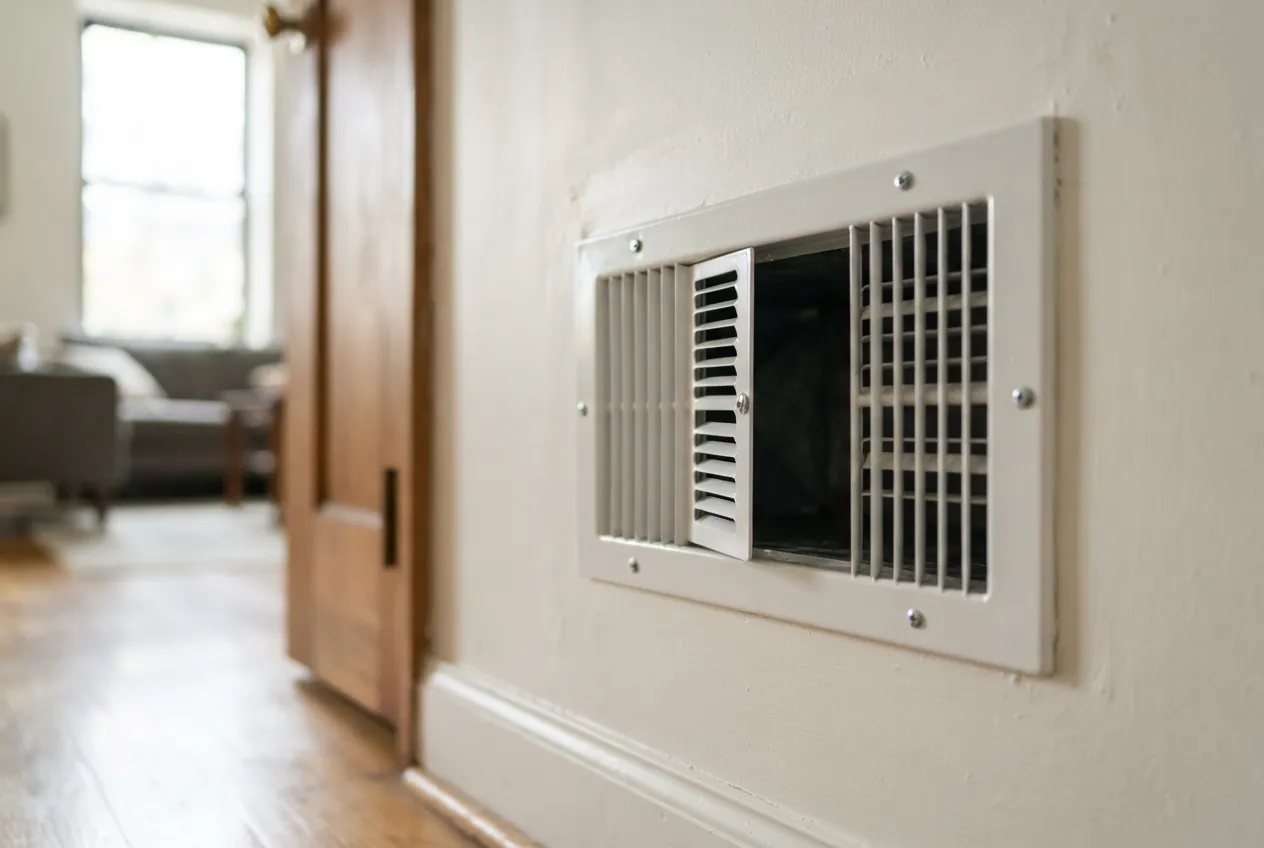
- Removal and cleaning of supply registers and return grilles
- Agitation and vacuuming of supply ducts with rotary brushes and a HEPA vacuum
- Cleaning of return ducts and the return plenum
- Cleaning of accessible air handler parts, such as the blower compartment
- Filter check and replacement with a filter you provide or one we supply
- Camera inspection where it fits, to show buildup before and after
- A plain-language summary of what we found, including any damage, disconnected runs, or signs of pests
How our crew works in your home
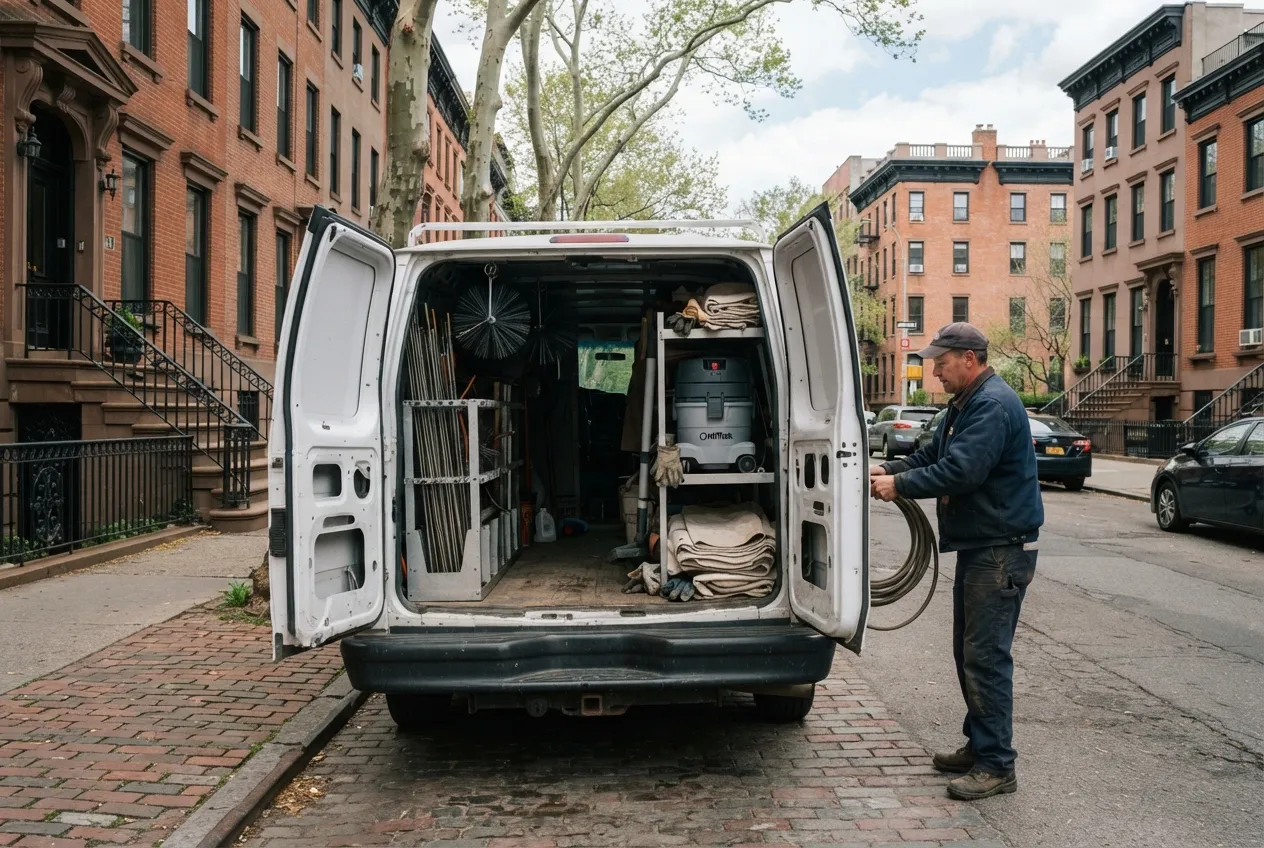
We treat your home as a workspace that has to be left clean. Before any equipment comes in, the crew lays drop cloths along the path from the door to each work area and covers furniture near the registers. Registers and grilles are covered or sealed so loosened dust is pulled into our vacuum and not pushed into the room.
Cleaning is done with HEPA-filtered vacuums and rotary brushes. The brushes knock dust and debris loose from the duct walls, and the vacuum collects it as it comes free. Where a run is long, bends, or is hard to see, we use a camera to check the inside of the duct and show you what is there. We don't spray chemical treatments as a routine add-on. The EPA advises care with them, so if one seems appropriate for your situation we'll explain why first and leave the decision to you.
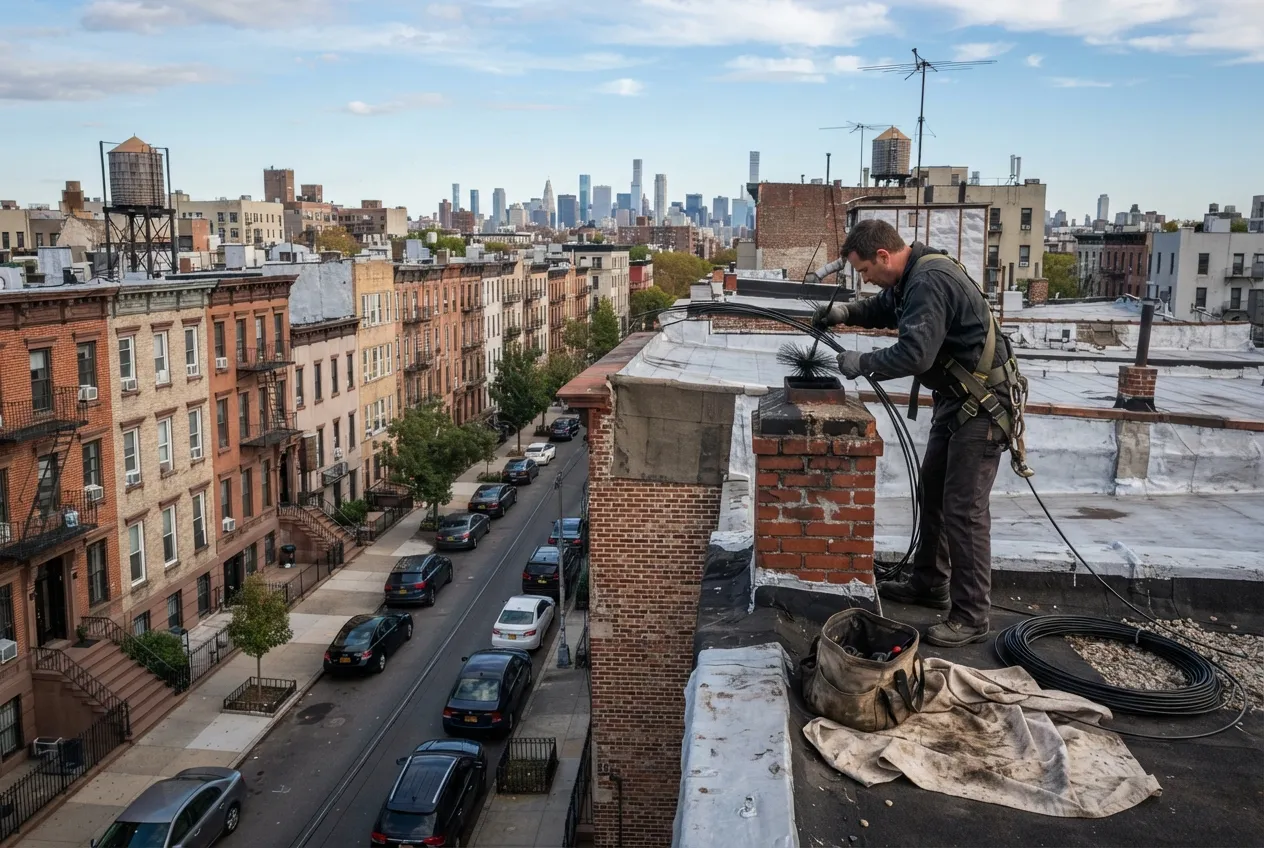
Most duct work happens indoors, but some homes and small buildings have equipment or exhaust terminations on the roof. When we need roof access, the crew sets up safely, checks the termination for blockage, nests, or damage, and reports what we see. When we finish, we vacuum the work area, fold up drop cloths carefully, and reinstall every grille.
Time for your annual chimney check?
The guidance we follow
There is no yearly inspection requirement for air ducts like the one NFPA 211 sets for chimneys. We follow the EPA's guidance instead. The EPA advises cleaning ducts when there is substantial visible mold growth, vermin, or excessive dust and debris. It also says duct cleaning has not been shown to prevent health problems, and it encourages homeowners to research the process before answering very cheap advertised offers.
That shapes how we work. If your ducts don't need cleaning, we'll tell you. If they do, we'll show you why with photos or camera footage when possible. If we find visible mold, we'll point out where it is, because moisture causing it should be fixed so the problem doesn't come back after cleaning.
What affects the price
Every system is different, so we quote after we know what we're working with. These are the main factors:
- Size of the home and the number of supply and return vents
- How easy the ducts and air handler are to reach, including tight closets, attics, or basements
- Whether any roof access is needed for equipment or terminations
- How much dust, debris, or renovation residue has built up
- Signs of pests that call for extra cleanup of nesting material or droppings
- Whether a camera inspection is needed for long or hidden runs
- Repairs such as resealing joints, reconnecting loose sections, or replacing damaged duct
How a visit works
It starts with a conversation. Tell us what you're noticing, such as dust from vents, an odor, a recent renovation, or pest activity, and we'll ask a few questions about your system and home so we can schedule enough time.
When the crew arrives, they walk the system with you, confirm the scope, and explain anything that may change it. Then they protect the work area, clean the ducts and accessible air handler parts, and check airflow at the registers.
Before leaving, the technician goes over what was cleaned, shows photos or camera footage where available, and notes any repairs or follow-up worth considering. You'll know what we did and why.
Air Duct Cleaning by city
- Air Duct Cleaning in Lenox Hill
- Air Duct Cleaning in Roosevelt Island
- Air Duct Cleaning in Upper East Side
- Air Duct Cleaning in Yorkville
- Air Duct Cleaning in Carnegie Hill
- Air Duct Cleaning in Queensbridge
- Air Duct Cleaning in Ravenswood
- Air Duct Cleaning in Dutch Kills
- Air Duct Cleaning in Old Astoria
- Air Duct Cleaning in Hallets Point
- Air Duct Cleaning in East Midtown
- Air Duct Cleaning in Turtle Bay