The short answer
The NFPA 211 standard calls for chimneys, fireplaces and vents to be inspected once a year, and Upper East Side homes are no exception. Most homeowners need a Level 1 inspection, a Level 2 when they buy a home or change fuel or appliances, and a Level 3 only when a suspected hidden hazard requires opening part of the chimney or wall.
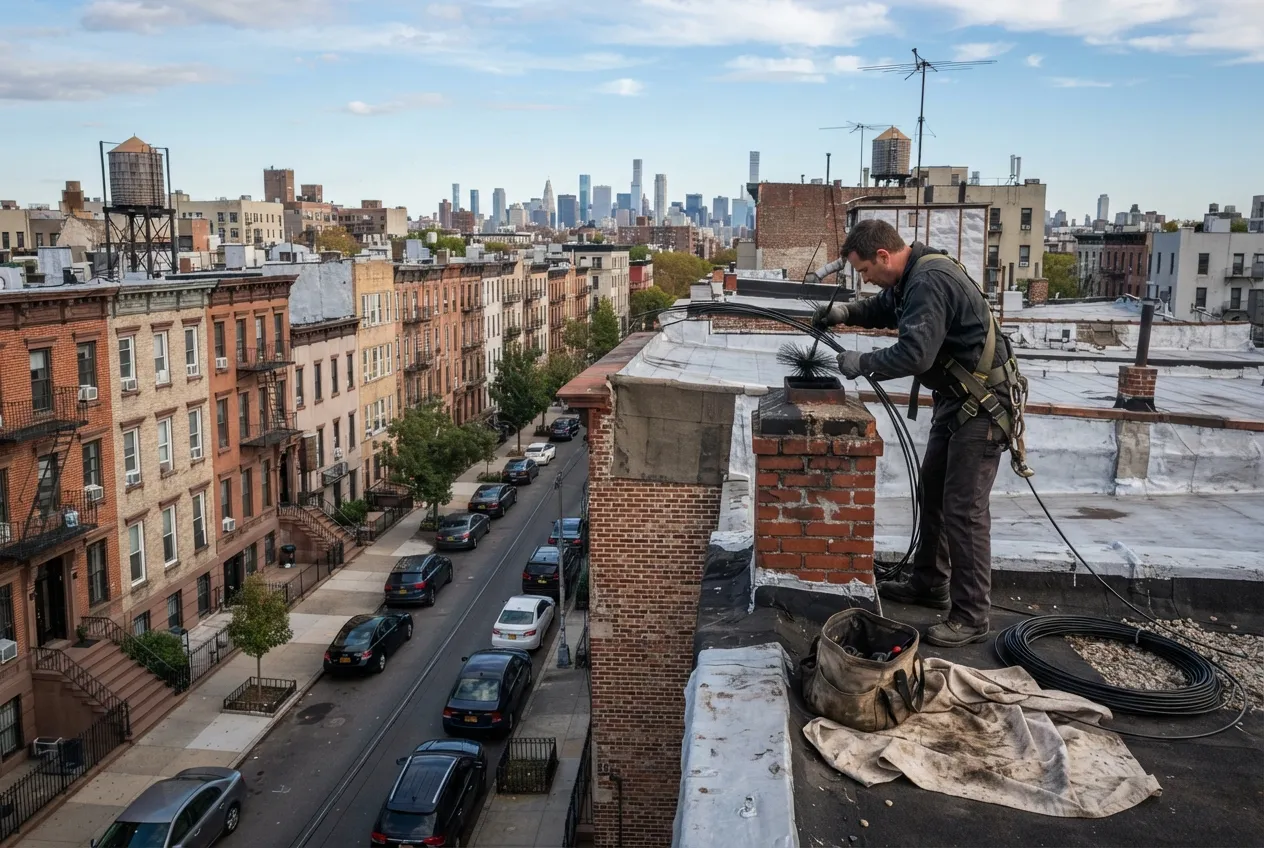
PrimeFlue Chimney Services is based on the Upper East Side, with our office at 18 E 75th St, so our certified technicians inspect chimneys in neighborhood homes as part of everyday work. Many local chimneys are old masonry, and many have been altered over time: a fireplace reopened, a boiler swapped, a flue shared between floors. Inspection is how you learn what condition that chimney is in now, before you light a fire or change a heating system. Below we explain what an inspection covers, which level you likely need, and when to schedule it.
Why a Yearly Inspection Matters Here
The NFPA 211 standard, which chimney professionals follow, calls for chimneys, fireplaces and vents to be inspected once a year. That includes flues serving boilers and water heaters, not only wood-burning fireplaces.
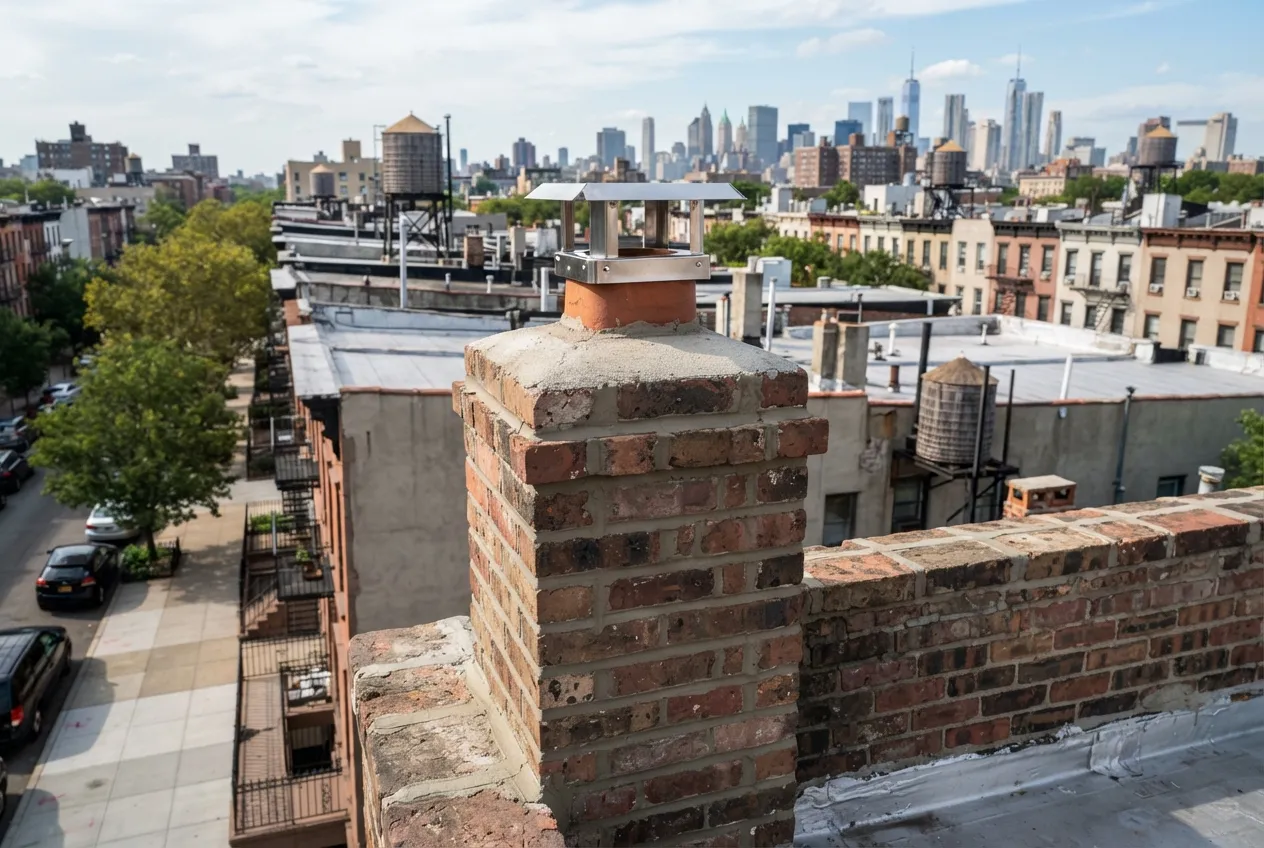
On the Upper East Side, a lot of chimney masonry was built long before modern liners and appliances were common. Mortar joints wear, crowns crack, and flues that once served one appliance may now serve another. A yearly inspection shows whether the system is still sound for the way you use it today.
Choosing the Right Inspection Level
Chimney professionals use three inspection levels. The right one depends on what has changed in your home, not on how worried you are.
If you are unsure, tell us how you use the fireplace or heating system and what has changed recently. We will recommend a level based on that.
- Level 1: For a chimney in regular use when nothing has changed. We check the accessible parts of the chimney, firebox, damper and connections for soundness, blockages and buildup.
- Level 2: Needed when the system changes, such as a new appliance or a switch of fuel, or when the home is sold. It goes further than Level 1, including accessible areas like attics and basements and a video scan of the flue interior.
- Level 3: Used only when a hidden hazard has to be reached by opening part of the chimney or building. We explain why before any removal is discussed.
Brownstones, Townhouses and Pre-War Buildings
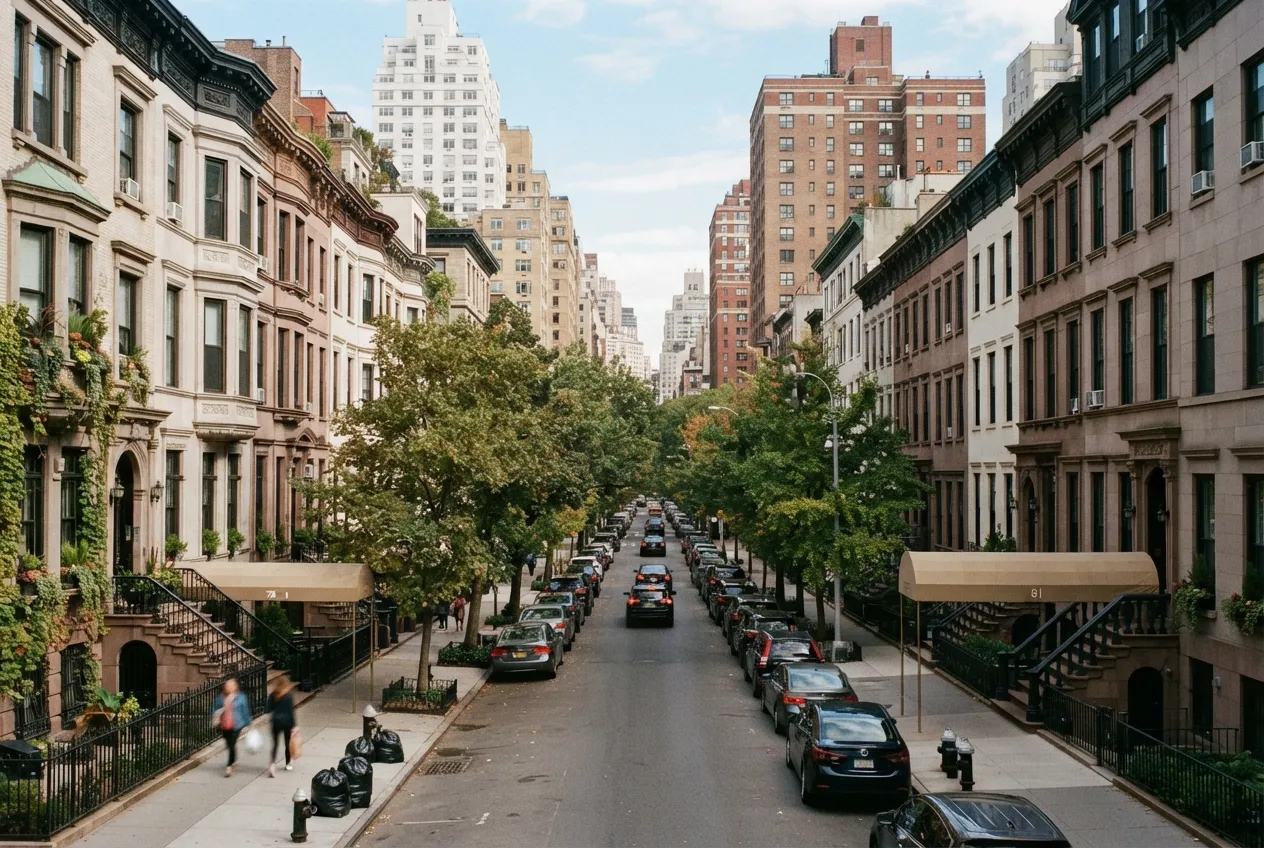
Housing in this part of Manhattan ranges from brownstones and rowhouses to pre-war apartment buildings and taller co-ops and condos. Each type brings its own inspection questions.
In a brownstone or townhouse, there are often several fireplaces on different floors, some unused for years. We check each flue that will be used, look at shared walls between neighboring houses, and review the condition of the chimney top where weather does the most damage.
In apartment buildings, a unit's fireplace may tie into a flue running through other floors, and the boiler chimney is usually the building's responsibility. We can inspect a single unit's fireplace and share findings that boards or building managers need.
Time for your annual chimney check?
Oil-to-Gas Conversions and Liners
Many older Manhattan buildings have moved boilers from oil to gas. When a New York City building converts its boiler from oil to gas, the chimney has to be evaluated as part of that work. A new liner is often needed, because gas exhaust produces acidic condensate that can corrode an unlined or poorly lined masonry flue.
Because a fuel change is a change to the system, it calls for a Level 2 inspection. We check flue size, liner condition and the connection to the new appliance, then explain clearly whether relining is needed.
Timing Around Heat Season
New York City's heat season runs from October 1 through May 31, when building owners must keep apartments heated to the city's minimum temperatures. A boiler chimney problem found in the middle of winter is harder to deal with than one found in late summer.
For that reason, we suggest scheduling your inspection before October, especially for heating flues and for fireplaces you plan to use over the holidays. Any repairs can then be handled before the system is under daily demand.
Areas We Serve Near Our Office
We inspect chimneys throughout the Upper East Side, including ZIP codes 10021, 10028, 10044, 10065, 10075, 10128 and 10162. We also work in the nearby neighborhoods of Carnegie Hill, Lenox Hill, Yorkville, Roosevelt Island and East Midtown.
More services in Upper East Side
- Chimney Sweep in Upper East Side
- Chimney Repair in Upper East Side
- Air Duct Cleaning in Upper East Side
- Chimney Liner Installation in Upper East Side