The short answer
Chimney waterproofing seals the outside of a masonry chimney with a breathable water repellent so rain can't soak in and cause freeze-thaw damage, leaks and staining. A proper job starts with an inspection and any needed repairs to the crown, mortar and flashing. The repellent goes on only after the masonry is clean and dry.
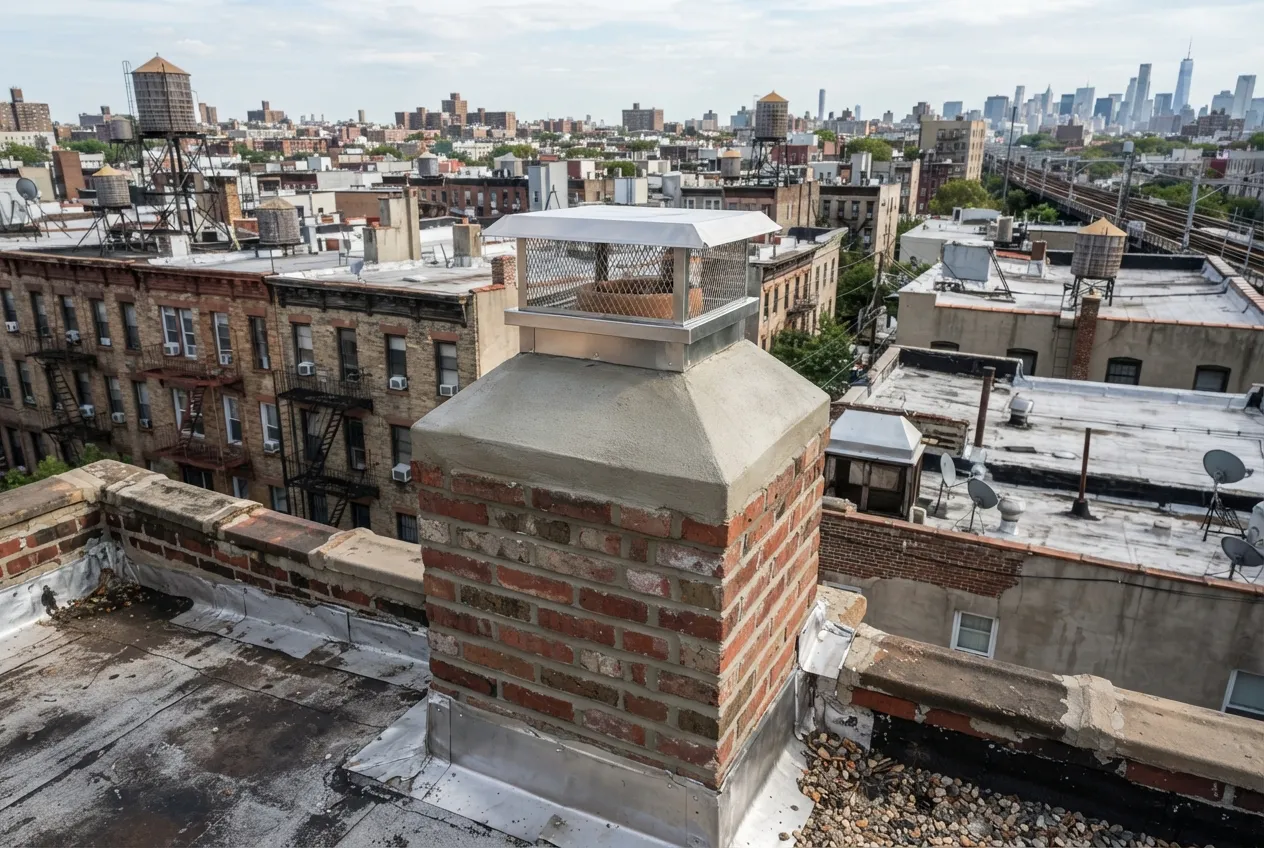
Brick and mortar look solid, but they absorb water. Every rain soaks the chimney a little, and every freeze pushes that moisture outward. Over a few winters this cracks mortar joints, flakes the face off bricks, rusts dampers and stains ceilings. PrimeFlue Chimney Services waterproofs chimneys for homeowners in New York City and nearby cities. We find where water is getting in, repair what needs repair, and apply a breathable water repellent that sheds rain while still letting the masonry dry. This page covers the signs to watch for, what the service includes, how our certified technicians work in your home and on your roof, and what affects the cost.
Signs you need it
Water damage to a chimney usually shows up slowly. Most homeowners notice one of these signs before they notice a leak in the ceiling. If you see more than one, it's worth having the chimney looked at before the next freeze.
- White, chalky staining on the outside brick. This is efflorescence, salt left behind as water moves through the masonry.
- Water or damp spots in the firebox after rain, or rust on the damper and fireplace doors.
- Bits of brick, mortar or flakes of masonry in the firebox or on the smoke shelf.
- Brick faces that are flaking or popping off on the outside of the chimney.
- A stronger smoke or creosote smell in humid or rainy weather, which often means moisture is mixing with deposits in the flue.
- Water stains on the ceiling or wall next to the chimney.
What's included
Waterproofing only works if the chimney is sound first. Sealing over cracked mortar or a broken crown traps the problem instead of fixing it. Every job follows the same checklist, and we tell you about any repair before we do it.
- Visual inspection of the chimney exterior, crown, flashing and cap.
- Camera check of the flue where we suspect water has reached the interior.
- Notes and photos of cracks, open mortar joints, spalled brick and flashing gaps.
- Cleaning the masonry surface so the repellent can soak in evenly.
- Sealing small hairline cracks in the crown and mortar.
- Applying a vapor-permeable water repellent to the exposed brick and mortar.
- Checking that the chimney cap is in place and keeps rain out of the flue.
- A written summary of what we found, what we did and anything to watch.
How our crew works in your home and on the roof
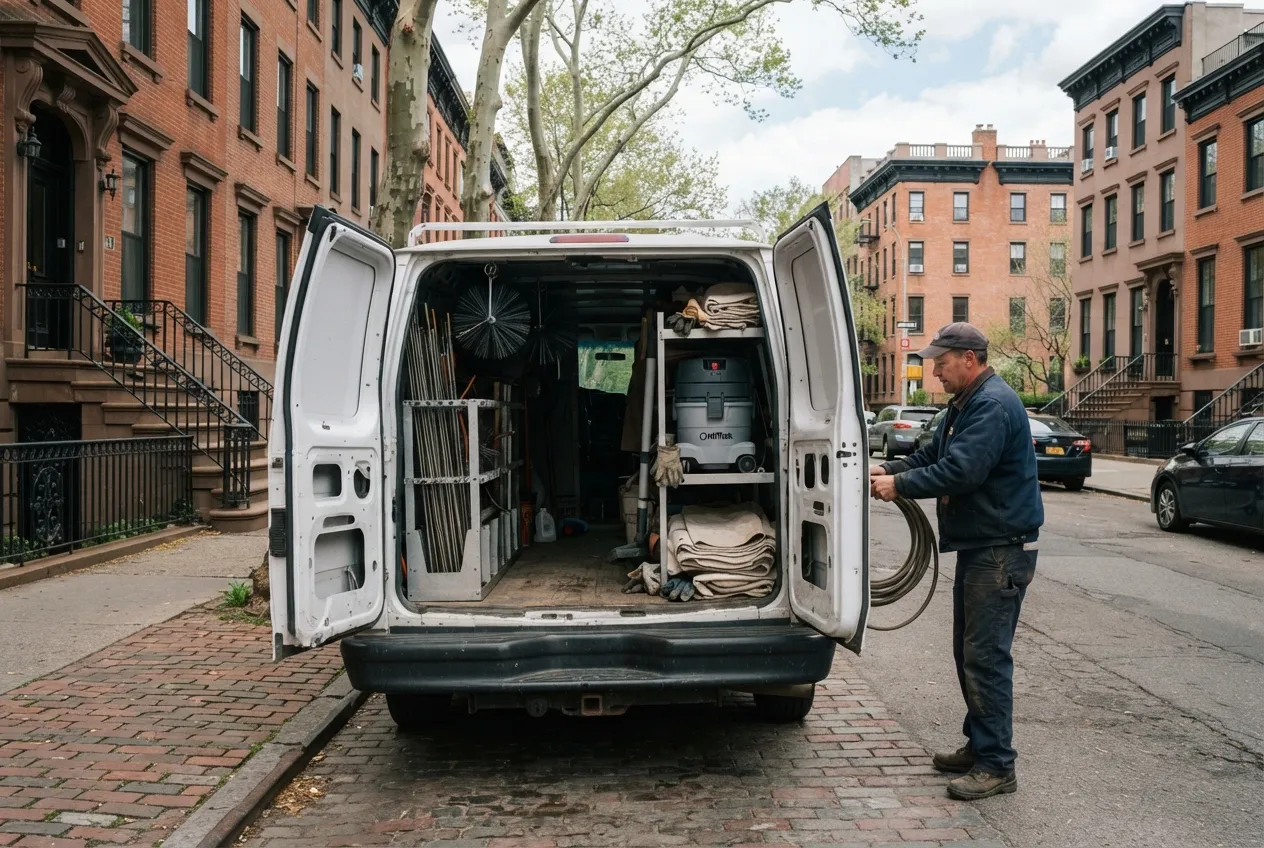
Inside, we lay drop cloths from the door to the fireplace and cover the hearth before we open anything. If the flue needs a sweep before we can inspect it properly, we use rotary brushes with a HEPA vacuum running at the fireplace opening so soot stays out of the room. A camera lets us see water stains, cracked flue tiles and loose mortar without opening walls.
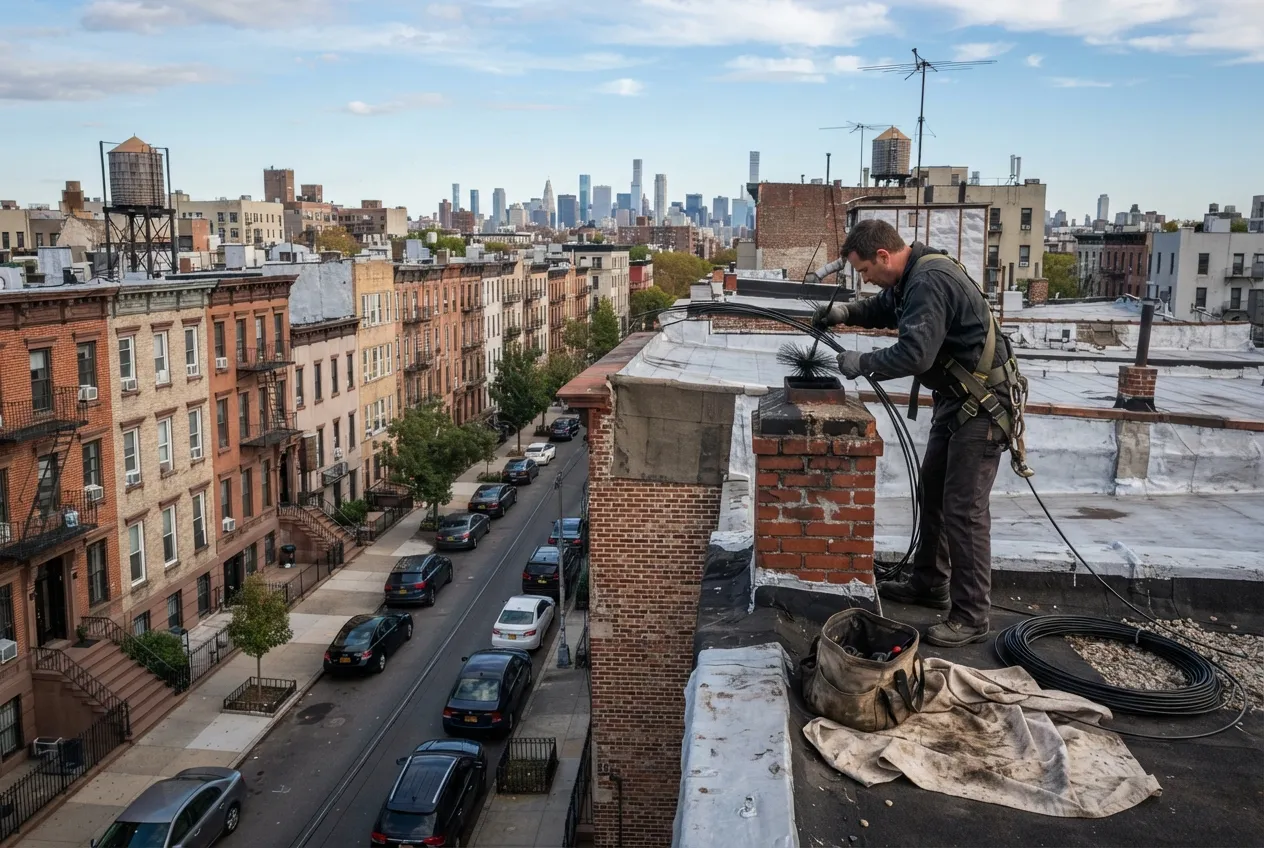
On the roof, we set up safe access first and keep tools and materials off your shingles and gutters. We clean the brick, let it dry, and make repairs before any repellent goes on. We apply the repellent only to dry masonry in suitable weather, because sealing wet brick traps moisture inside. If rain is in the forecast, we would rather reschedule than do the job poorly.
We use breathable repellents, not paint or film-forming sealers. Masonry has to release the water vapor that comes from inside the house and the flue. A coating that blocks it can make spalling worse.
Time for your annual chimney check?
The standard we follow
The NFPA 211 standard calls for chimneys, fireplaces and vents to be inspected once a year. Chimney professionals use three inspection levels. Level 1 applies when nothing about the system has changed. Level 2 applies when the system changes, such as a new appliance or a switch of fuel, or when the home is sold. Level 3 applies when a hidden hazard can only be reached by opening part of the chimney or building. Most waterproofing visits start with a Level 1 review of the exterior and flue. If we find signs of deeper damage, we explain why a higher level might be needed before you decide.
Exterior waterproofing doesn't fix every kind of moisture problem. When a New York City building converts its boiler from oil to gas, the chimney has to be evaluated as part of that work. A new liner is often needed because gas exhaust produces acidic condensate that can corrode a masonry flue from the inside. If your system has changed fuel, we'll tell you whether the damage we see is coming from outside or from the flue itself.
What affects the price
Every chimney is different, so we quote after we've seen yours. These are the main factors:
- Chimney height and how hard the roof is to reach and work on safely.
- How much exposed masonry needs to be treated.
- The condition of the crown, mortar joints and flashing, and whether repairs come first.
- Fuel type and flue size and condition, especially if the flue shows its own moisture damage.
- How much soot or creosote buildup has to be cleared before an inspection.
- Whether a camera inspection is needed to check for hidden water damage.
How a visit works
You contact us and describe what you're seeing, such as staining, leaks or debris. We set up a time and look at the forecast so the work happens on a dry day. On site, we protect the room, inspect the chimney inside and out, and walk you through what we found before any work starts. If repairs are needed, you get a clear explanation and a quote. Once you approve, we clean, repair and apply the repellent, then tidy the work area and give you a written summary.
Timing matters in New York. The city's heat season runs from October 1 through May 31, and many households lean on their chimneys and heating systems most during those months. Late spring through early fall is usually the easiest window to waterproof before freeze-thaw cycles start again.