The short answer
A chimney sweep removes soot, creosote and debris from your flue so smoke and exhaust vent safely. It also includes a visual inspection of the system. The NFPA 211 standard calls for chimneys, fireplaces and vents to be inspected once a year, and sweeping is done whenever the inspection shows buildup or blockage.
Every fireplace and heating appliance leaves something behind in the chimney. Wood fires deposit soot and creosote, and furnaces, boilers and water heaters send exhaust up a flue that can collect debris, nesting material and crumbling masonry. A chimney sweep removes that buildup so smoke and exhaust leave your home the way they should. It also gives a trained technician a close look at the flue, damper, smoke chamber, crown and cap. PrimeFlue Chimney Services sweeps chimneys for homeowners across New York City and nearby cities, from row houses and brownstones to detached homes. Our certified technicians clean the full system, show you what they found and explain any problems in plain terms. This page covers the signs to watch for, what a sweep includes, how we work in your home and on your roof, and how a visit is scheduled and carried out.
Signs you need a chimney sweep
Many chimney problems show up in small ways before they become serious. If you notice any of the following, it is a good time to have the chimney swept and looked over, even if your last service was recent.
- A smoky or campfire-like smell, or a sharp, tar-like creosote odor, especially on humid days or when the air conditioning is running
- Poor draft: smoke rolls into the room, fires are hard to start, or they burn weakly
- Soot, debris or flakes of brick and mortar collecting in the firebox
- White, chalky staining on the brick inside or outside, a sign that moisture is moving through the masonry
- Scratching, chirping or rustling sounds from inside the chimney, which can mean birds or animals are nesting
- Water dripping or pooling in the firebox after rain or snow
What a chimney sweep includes
A sweep covers more than running a brush up the flue. Here is the checklist our crew works through on a standard visit.
- Cleaning the flue from top to bottom to remove soot, creosote and loose debris
- Cleaning the firebox, smoke shelf and smoke chamber
- Checking that the damper opens, closes and seals properly
- Removing nesting material and other blockages where they can be reached safely
- Checking the chimney cap, crown and visible flashing from the roof
- Looking over the flue liner for cracks, gaps or heavy glazed creosote
- Checking the appliance connection on furnace, boiler or water heater flues
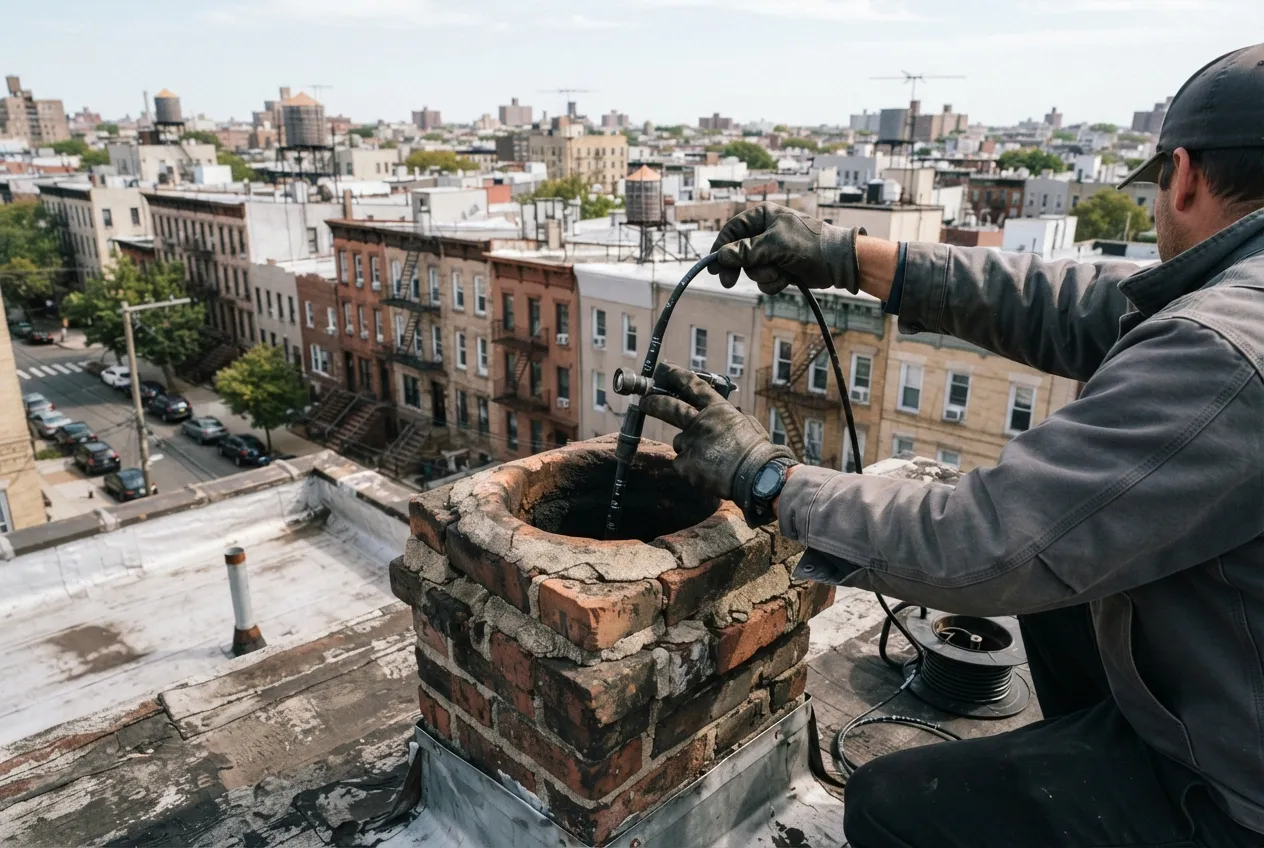
- A camera scan of the flue where one is needed to see conditions the eye cannot reach
- A walkthrough of findings with photos, plus written notes on any recommended repairs
How our crew works in your home and on the roof
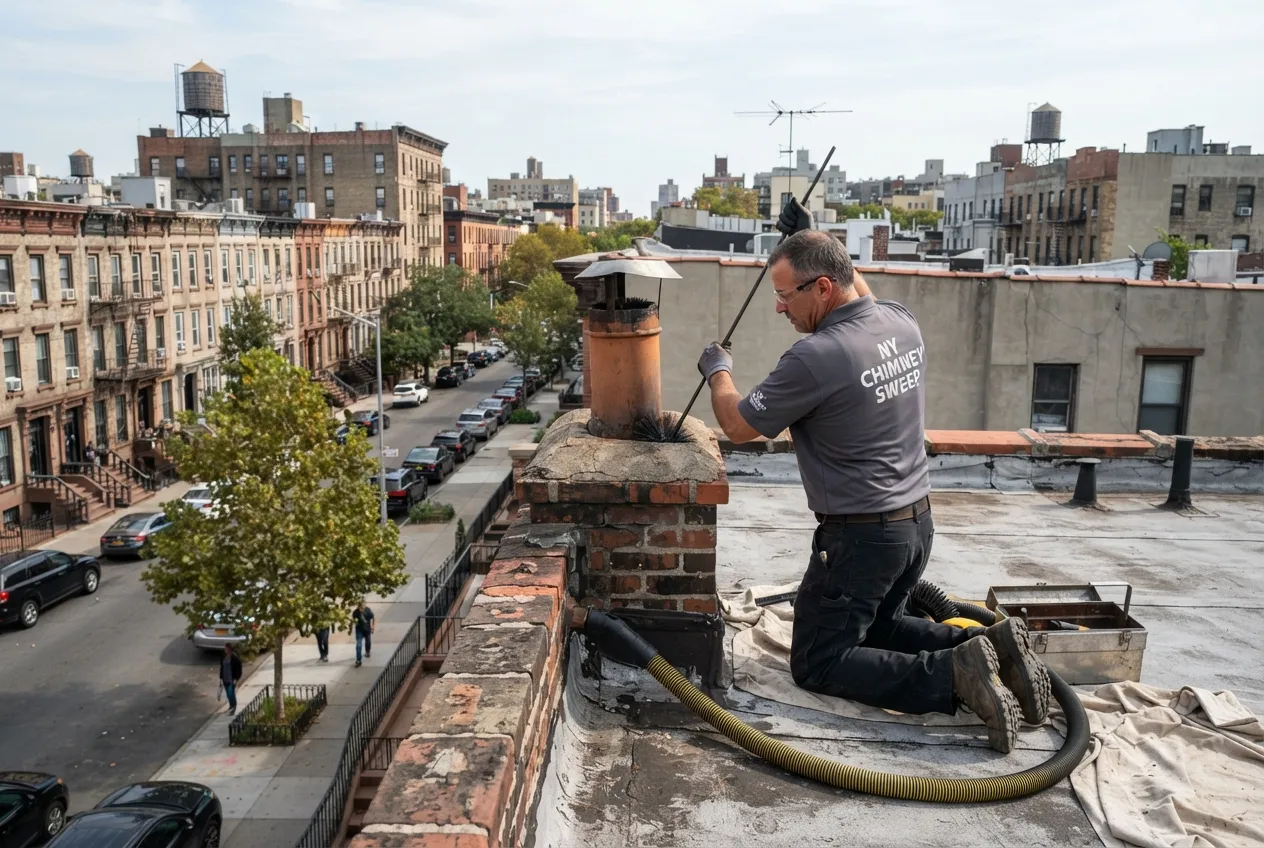
Inside, we protect your space before any cleaning starts. The crew lays drop cloths from the door to the fireplace and covers the hearth and nearby floors. The fireplace opening is sealed, and a HEPA vacuum runs the whole time, so the soot pulled loose stays contained instead of drifting into the room.
We use rotary brushes sized to your flue. They spin against the flue walls and break up creosote and soot that a hand brush can leave behind. When the flue is hard to see, or when the cleaning turns up signs of damage, we run a camera through it so you can see the liner yourself.
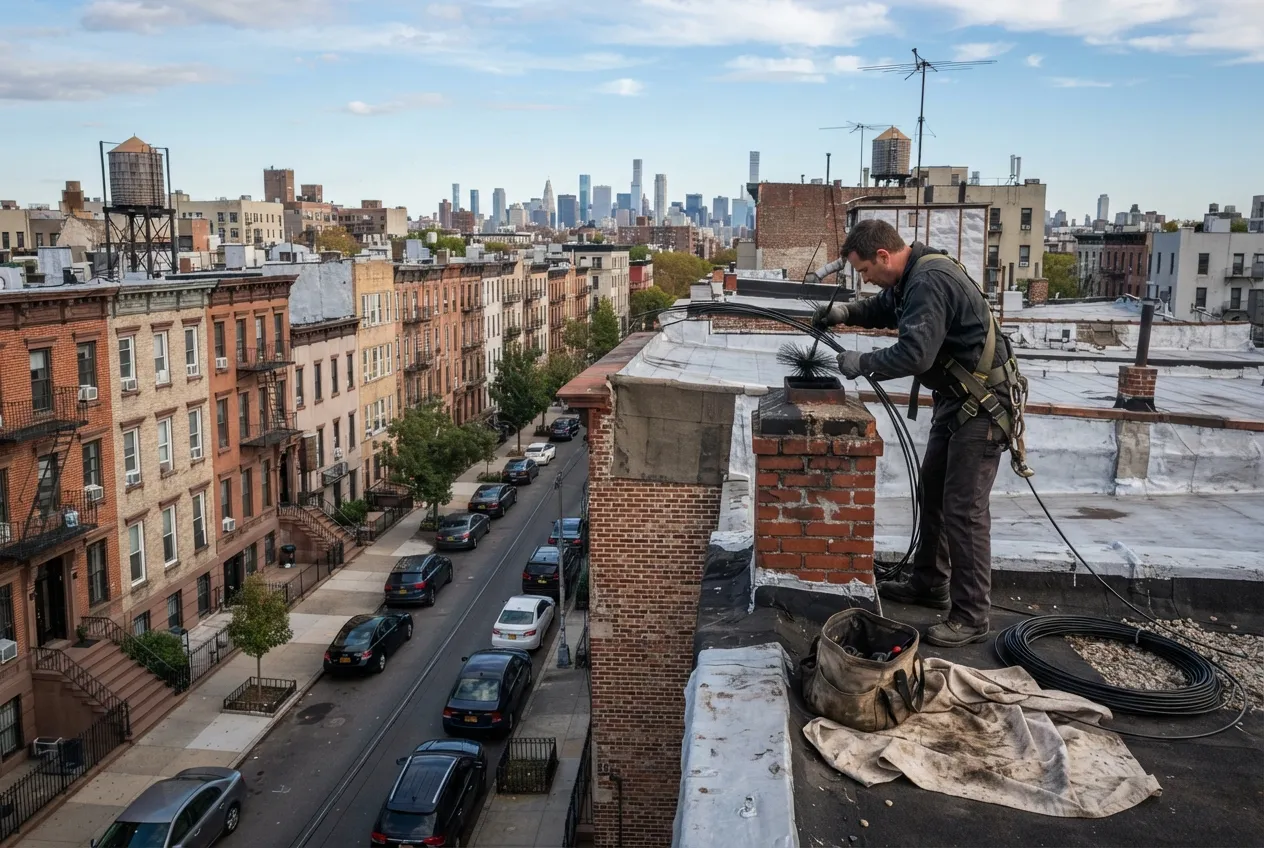
On the roof, the crew uses proper ladders and fall protection and works from the top of the chimney where access allows. That is also where we check the cap, crown and flashing, which are common sources of water and animal entry. When we're done, we vacuum the work area and fold the drop cloths inward so nothing is left behind.
Time for your annual chimney check?
The standard we follow
Our work follows NFPA 211, the national standard for chimneys, fireplaces and vents, which calls for them to be inspected once a year. Chimney professionals use three inspection levels. Level 1 applies when nothing about the system has changed. Level 2 applies when the system changes, such as a new appliance or a switch of fuel, or when the home is sold. Level 3 applies when a hidden hazard has to be reached by opening part of the chimney or building.
This matters in New York City. When a building converts its boiler from oil to gas, the chimney has to be evaluated as part of the work. A new liner is often needed, because gas exhaust produces acidic condensate that can corrode a masonry flue. The city's heat season also runs from October 1 through May 31, when heating systems carry their heaviest load. Booking a sweep before October gives you time to handle any repairs before the cold weather arrives.
What affects the price
Every chimney is different, so we quote after we understand your system. These are the main factors.
- Chimney height and how easy the roof is to reach
- Fuel type: wood, gas or oil
- Flue size, shape and current condition
- How much soot, creosote or debris has built up
- Whether a camera inspection is needed
- Whether repairs are needed, such as a new cap, crown work or a liner
How a visit works
When you contact us, we ask a few questions: what the chimney serves, when it was last cleaned, and anything you have noticed, such as smells, leaks or noises. We then schedule a time that works for you. For wood-burning fireplaces, please let the fire go out and the ashes cool for at least a day beforehand.
On the day of the visit, the crew sets up protection inside, sweeps and inspects the system, and checks the roof components. Before leaving, the technician walks you through what they found, with photos where they help. If anything needs repair, you get a clear explanation and a written recommendation. You decide what to do next, with no pressure to book on the spot.
Chimney Sweep by city
- Chimney Sweep in Lenox Hill
- Chimney Sweep in Roosevelt Island
- Chimney Sweep in Upper East Side
- Chimney Sweep in Yorkville
- Chimney Sweep in Carnegie Hill
- Chimney Sweep in Queensbridge
- Chimney Sweep in Ravenswood
- Chimney Sweep in Dutch Kills
- Chimney Sweep in Old Astoria
- Chimney Sweep in Hallets Point
- Chimney Sweep in East Midtown
- Chimney Sweep in Turtle Bay