The short answer
Roosevelt Island homes and buildings with a fireplace or a boiler flue should have the chimney inspected once a year, as the NFPA 211 standard calls for, and swept when soot or creosote has built up. The best time to schedule is before New York City's heat season starts on October 1. Buildings converting from oil to gas also need the chimney evaluated, and often relined.
Most homes on Roosevelt Island are apartments, and many residents never think about a chimney until a fireplace smells smoky or building management asks for an inspection. A chimney still has to be cleaned and checked when a home or building has a wood-burning fireplace, a gas fireplace, or a boiler that vents through a masonry flue. PrimeFlue Chimney Services is based in Manhattan, with our office on East 75th Street, and our certified technicians sweep chimneys for Roosevelt Island residents, condo and co-op boards, and building staff in ZIP code 10044.
What a chimney sweep includes
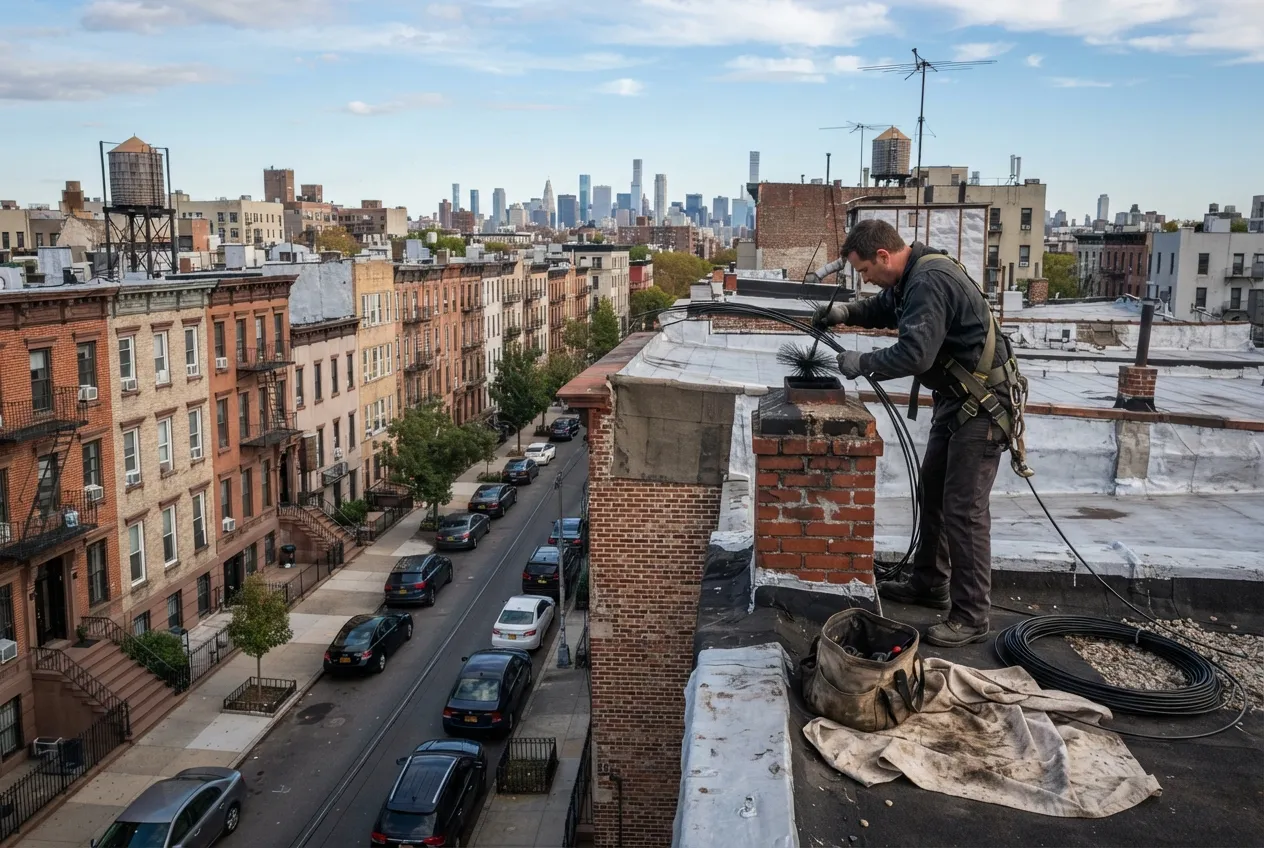
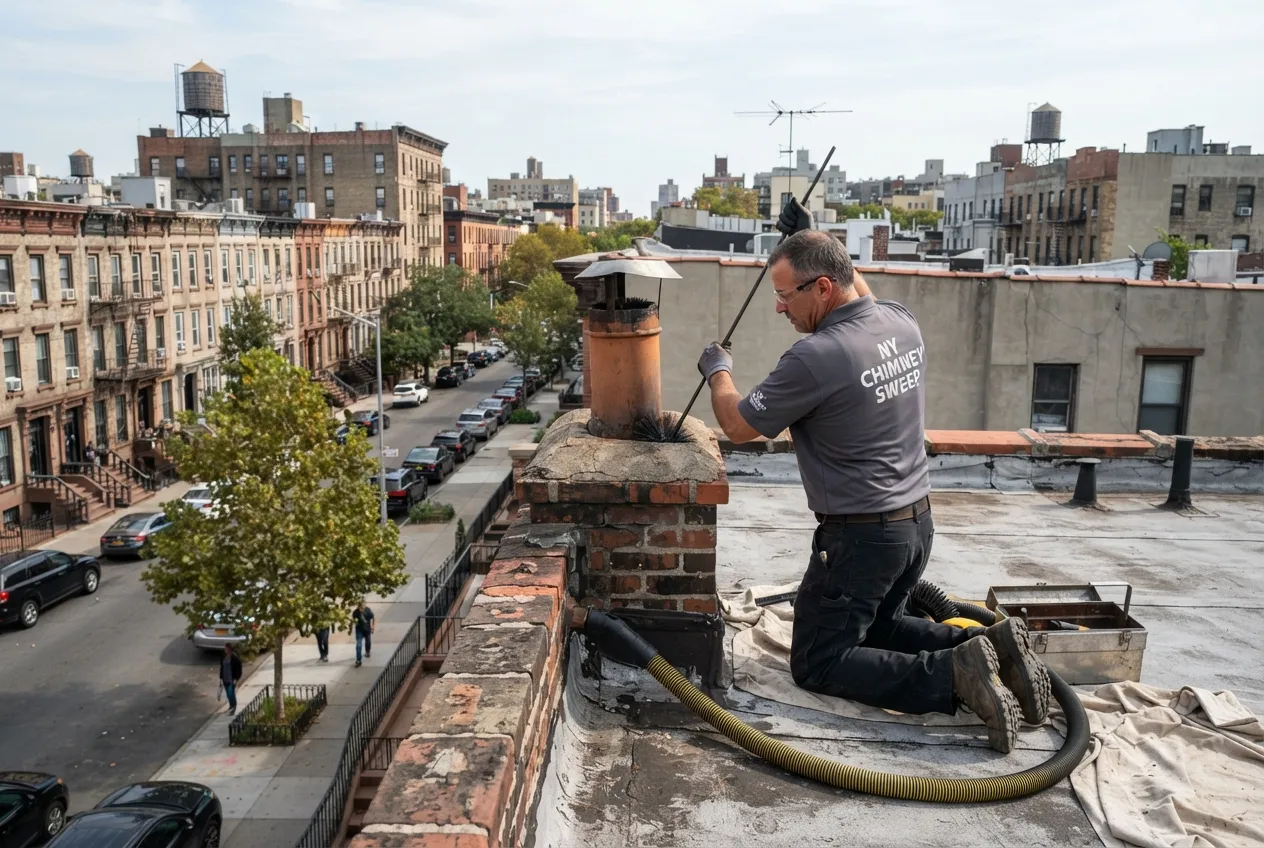
A sweep removes what fires and boilers leave behind in the flue: soot, creosote, loose debris, and anything that has blocked the opening. Creosote is the main concern with wood-burning fireplaces because it is flammable and builds up with every fire. Gas and oil appliances leave less visible residue, but their flues can still collect debris, scale, or crumbling mortar that affects how exhaust leaves the building.
Every sweep starts and ends with a look at the flue so you know what was there and what condition it is in afterward.
- Protecting floors and furniture before work begins
- Brushing the flue and smoke chamber to remove soot and creosote
- Cleaning the firebox, damper, and smoke shelf
- Clearing debris or nesting material from the flue
- Checking the damper, liner, and visible masonry for damage
- A plain-language report of what we found and anything that needs attention
Chimneys in Roosevelt Island apartment buildings
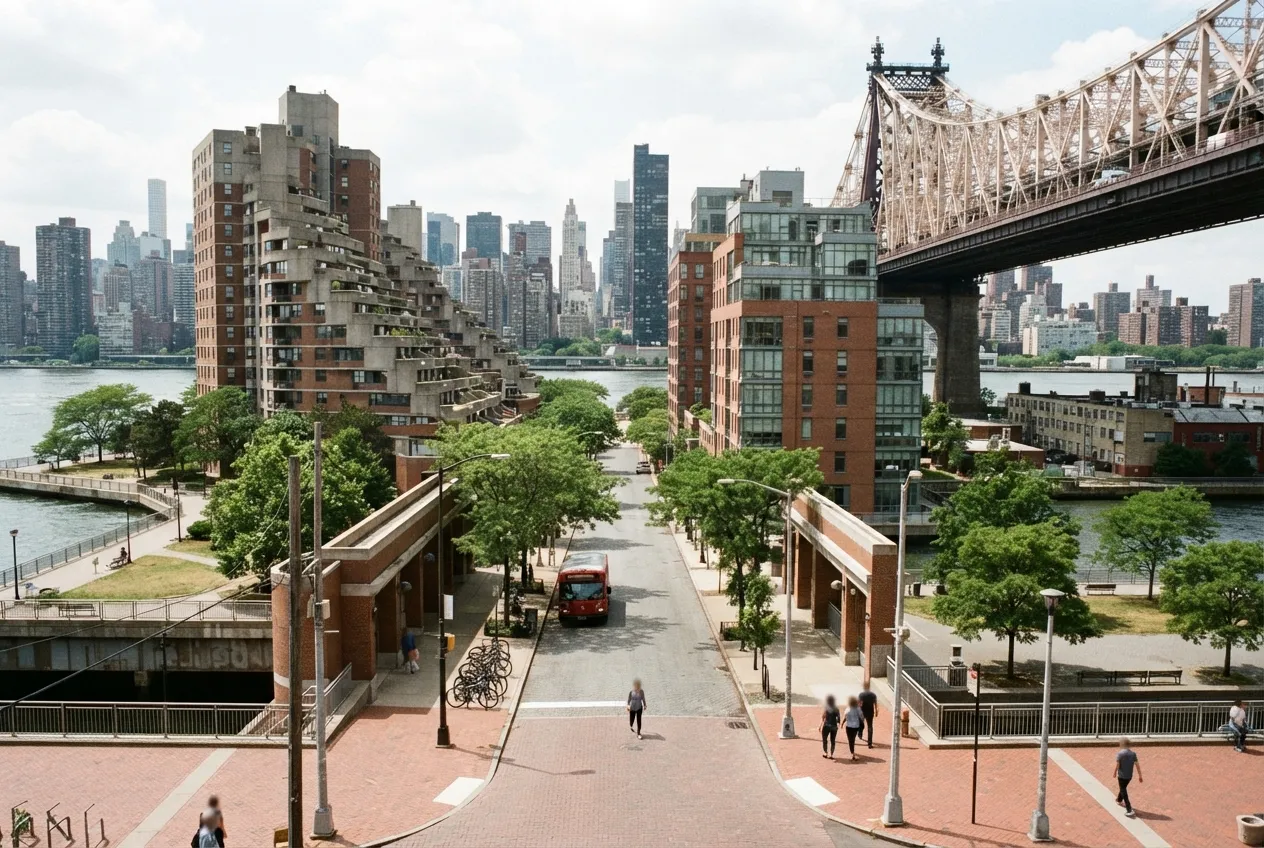
Housing on the island is mostly multi-unit apartment buildings, including rentals, condominiums, and co-ops. In these buildings, a chimney may serve a single unit's fireplace, or it may be a larger flue that carries exhaust from the building's boiler. Some fireplaces connect to flues shared with other units, so a problem in one apartment can affect the neighbors above or below.
Because of that, we coordinate with building management or the superintendent before any work. Access to the roof, the boiler room, or a shared flue usually has to be arranged in advance, and many buildings have their own rules about work hours and elevator use. If you are a unit owner, it helps to check with management first so the visit goes smoothly.
Annual inspections and the heat season
The NFPA 211 standard calls for chimneys, fireplaces, and vents to be inspected once a year. A Level 1 inspection is the routine check when nothing has changed. A Level 2 inspection applies when the system changes, such as a new appliance or a switch in fuel, or when the home is sold. A Level 3 inspection is used when a hidden hazard can only be reached by opening part of the chimney or the building.
New York City's heat season runs from October 1 through May 31, when building owners must keep apartments heated to the city's minimum temperatures. A boiler flue that is blocked or damaged during that stretch is a serious problem, so we recommend scheduling sweeps and inspections in late spring or summer, after the heating season ends and before the next one begins.
Time for your annual chimney check?
Oil-to-gas conversions and chimney liners
When a New York City building converts its boiler from oil to gas, the chimney has to be evaluated as part of the work. A new liner is often needed because gas exhaust produces acidic condensate that can corrode a masonry flue over time. If your building is planning a conversion, we can sweep and inspect the chimney so the board and the contractor know its condition before decisions are made about relining.
Nearby neighborhoods we serve
Along with Roosevelt Island, our technicians handle chimney sweeps across the East Side of Manhattan, including Lenox Hill, the Upper East Side, Carnegie Hill, Yorkville, and East Midtown. That covers ZIP codes 10021, 10065, 10075, and 10162 as well as 10044. Across these neighborhoods we work on brownstone and rowhouse fireplaces, pre-war apartment buildings, and newer buildings with boiler or gas fireplace flues.
More services in Roosevelt Island
- Chimney Inspection in Roosevelt Island
- Chimney Repair in Roosevelt Island
- Air Duct Cleaning in Roosevelt Island
- Chimney Liner Installation in Roosevelt Island