The short answer
PrimeFlue sweeps fireplace and heating-appliance chimneys in Carnegie Hill townhouses, brownstones and pre-war apartment buildings. The NFPA 211 standard calls for a yearly inspection, so we pair each sweep with an inspection and explain what we find in plain terms.
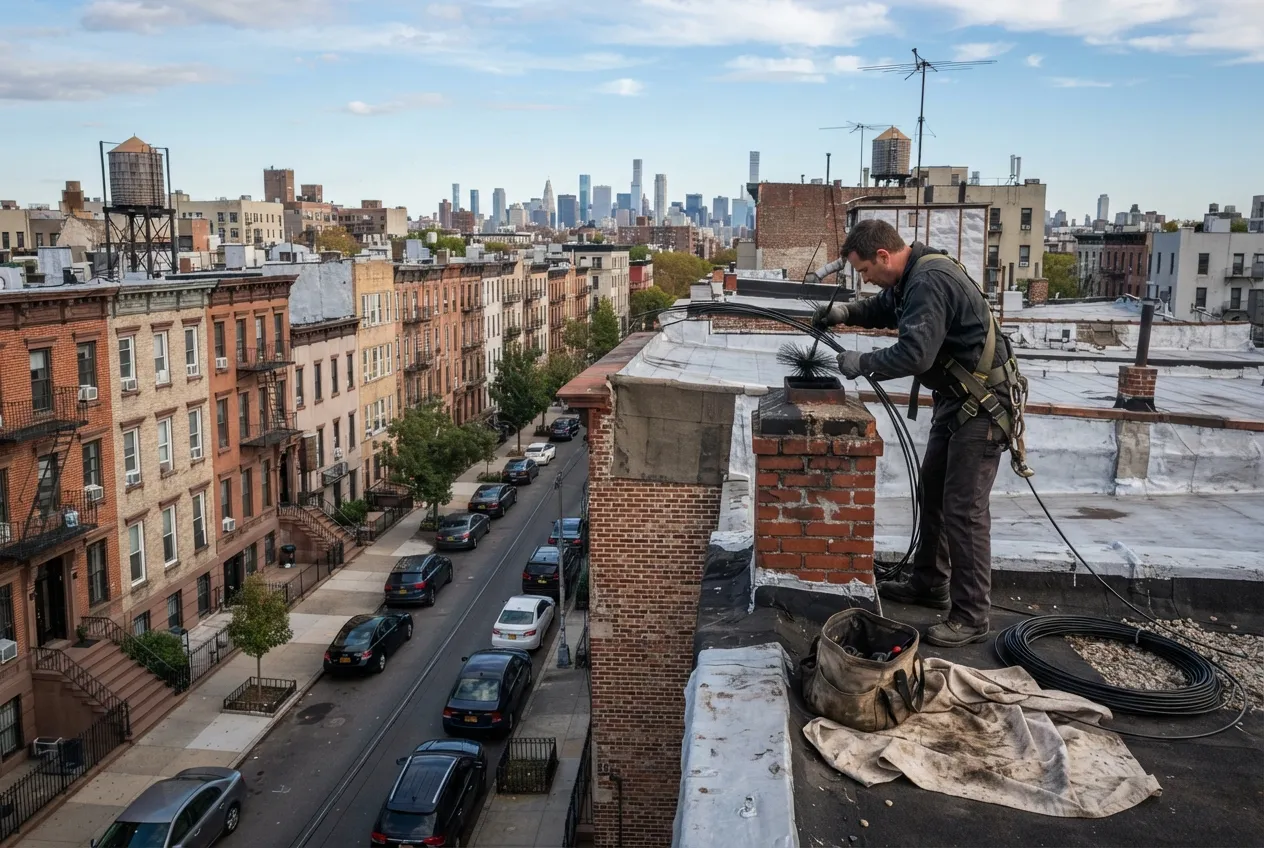
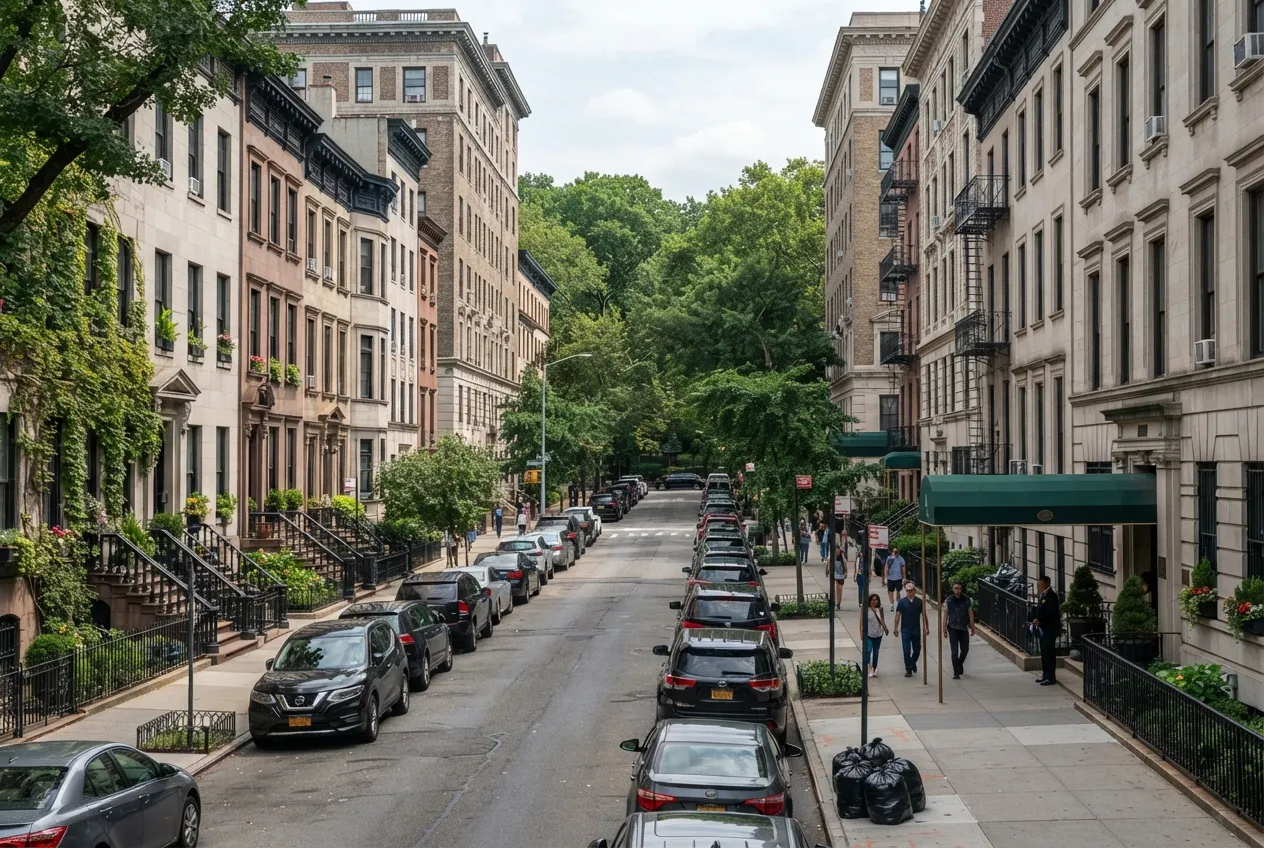
Carnegie Hill is about a mile from our Manhattan office, so PrimeFlue Chimney Services reaches the neighborhood quickly. We sweep and inspect chimneys in the area's brownstones, rowhouses and pre-war apartment buildings. Many of these homes still have working wood-burning fireplaces, and many buildings send boiler exhaust up masonry flues that have been in service for generations. A sweep removes the soot and creosote that build up inside a flue. It also gives a certified technician a close look at the liner, damper and smoke chamber before you light a fire or the heat comes on for the season.
Why Carnegie Hill Chimneys Need Regular Sweeping
Older Manhattan masonry chimneys tend to be tall and narrow, and many have offsets where the flue bends around floors or neighboring walls. Creosote, the tar-like residue left by burning wood, collects in those bends and on rough mortar joints. Enough of it can catch fire inside the flue. Soot and debris can also narrow the passage until smoke drifts back into the room instead of drawing up and out.
Fireplaces that see only occasional use still need attention. Birds, leaves and fallen mortar can block a flue that sat unused for a few seasons. A cracked or missing liner tile is easy to miss from the hearth but shows up clearly during a sweep and inspection.
What Our Chimney Sweep Includes
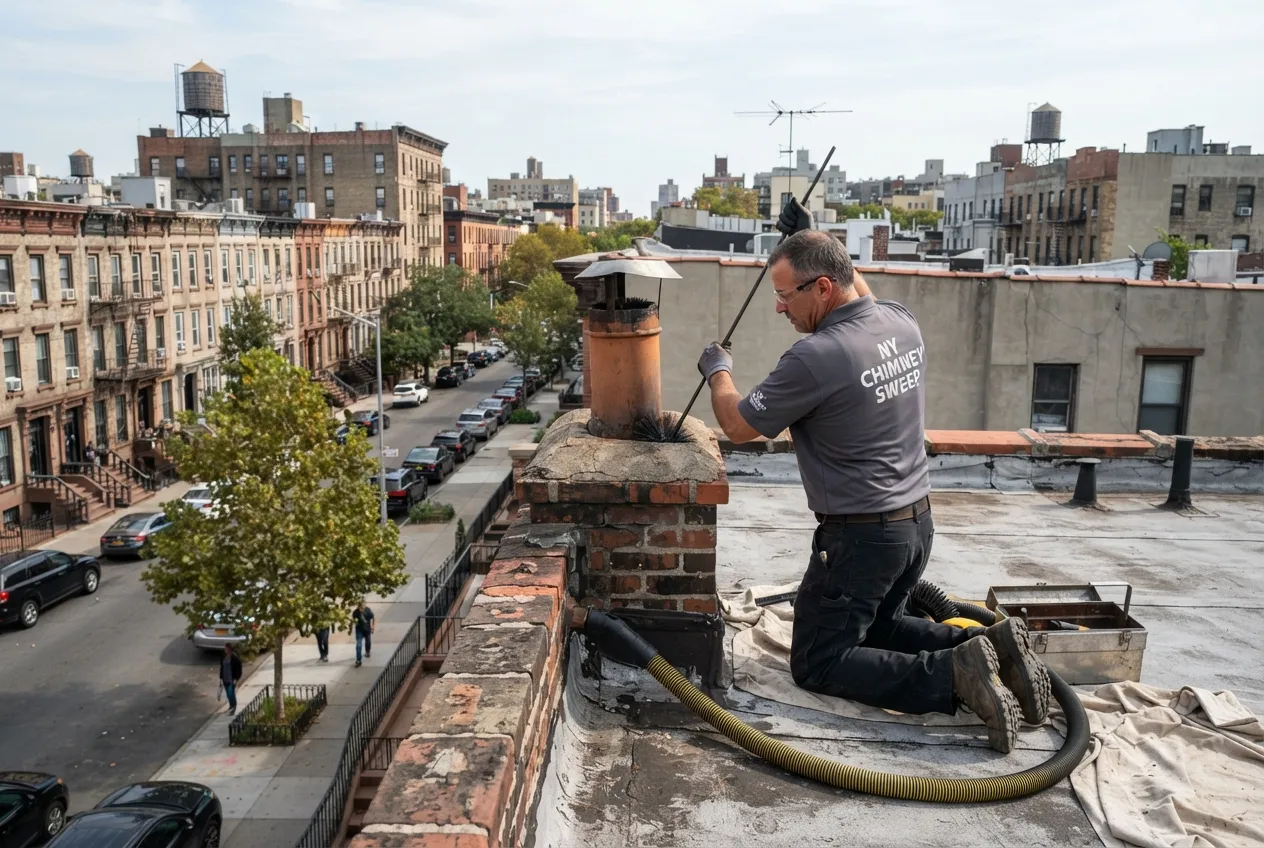
We work carefully in finished interiors. That matters in homes with original woodwork, marble mantels and plaster walls. We set up drop cloths and seal the firebox opening, and we use vacuum containment so soot stays in the chimney and out of your living room.
- Brushing the flue from top to bottom to remove soot, creosote and loose debris
- Cleaning the firebox, smoke shelf and smoke chamber
- Checking that the damper opens, closes and seals properly
- Looking for cracked liner tiles, gaps in mortar joints and signs of water entry
- Checking the chimney cap and crown where we have safe access
- Explaining what we found and what, if anything, needs repair
Inspection Levels and the Yearly Standard
The NFPA 211 standard calls for chimneys, fireplaces and vents to be inspected once a year. Chimney professionals use three inspection levels. A Level 1 inspection fits when nothing about the system has changed. A Level 2 inspection is called for when the system changes, such as a new appliance or a switch of fuel, or when the home is sold. A Level 3 inspection is used when a hidden hazard has to be reached by opening part of the chimney or building.
For most Carnegie Hill homeowners, a yearly sweep with a Level 1 inspection is the routine. If you are buying or selling a townhouse, or you have changed how the home is heated, ask us about a Level 2 inspection instead.
Time for your annual chimney check?
Boiler Flues and Oil-to-Gas Conversions
Chimneys in this neighborhood often serve the heating system, not just the fireplace. When a New York City building converts its boiler from oil to gas, the chimney has to be evaluated as part of the work. A new liner is often needed because gas exhaust produces acidic condensate that can corrode a masonry flue. If your building is planning a conversion, or finished one and never had the flue checked, our technicians can inspect it and tell you whether the existing liner is suitable.
For co-op and condo buildings, we can coordinate with building management or the superintendent on access to the roof and boiler room.
Timing Your Sweep Around Heat Season
New York City's heat season runs from October 1 through May 31. During those months, building owners must keep apartments heated to the city's minimum temperatures. Taking a boiler flue out of service in midwinter is disruptive, so late spring and summer are the practical time to sweep and fix anything we find. Fireplace owners benefit from the same timing, since early fall is when schedules fill up. We also serve the Upper East Side, Yorkville, Lenox Hill, Roosevelt Island and East Midtown.
More services in Carnegie Hill
- Chimney Inspection in Carnegie Hill
- Chimney Repair in Carnegie Hill
- Air Duct Cleaning in Carnegie Hill
- Chimney Liner Installation in Carnegie Hill