The short answer
A chimney sweep removes creosote, soot and debris that can catch fire or block exhaust. The NFPA 211 standard calls for chimneys, fireplaces and vents to be inspected once a year, and a sweep is often scheduled at the same visit. In Yorkville, booking before heating season starts in October is the practical choice.
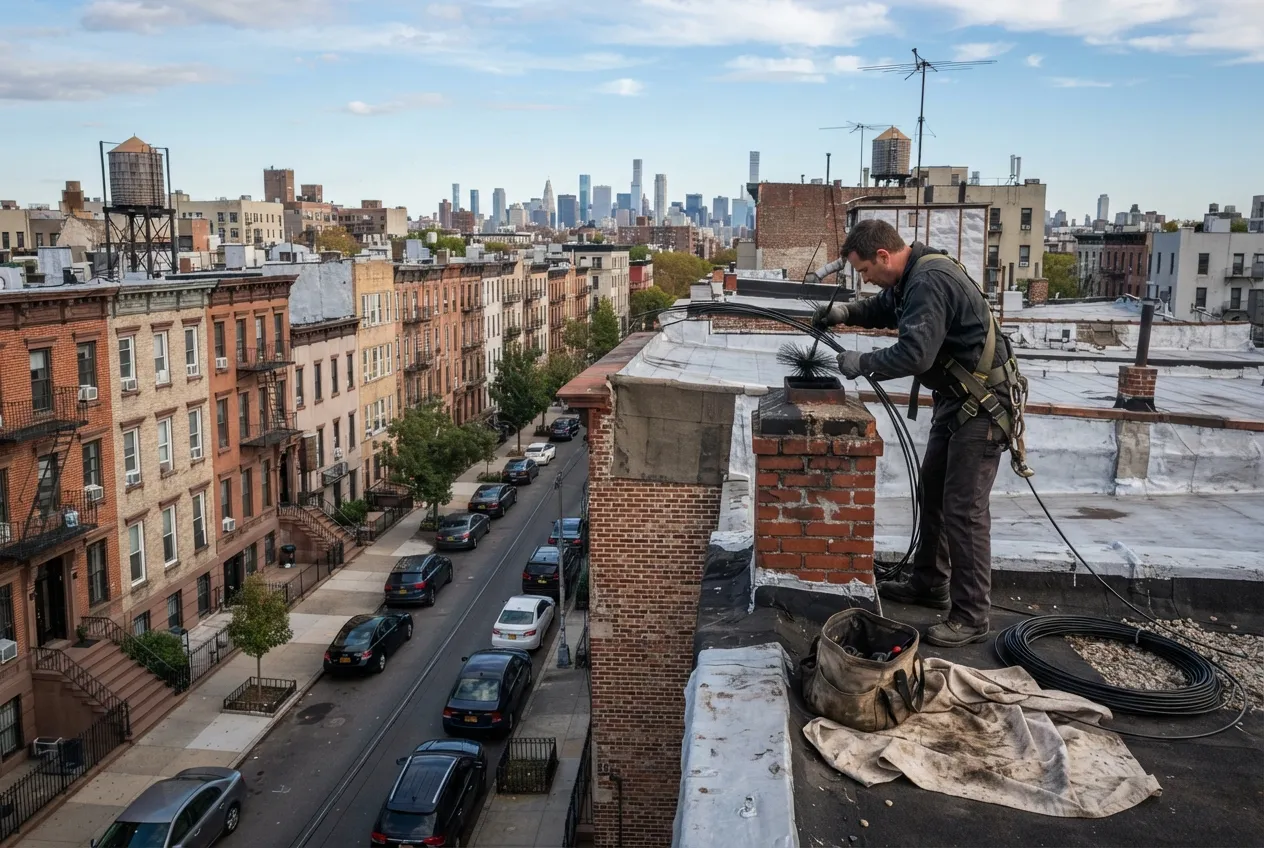
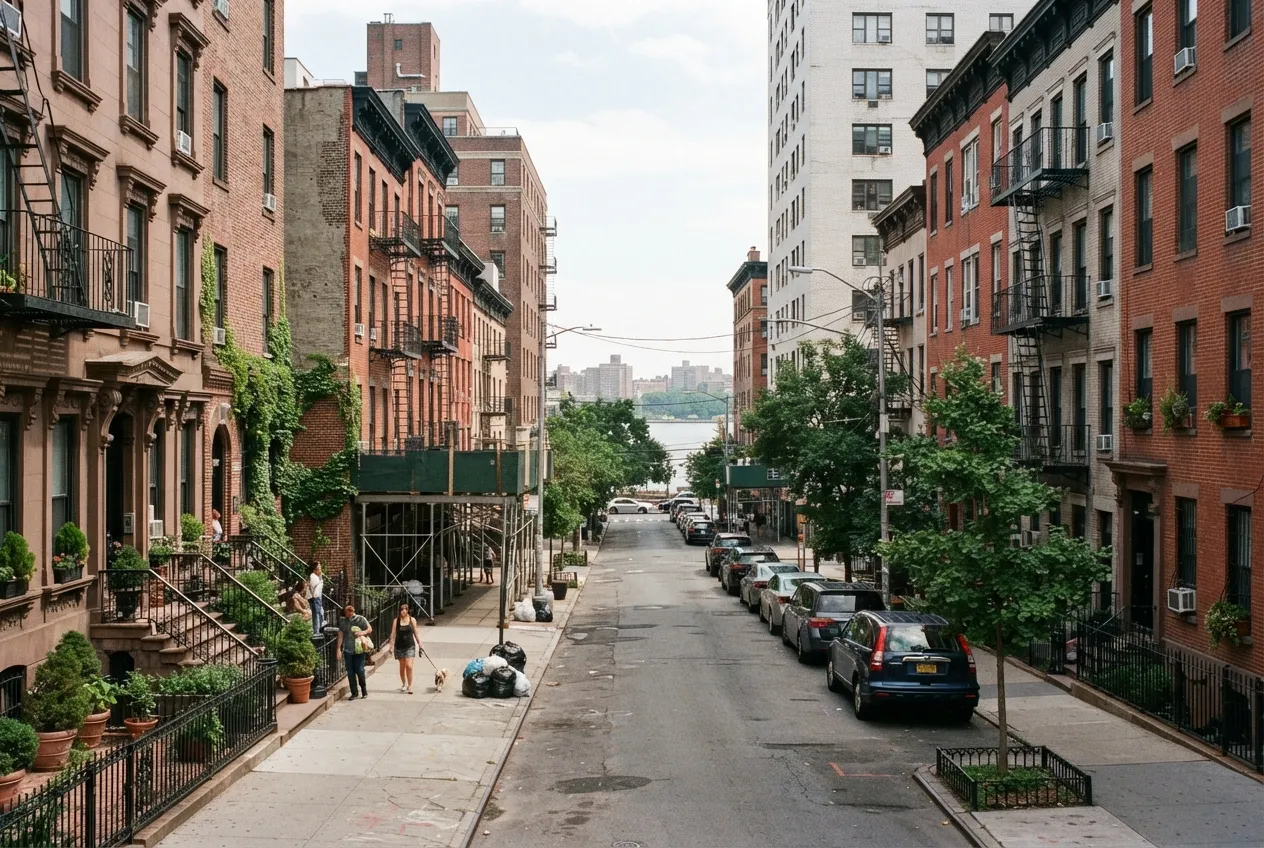
Yorkville's housing mix of brownstones, rowhouses, walk-ups and pre-war apartment buildings means many chimneys have been in service for generations, often with fireplaces that sit unused for long stretches and then get lit on the first cold night. PrimeFlue Chimney Services sweeps chimneys throughout Yorkville in ZIP codes 10028 and 10128, about a mile north of our Manhattan office. Our certified technicians clean the flue, check what they find along the way, and explain the condition of your chimney in plain terms so you can decide what comes next.
What a Chimney Sweep Covers in a Yorkville Home
A sweep cleans the inside of the flue, the smoke chamber, the damper area and the firebox. Wood fires leave creosote, a tar-like residue that builds in layers and can ignite if it gets thick enough. Gas and oil appliances leave less visible buildup, but their flues still collect soot, debris and sometimes nesting material that can restrict the draft.
We protect the room before starting, work from the bottom, the top or both depending on access, and contain dust as we go. After the sweep, we tell you what we saw: the condition of the liner and damper, any cracks or gaps we noticed, and whether anything calls for a closer look.
- Removal of creosote, soot and loose debris from the flue
- Cleaning of the smoke chamber, smoke shelf and firebox
- Check of the damper for proper opening and closing
- Visual review of the liner, crown and cap where accessible
- A plain-language rundown of findings when we finish
Chimneys in Brownstones, Rowhouses and Pre-War Buildings
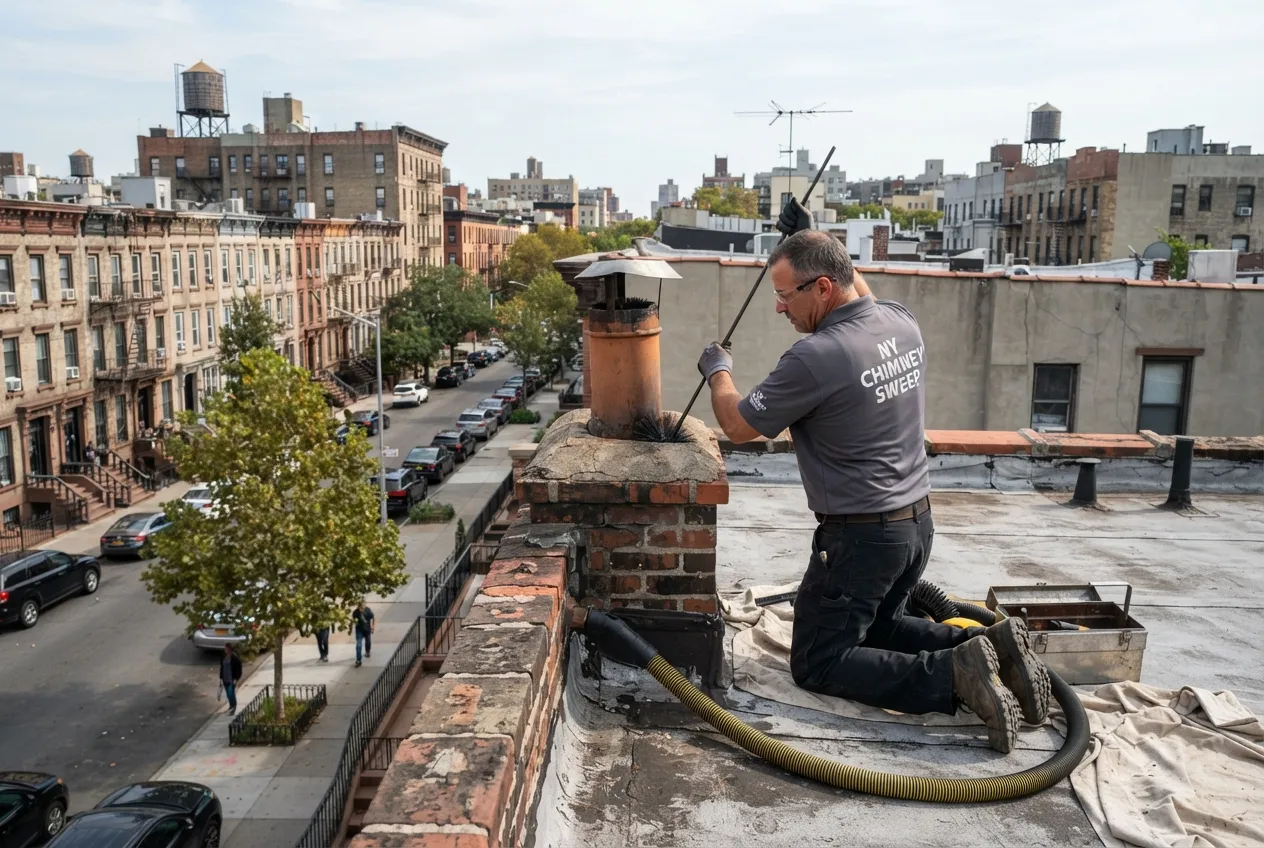
Many older Yorkville homes were built with several fireplaces sharing one masonry chimney stack, with separate flues running side by side. Over time some flues get sealed off, others get converted to decorative use, and one may still serve a working fireplace. Knowing which flue goes where matters before anyone lights a fire, and we trace it as part of the visit.
Older masonry flues may be unlined or have clay tile liners with cracked or missing sections. Roof access in attached rowhouses and apartment buildings can also take coordination with neighbors, a superintendent or building management. We plan for that ahead of time so the work goes smoothly.
Timing Your Sweep Around Heating Season
New York City's heat season runs from October 1 through May 31, when building owners must keep apartments heated to the city's minimum temperatures. For homeowners and building owners whose boilers or furnaces vent through a chimney, that schedule makes late summer and early fall the sensible time for a sweep and inspection. You find problems before the heat has to run every day.
If you use a wood-burning fireplace, the same window works well. Cleaning before the first fire of the season means you start with a clear flue, and any repairs can be handled before you depend on the fireplace.
Time for your annual chimney check?
Oil-to-Gas Conversions and Chimney Liners
Many Manhattan buildings have switched their boilers from oil to gas. When a New York City building converts, the chimney has to be evaluated as part of the work, and a new liner is often needed because gas exhaust produces acidic condensate that can corrode a masonry flue.
A change like this is also when the NFPA 211 standard calls for a more detailed Level 2 inspection, since the venting system itself has changed. A thorough sweep comes first, because a dirty flue hides the masonry and makes an accurate evaluation harder. If your building has converted or is planning to, we can sweep and inspect the chimney so you know where it stands.
Signs Your Chimney Needs Attention
Some warning signs are easy to miss, especially in a fireplace that only gets used a few times a year. If you notice any of the following, schedule a sweep and inspection before your next fire.
- A strong smoky or musty smell from the fireplace, especially in humid weather
- Smoke drifting into the room instead of drawing up the flue
- Black, flaky or shiny deposits inside the firebox or on the damper
- Bits of tile, mortar or masonry falling into the firebox
- Animal sounds, nesting material or debris coming down the flue
- A fireplace that hasn't been used or checked in years
More services in Yorkville
- Chimney Inspection in Yorkville
- Chimney Repair in Yorkville
- Air Duct Cleaning in Yorkville
- Chimney Liner Installation in Yorkville