The short answer
A chimney sweep clears soot, creosote and blockages from your flue so smoke and exhaust vent safely, and it's best paired with the yearly inspection that the NFPA 211 standard calls for. In Dutch Kills, scheduling before New York City's heat season begins on October 1 helps keep fireplaces and boiler chimneys ready for winter.
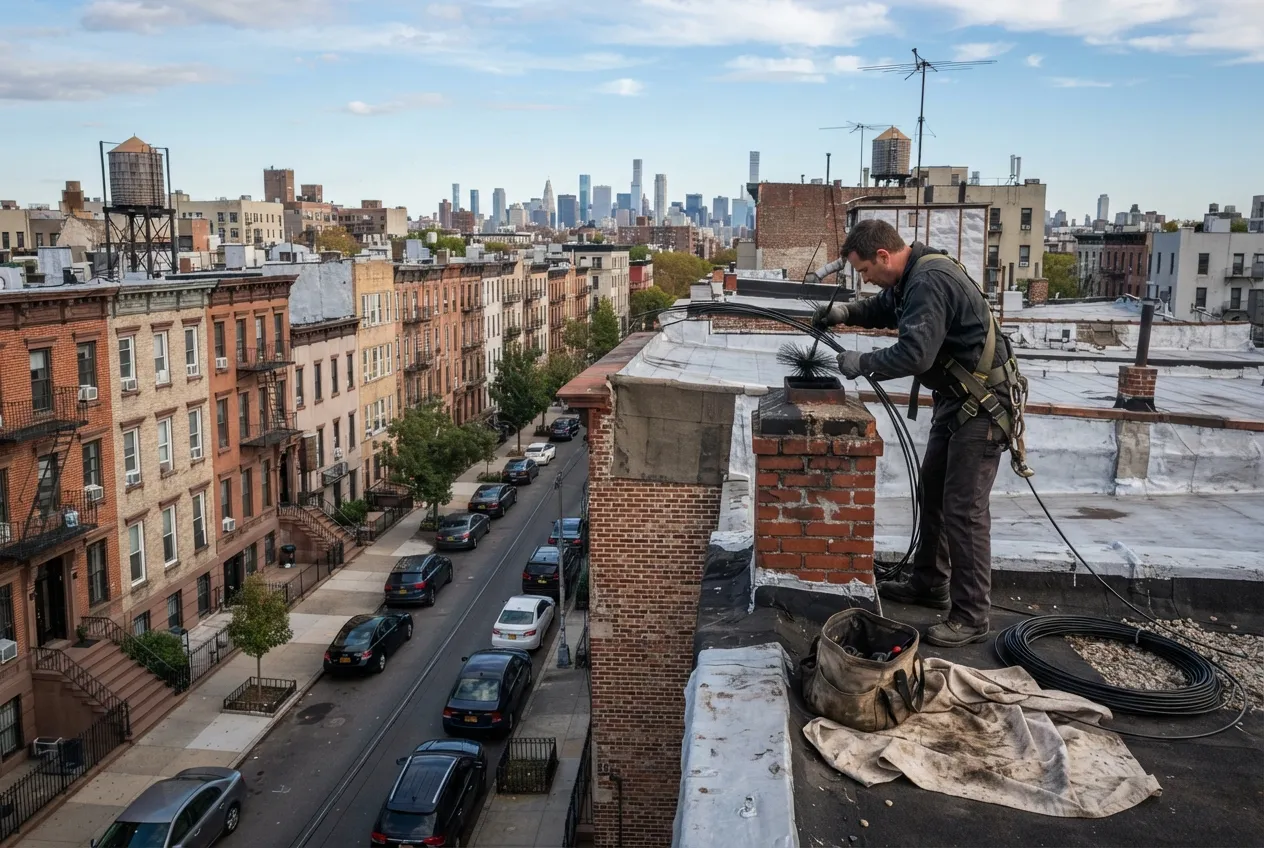
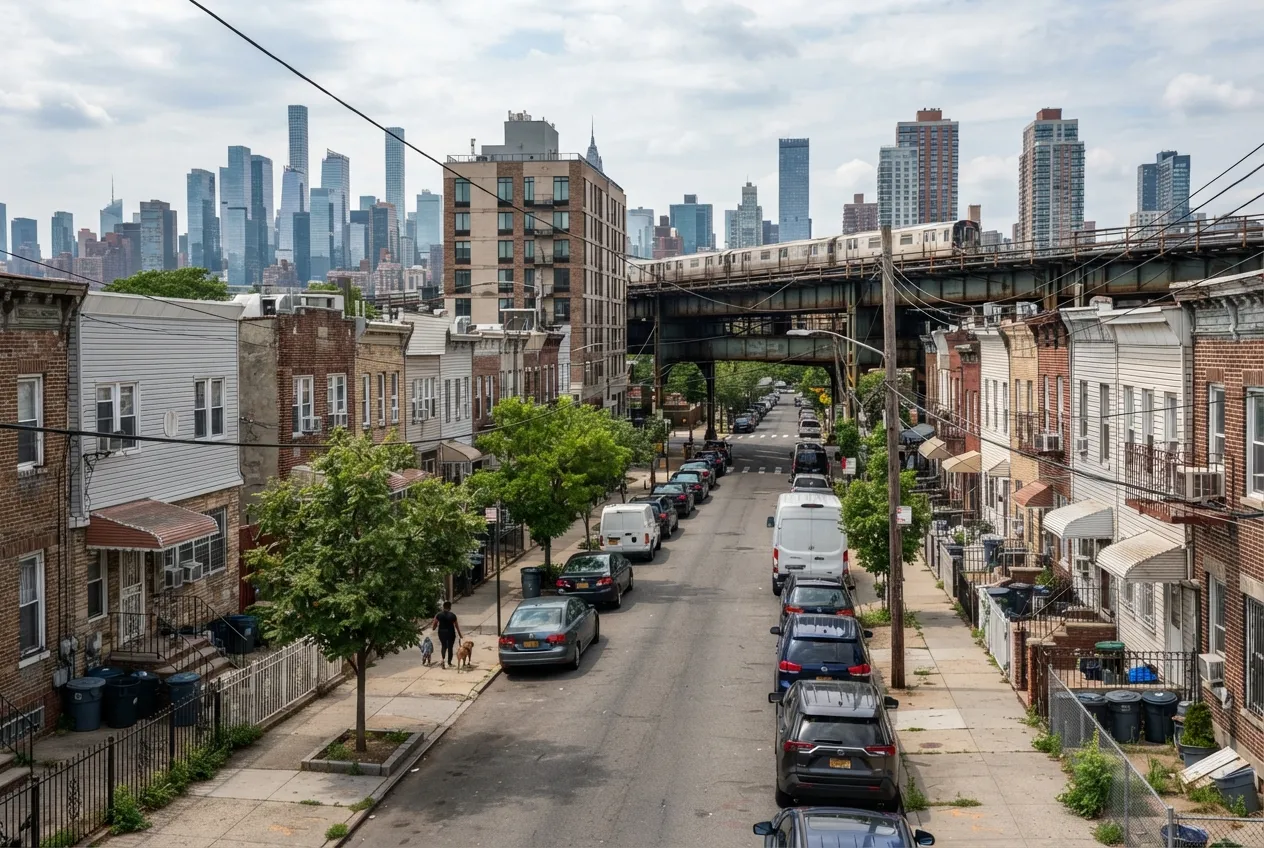
Dutch Kills sits about a mile southeast of our Manhattan office, so PrimeFlue Chimney Services can reach homes in ZIP code 11106 without a long trip across the city. The neighborhood mixes older rowhouses, small multi-family buildings and pre-war apartment buildings, and many of them still have working fireplaces, masonry chimneys serving boilers, or flues that have changed use over the decades. A chimney sweep removes the soot, creosote and debris that build up inside those flues so smoke and exhaust can leave the house the way they should. This page explains what a sweep involves for Dutch Kills homes, when to schedule one, and what our certified technicians look for while they work.
Why Dutch Kills Chimneys Need Regular Sweeping
Many homes in Dutch Kills are older masonry buildings, and their chimneys have often served more than one appliance over their lifetime. A flue that once vented a coal stove or an oil burner may now serve a gas boiler, a wood-burning fireplace, or nothing at all. Each fuel leaves something different behind. Wood fires deposit creosote, a tarry residue that can ignite. Oil leaves soot and scale. Gas burns cleaner, but its exhaust produces moisture and acidic condensate that can wear down an unlined masonry flue.
Sweeping removes these deposits before they narrow the flue or catch fire. It also gives the technician a clear view of the flue walls, which matters in older buildings where mortar joints and clay liners may have aged. Birds, leaves and fallen masonry can also block a chimney that sees little use during the warmer months.
What a Chimney Sweep Includes
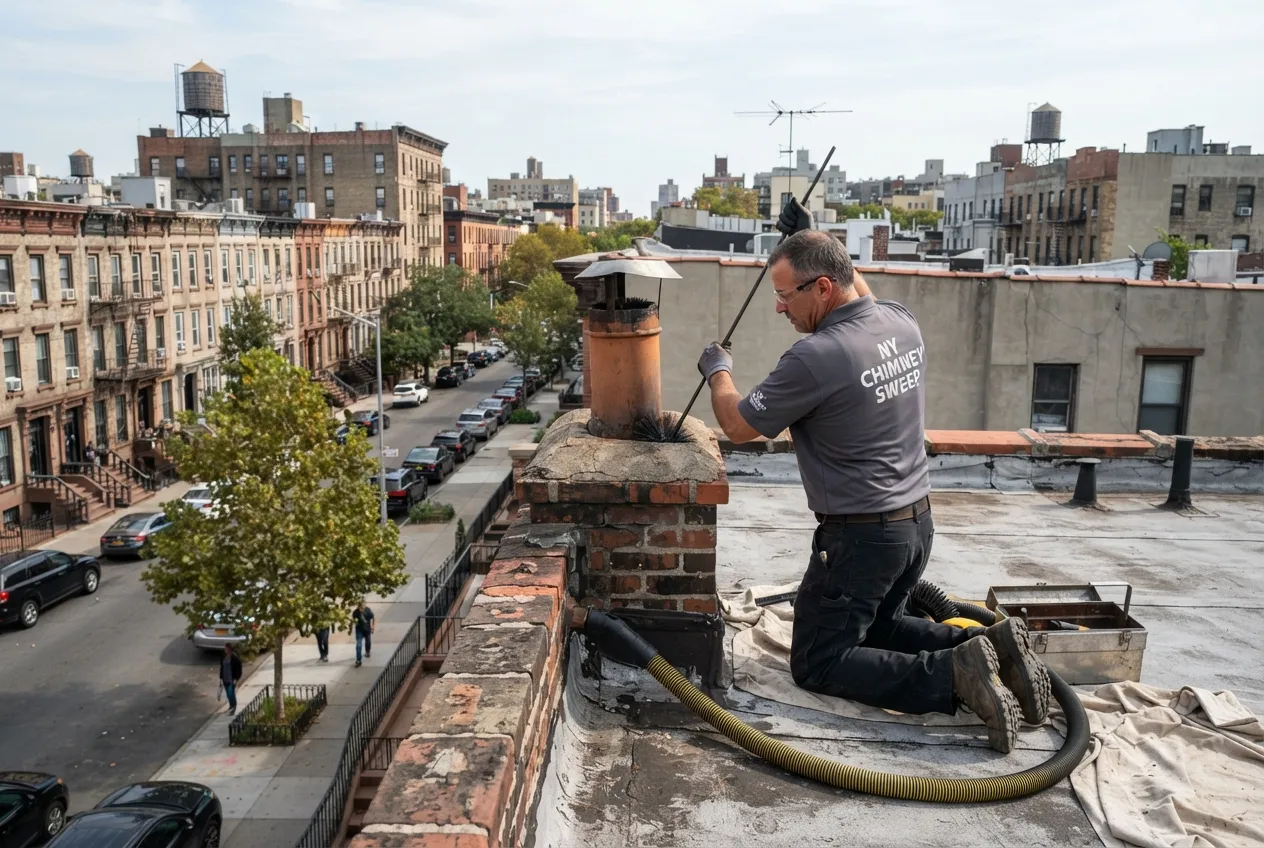
Our certified technicians set up drop cloths and a vacuum system before any brushing starts, so soot stays out of your living space. Most apartments and rowhouses in the neighborhood can be swept from the firebox or the appliance connection, and roof access is used when the building allows it and the job calls for it.
- Brushing the flue from top to bottom to remove soot and creosote
- Cleaning the firebox, smoke shelf and damper area on fireplaces
- Clearing debris, nesting material and loose masonry from the flue
- Checking that the damper opens, closes and seals properly
- Looking at the chimney cap and crown for damage that lets water or animals in
- Noting any cracks, gaps or liner problems we can see during the cleaning
- Explaining what we found and whether anything needs follow-up
Sweeping and Annual Inspections
The NFPA 211 standard calls for chimneys, fireplaces and vents to be inspected once a year. Sweeping and inspection go together: the cleaning removes buildup, and the inspection confirms the flue is sound enough to keep using. When nothing about your system has changed, a Level 1 inspection is usually enough.
A Level 2 inspection applies when the system changes, such as a new appliance or a switch of fuel, or when the home is sold. That comes up often in Dutch Kills, where buildings change hands and older heating equipment gets replaced. A Level 3 inspection is reserved for situations where a hidden hazard can only be reached by opening part of the chimney or the building.
Time for your annual chimney check?
Oil-to-Gas Conversions and Boiler Chimneys
If your building is switching its boiler from oil to gas, the chimney has to be evaluated as part of that work in New York City. A new liner is often needed, because gas exhaust produces acidic condensate that can corrode a masonry flue designed for oil. Sweeping the old oil soot out of the flue is usually the first step, since the technician needs a clean surface to judge the condition of the masonry and any existing liner.
We can sweep and assess the chimney so you and your heating contractor know what you're working with before the new equipment goes in.
When to Schedule in Dutch Kills
New York City's heat season runs from October 1 through May 31, when building owners must keep apartments heated to the city's minimum temperatures. Boiler chimneys in multi-family buildings get heavy use during those months, so late summer and early fall are good times to have them swept and inspected. Fireplace owners benefit from the same timing, since a clean flue is ready for the first cold night.
You should also call between scheduled visits if you notice a smoky smell, smoke coming back into the room, a strong odor in humid weather, flaking material in the firebox, or signs of animals in the chimney.
More services in Dutch Kills
- Chimney Inspection in Dutch Kills
- Chimney Repair in Dutch Kills
- Air Duct Cleaning in Dutch Kills
- Chimney Liner Installation in Dutch Kills