The short answer
PrimeFlue repairs chimneys on Roosevelt Island, including crowns, mortar joints, flashing, caps, dampers, and flue liners, with special attention to boiler flues in apartment buildings. We recommend scheduling repairs outside New York City's October 1 to May 31 heat season whenever possible. A Level 2 inspection is the right starting point after a boiler change or fuel conversion.
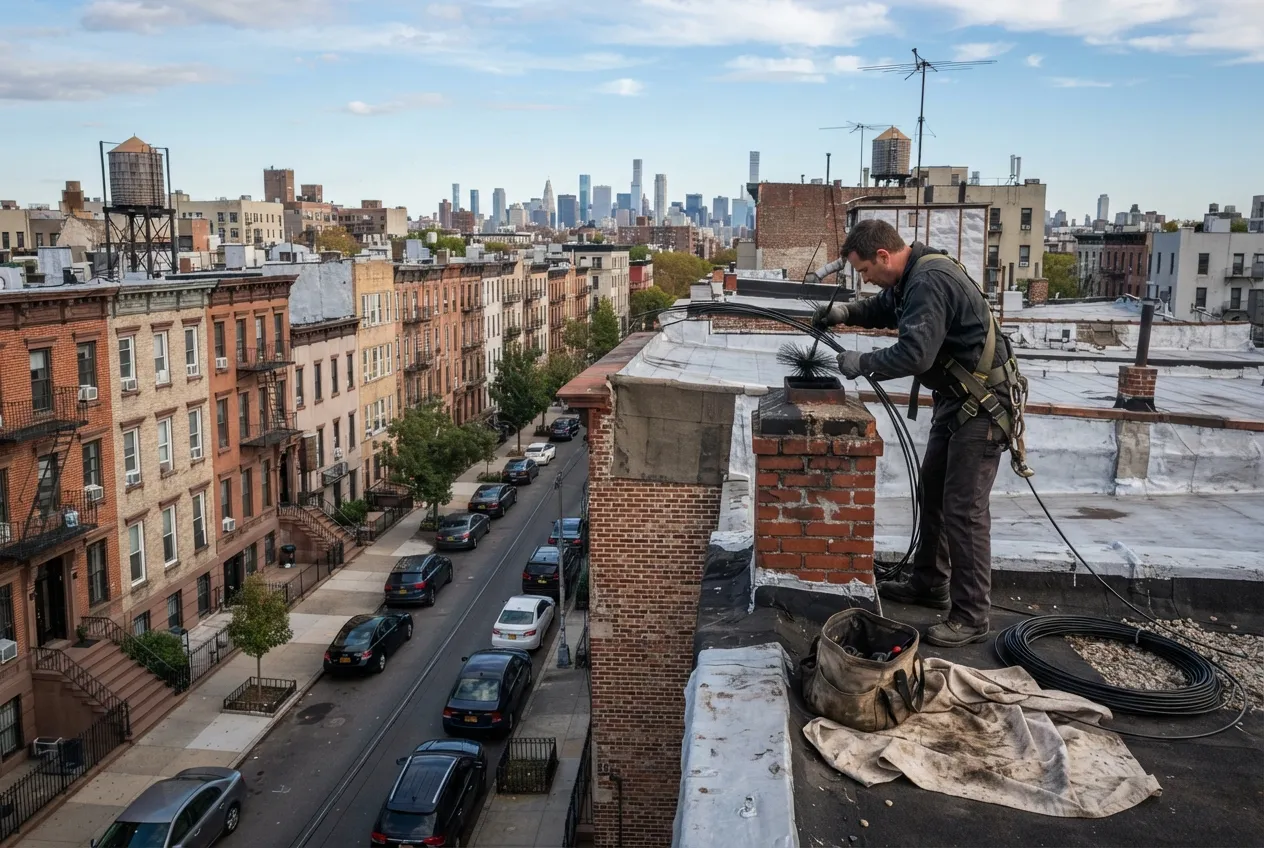
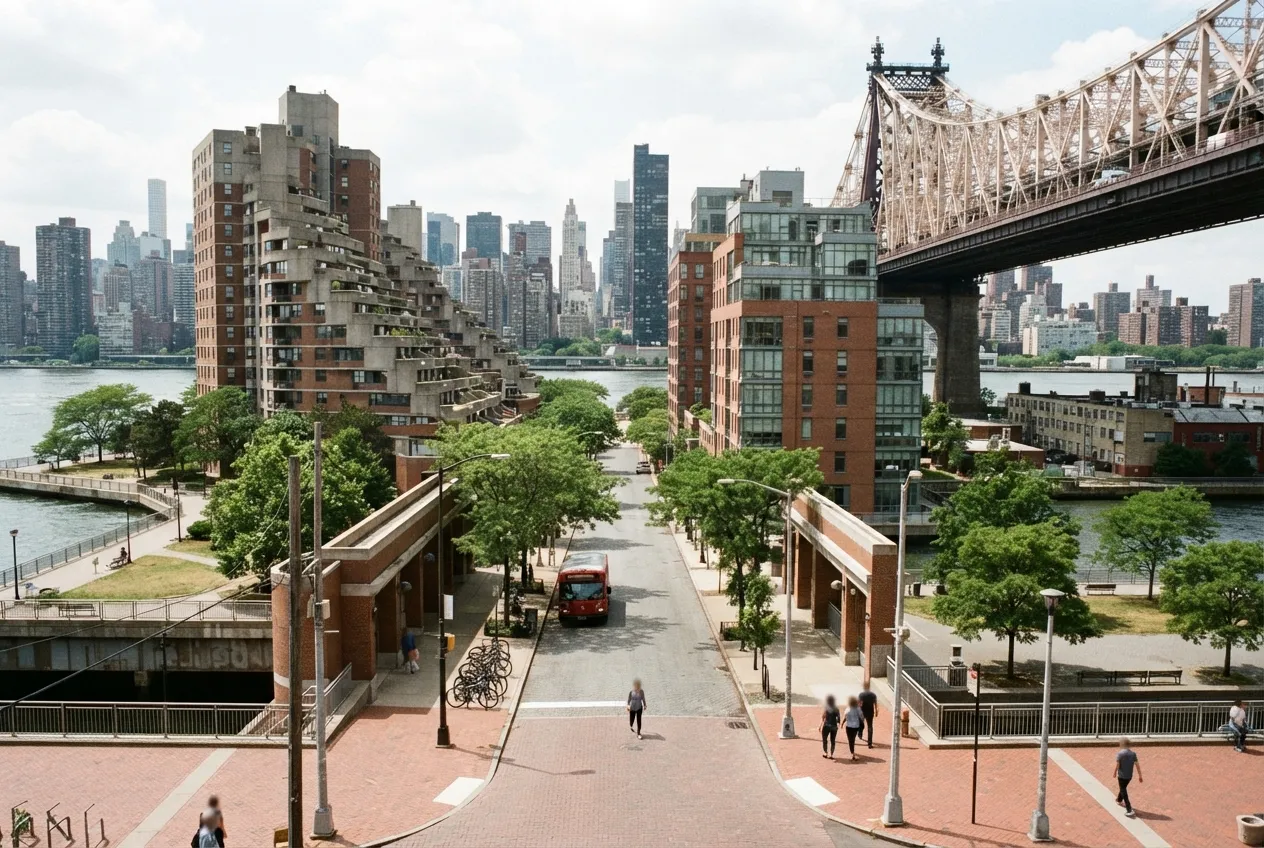
Most homes on Roosevelt Island are in multifamily apartment buildings, where the chimney or flue usually serves a central boiler or water heater rather than a single living room fireplace. That changes what chimney repair looks like here. A cracked crown or a corroded liner affects every household on the system, and work has to be coordinated with building management, residents, and the heating schedule. PrimeFlue Chimney Services repairs chimneys and flues for buildings and homes on the island, from masonry and flashing on the roof to liners running the full height of the building. Our certified technicians start by finding the actual cause of the problem, so a repair addresses the source instead of a symptom.
What Chimney Repair Covers on Roosevelt Island
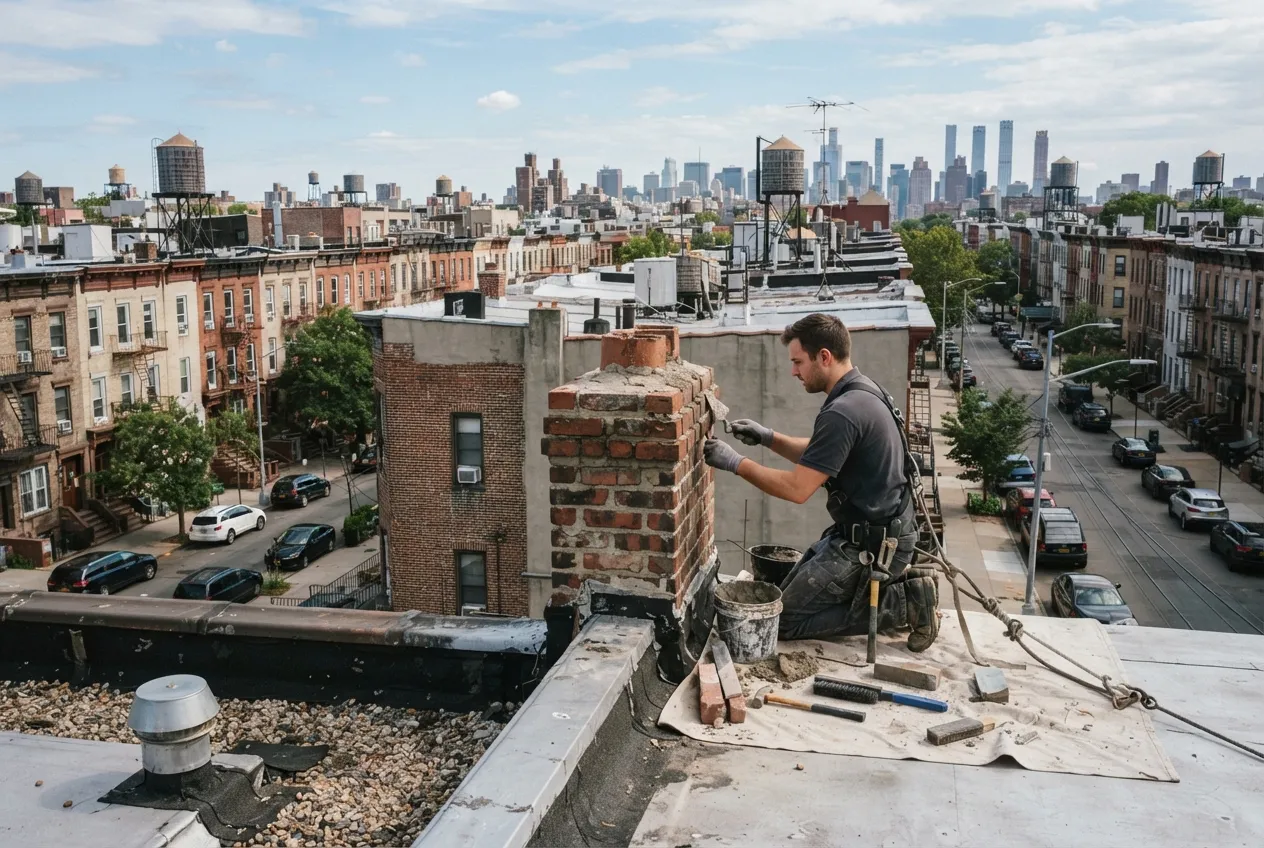
Chimney problems tend to start small and spread. Water gets into one open joint, freezes, and loosens the brick around it. A gap in the flashing lets rain run down inside a wall. Because most chimneys here are tall flues on multistory buildings, small defects at the top can show up as damage several floors below.
These are the repairs we handle most often:
- Rebuilding or sealing cracked chimney crowns
- Repointing worn or missing mortar joints
- Replacing spalled or broken brick
- Repairing or replacing flashing where the chimney meets the roof
- Installing or replacing chimney caps to keep out rain and animals
- Repairing dampers in fireplaces that won't open or seal
- Relining deteriorated or undersized flues
Boiler Flues, Liners, and Fuel Conversions
In an apartment building, the chimney does a demanding job. It carries exhaust from the heating system day after day through the cold months. When a New York City building converts its boiler from oil to gas, the chimney has to be evaluated as part of the work. A new liner is often needed because gas exhaust produces acidic condensate that can corrode a masonry flue from the inside.
Signs of liner trouble include crumbling tile or mortar at the base of the flue, staining or dampness on walls near the chimney, and rust or debris collecting at the cleanout. Any change to the heating system, such as a new boiler or a switch of fuel, calls for a Level 2 inspection before the new system runs for a full season.
Weather Exposure and Masonry Damage
Rooftop chimneys on the island are exposed to wind-driven rain off the East River and to repeated freeze-thaw cycles each winter. Water is the main cause of chimney deterioration. Once moisture gets past the crown or into the joints, freezing expands it, and brick faces begin to flake and mortar loosens.
We look at the whole path water takes: the crown, the cap, the flashing, and the masonry face. Fixing only the visible crack usually means the leak comes back. When the masonry is sound but porous, a breathable water repellent can be added after repairs to slow moisture absorption.
Time for your annual chimney check?
Scheduling Around the Heat Season
New York City's heat season runs from October 1 through May 31. During those months, building owners must keep apartments heated to the city's minimum temperatures. Repairs that take the boiler out of service, such as relining a flue, are much easier to plan between June and September.
If a problem shows up mid-winter, we focus first on making the system safe to keep running, then schedule larger work for the warmer months. We work with superintendents and managing agents to plan access, give residents notice, and keep heating downtime short.
How a Repair Visit Works
The NFPA 211 standard calls for chimneys, fireplaces, and vents to be inspected once a year. Every repair begins with an inspection at the level the situation needs. A Level 1 inspection covers the readily accessible parts of the chimney when nothing has changed. Level 2 adds a camera look through the flue and is used after a system change or when a home is sold. Level 3 is reserved for cases where a hidden hazard can only be reached by opening part of the chimney or building.
After the inspection, we explain what we found, show photos when we have them, and lay out repair options in plain terms so owners and boards can make a clear decision.
Where We Work
We serve Roosevelt Island in ZIP code 10044, along with nearby Manhattan neighborhoods including Lenox Hill, the Upper East Side, Carnegie Hill, Yorkville, and East Midtown. Our office is at 18 E 75th St in Manhattan, a short trip from the island.
More services in Roosevelt Island
- Chimney Sweep in Roosevelt Island
- Chimney Inspection in Roosevelt Island
- Air Duct Cleaning in Roosevelt Island
- Chimney Liner Installation in Roosevelt Island