The short answer
A chimney liner keeps heat, smoke and corrosive exhaust inside the flue and away from the surrounding masonry and framing. In Carnegie Hill, relining is most often needed when an older masonry flue has cracked or eroded, or when a building converts its boiler from oil to gas. PrimeFlue inspects the flue first, then installs a liner matched to your appliance.
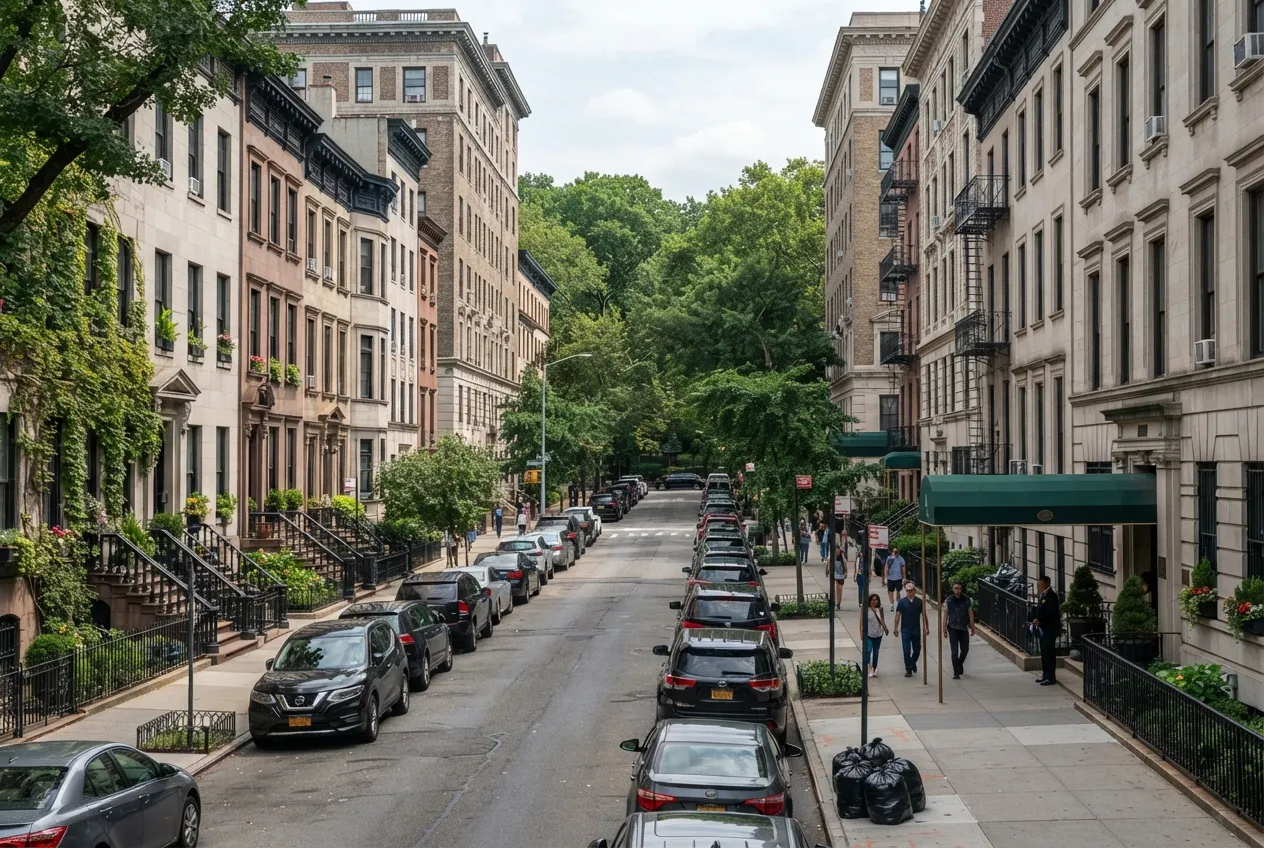
Many Carnegie Hill homes were built long before modern heating equipment, and their chimneys show it. Brownstones, rowhouses, townhouses and pre-war apartment buildings often have masonry flues that have handled decades of coal, oil, wood and gas, and the inner lining is usually the first thing to wear out. PrimeFlue Chimney Services installs new chimney liners for homeowners and buildings in Carnegie Hill, about a mile from our Manhattan office. Our certified technicians start by finding out what your flue is actually doing, then recommend a liner sized and rated for the appliance or fireplace it serves.
Why older Carnegie Hill chimneys need relining
A typical brownstone or pre-war building has a brick chimney with a clay tile lining, or in some cases no tile lining at all. Over time, mortar joints between tiles open up, tiles crack from heat cycling, and moisture works into the masonry. Once the lining is compromised, exhaust and heat can reach parts of the building they were never meant to touch.
Relining is also common when a chimney's job changes. A flue built for a large coal or oil boiler is often far too big for a modern, high-efficiency appliance. An oversized flue lets exhaust cool too quickly, which leads to poor draft and condensation inside the chimney.
- Cracked, shifted or missing clay flue tiles
- Crumbling mortar or brick fragments falling into the firebox or appliance base
- Smoke or odors entering rooms, especially on upper floors
- Staining, damp patches or efflorescence on walls next to the chimney
- A heating appliance replacement or a switch from oil to gas
Oil-to-gas conversions and new liners
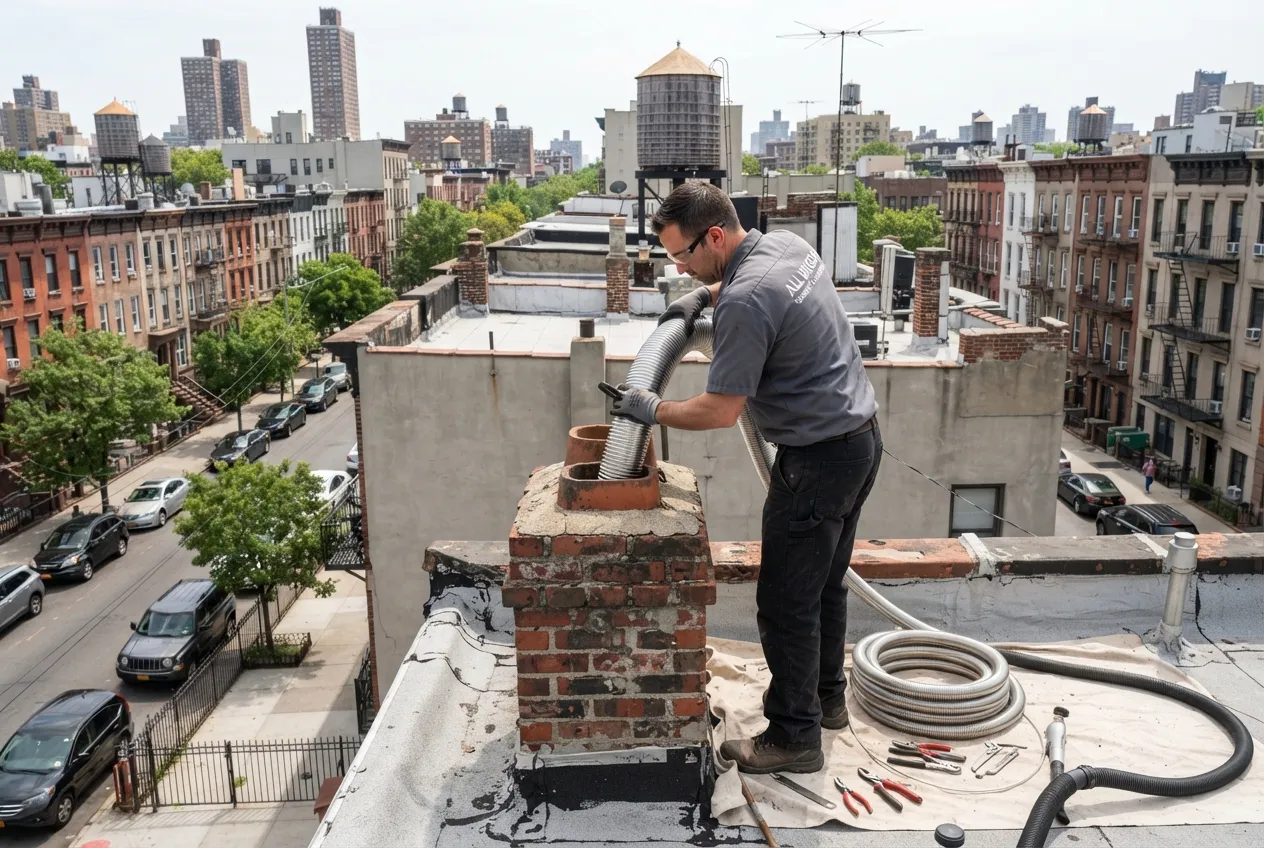
When a New York City building converts its boiler from oil to gas, the chimney has to be evaluated as part of the work. A new liner is often needed because gas exhaust produces acidic condensate that can corrode a masonry flue. In an older building, that condensate can steadily eat away at mortar and tile that held up fine under oil.
We work alongside your heating contractor during a conversion so the liner is sized to the new boiler or water heater, connected properly at the base and capped correctly at the top. For co-ops and condominiums, we can provide documentation of the inspection and recommended work to share with your board, managing agent or contractor.
How we install a chimney liner
Every job begins with an inspection. The NFPA 211 standard calls for chimneys, fireplaces and vents to be inspected once a year, and it describes three inspection levels. A Level 2 inspection, which includes a camera survey of the flue's interior, is the appropriate starting point when the system is changing, such as a new appliance or a fuel switch, or when a home is being sold. A Level 3 inspection is reserved for hidden hazards that can only be reached by opening part of the chimney or building.
Once we know the condition and dimensions of the flue, we recommend a liner type. Stainless steel liners are a common choice for gas and oil appliances and for many wood-burning fireplaces. Cast-in-place liners can be a fit where the existing masonry needs added strength. The right option depends on the fuel, the appliance, the shape of the flue and how the chimney runs through the building.
- Inspect and photograph the flue, including a camera review
- Clean the chimney so the liner can be installed against sound surfaces
- Size the liner to the appliance or fireplace it will serve
- Install the liner, connections and any required insulation
- Fit a top plate and chimney cap to keep out rain and animals
- Check draft and walk you through what was done
Time for your annual chimney check?
Planning around heat season and building access
New York City's heat season runs from October 1 through May 31, when building owners must keep apartments heated to the city's minimum temperatures. If you own a multi-unit brownstone or manage a pre-war building, scheduling liner work in late spring or summer avoids taking the boiler offline when tenants rely on it.
Manhattan chimney work usually means roof access, coordination with neighbors in attached rowhouses, and sometimes building management approval. We discuss access, timing and protection of interior finishes before work begins, so you know what to expect on installation day.
Serving Carnegie Hill and nearby neighborhoods
Along with Carnegie Hill, PrimeFlue installs chimney liners throughout the Upper East Side, Yorkville, Lenox Hill, Roosevelt Island and East Midtown. If you are not sure whether your flue needs a new liner, an inspection will give you a clear answer and photos of what we found.
More services in Carnegie Hill
- Chimney Sweep in Carnegie Hill
- Chimney Inspection in Carnegie Hill
- Chimney Repair in Carnegie Hill
- Air Duct Cleaning in Carnegie Hill