The short answer
PrimeFlue repairs chimney masonry, crowns, flashing, caps, dampers and flue liners for Yorkville brownstones, rowhouses and pre-war buildings. We start with an inspection to find the real cause, then recommend only the repairs the chimney needs. Repairs are easiest to schedule before the city's October-to-May heat season.
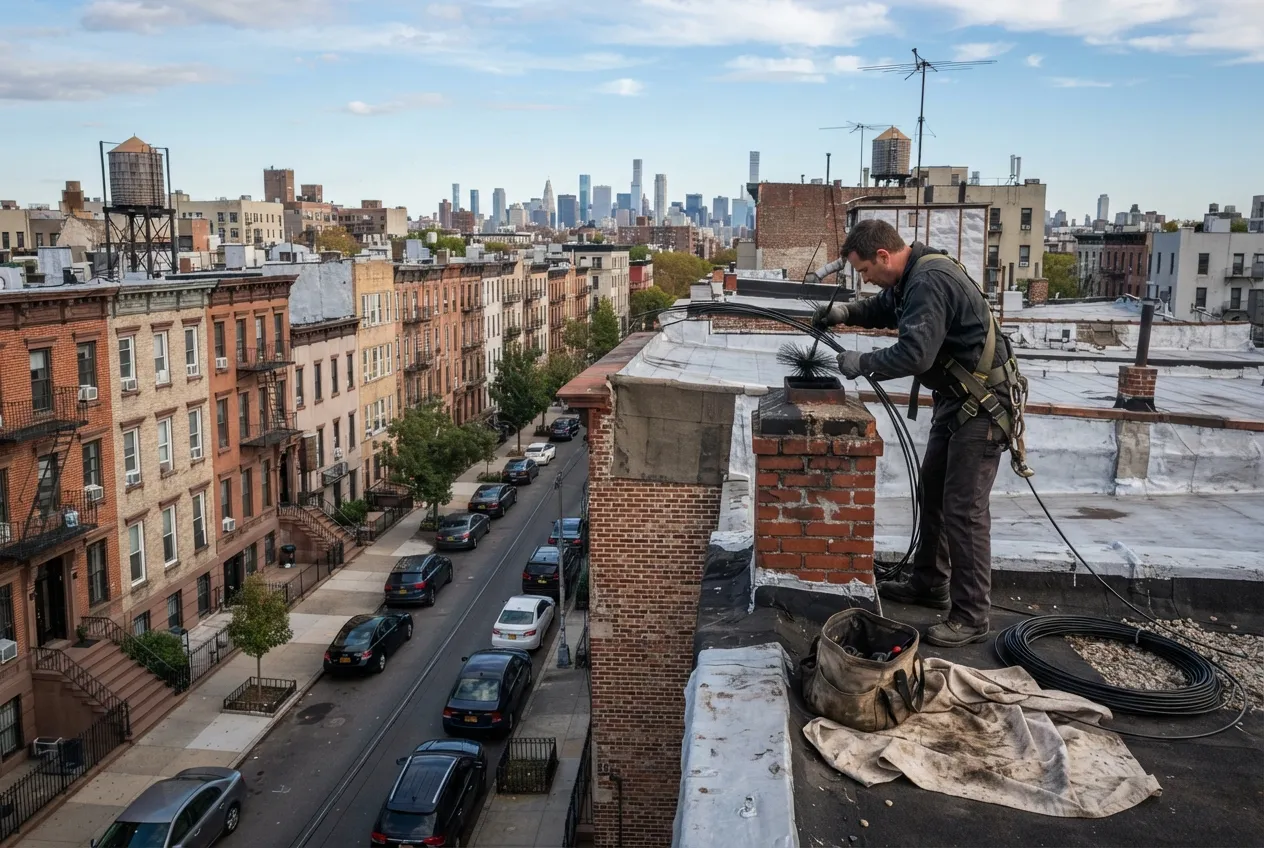
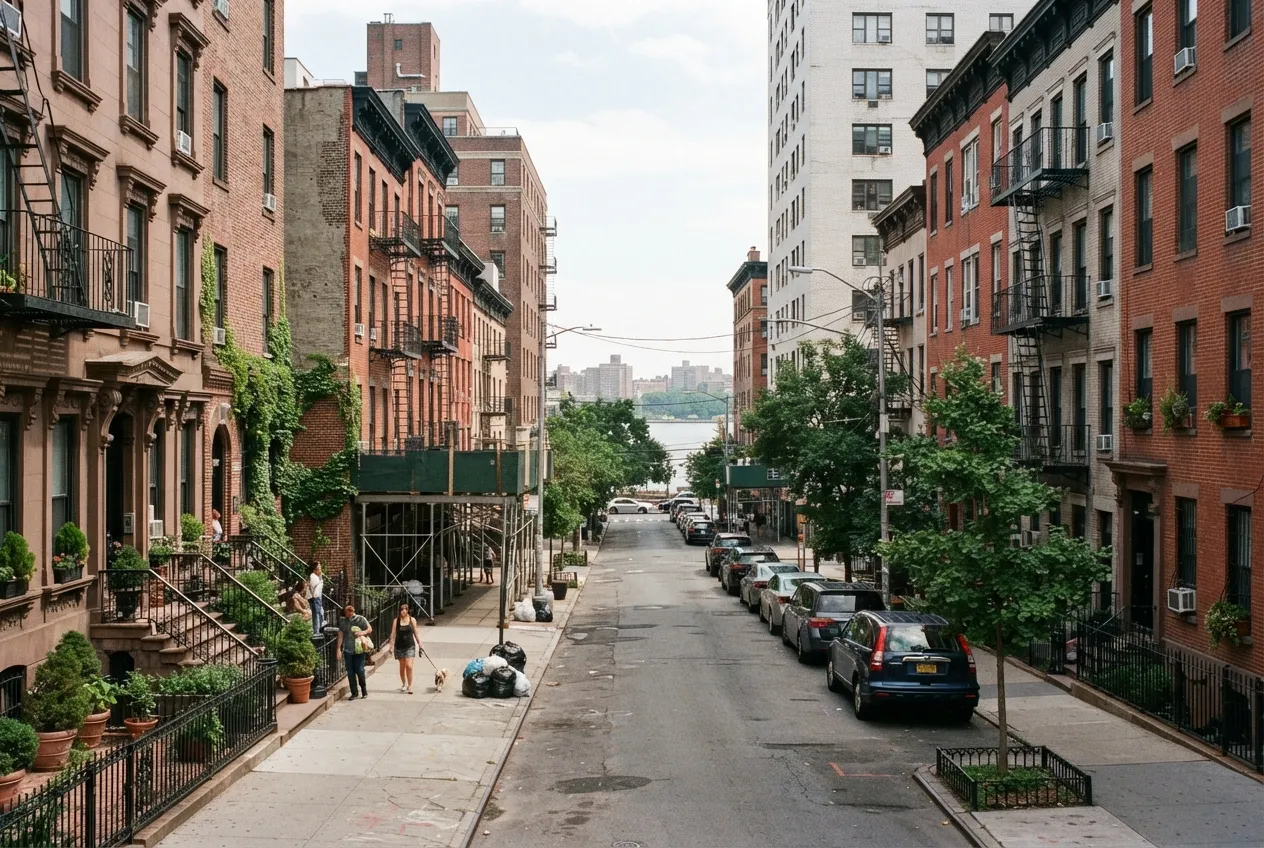
Yorkville's brownstones, rowhouses, walk-ups and pre-war apartment buildings have chimneys that have taken decades of freeze-thaw winters, boiler exhaust and rooftop weather. When mortar washes out, a crown cracks or a flue liner starts to fail, the problem usually spreads slowly and then all at once. PrimeFlue Chimney Services is based about a mile south of Yorkville in Manhattan, and our certified technicians repair chimneys throughout ZIP codes 10028 and 10128. We find out what is actually wrong, explain it in plain terms, and fix the cause.
Common Chimney Problems in Yorkville Buildings
Most chimneys in Yorkville are masonry and many are tall, shared or tied into a building's boiler. Age and weather do most of the damage, and the signs often show up indoors before anyone climbs to the roof.
These are the repairs we handle most often in the neighborhood:
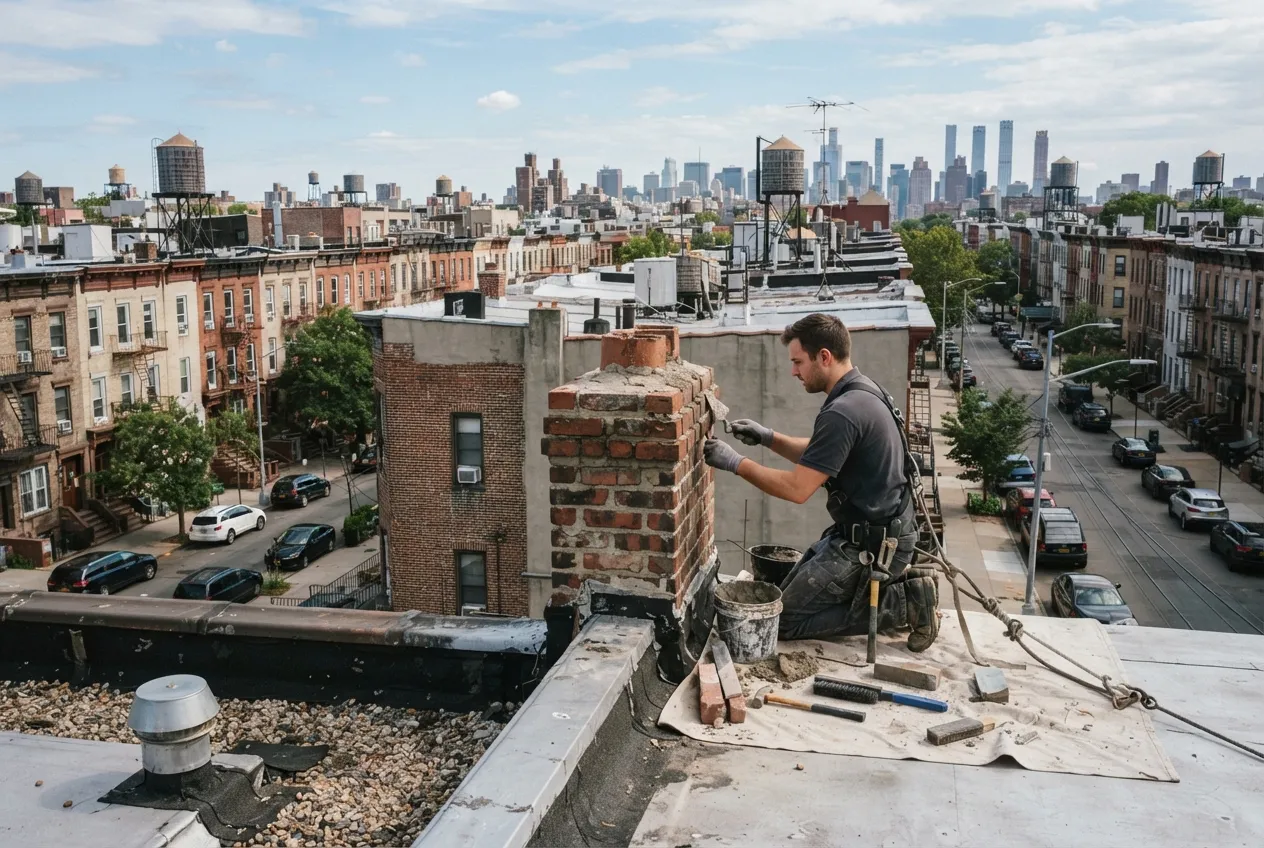
- Repointing loose or missing mortar joints and replacing spalled or cracked brick
- Rebuilding or resealing cracked chimney crowns that let water into the masonry
- Resealing or replacing failed flashing where the chimney meets the roof
- Installing or replacing chimney caps to keep out rain, debris and animals
- Repairing or replacing fireplace dampers and smoke chamber surfaces
- Relining damaged flues with a liner sized for the appliance
Warning Signs to Watch For
Water stains on a ceiling or wall next to the chimney, white chalky deposits on brick, and flakes of tile or mortar in the firebox all point to moisture getting into the chimney. In apartments, residents sometimes notice a damp, musty smell near a fireplace that is no longer used.
Other signs include smoke or odors backing into the room, a damper that sticks, and brick that crumbles when touched. If you see any of these, stop using the fireplace or appliance until the chimney has been checked.
Oil-to-Gas Conversions and Flue Liners
Many pre-war Yorkville buildings have converted, or are planning to convert, their boilers from oil to gas. When a New York City building makes that switch, the chimney has to be evaluated as part of the work. Gas exhaust produces acidic condensate that can corrode an unlined or old masonry flue, so a new liner is often needed.
We inspect the existing flue, confirm whether it can safely vent the new equipment, and install a properly sized liner when one is required. Because a fuel change counts as a change to the system, this is the point where a more detailed Level 2 inspection makes sense.
Time for your annual chimney check?
How We Approach a Repair
Every repair starts with an inspection. The NFPA 211 standard calls for chimneys, fireplaces and vents to be inspected once a year, using three levels: Level 1 when nothing has changed, Level 2 when the system changes or the home is sold, and Level 3 when a hidden hazard has to be reached by opening part of the chimney or building.
After the inspection, we show you what we found, often with photos, and explain which repairs are urgent and which can wait. In brownstones and rowhouses we protect interior finishes and stairways. In apartment buildings we coordinate roof access and timing with owners, boards and managing agents so residents are disturbed as little as possible.
Plan Around the Heat Season
New York City's heat season runs from October 1 through May 31, when building owners must keep apartments heated to the city's minimum temperatures. A chimney problem that takes a boiler offline in January is far more disruptive than one found in summer.
For that reason, we suggest that Yorkville building owners schedule inspections and any liner or masonry repairs in late spring or summer. Warm, dry weather is also better for mortar and crown work to cure properly. We also serve the Upper East Side, Carnegie Hill, Lenox Hill, Roosevelt Island and Old Astoria.
More services in Yorkville
- Chimney Sweep in Yorkville
- Chimney Inspection in Yorkville
- Air Duct Cleaning in Yorkville
- Chimney Liner Installation in Yorkville