The short answer
PrimeFlue repairs chimney masonry, crowns, flashing, caps and flue liners for rowhouses, multi-family homes and apartment buildings in Queensbridge, Queens. Every repair starts with an inspection so you know the cause of the problem, not just the symptom.
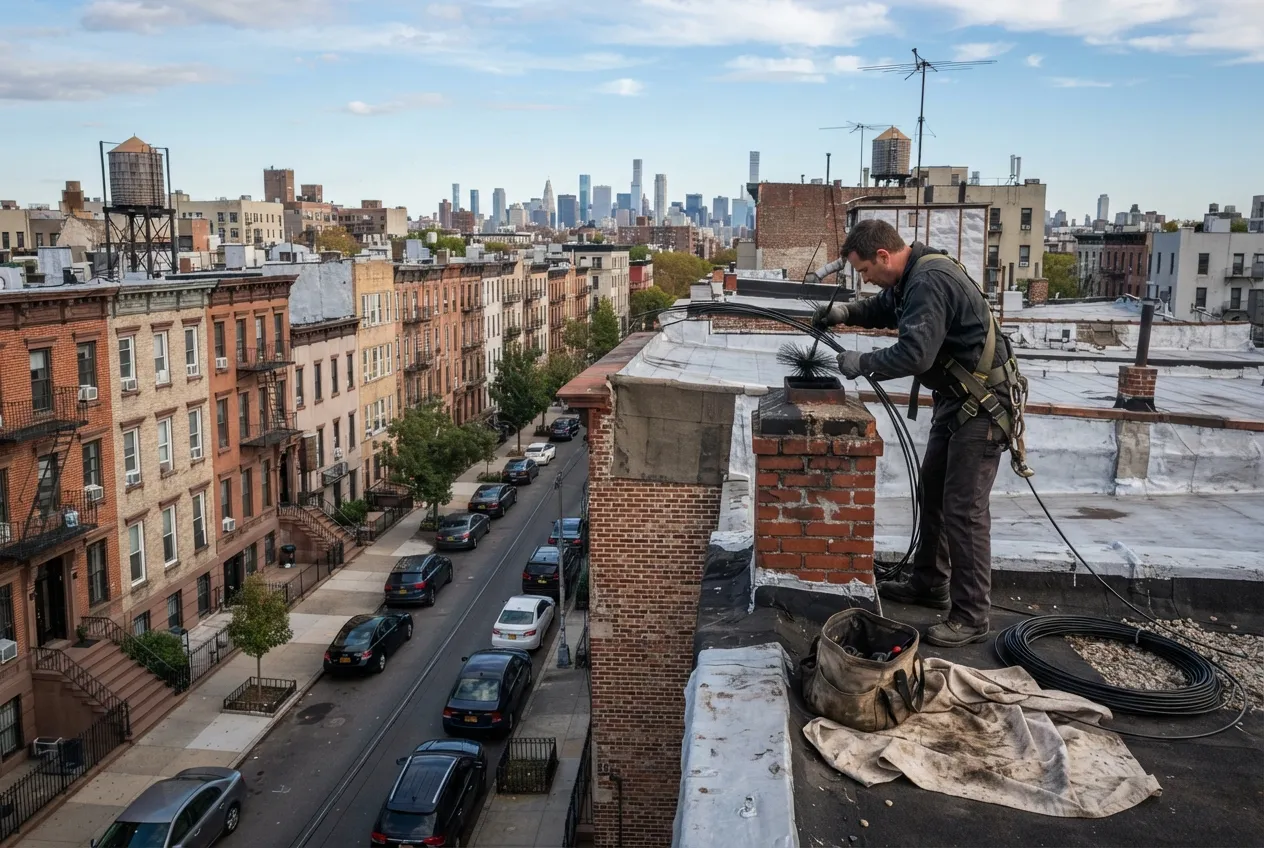
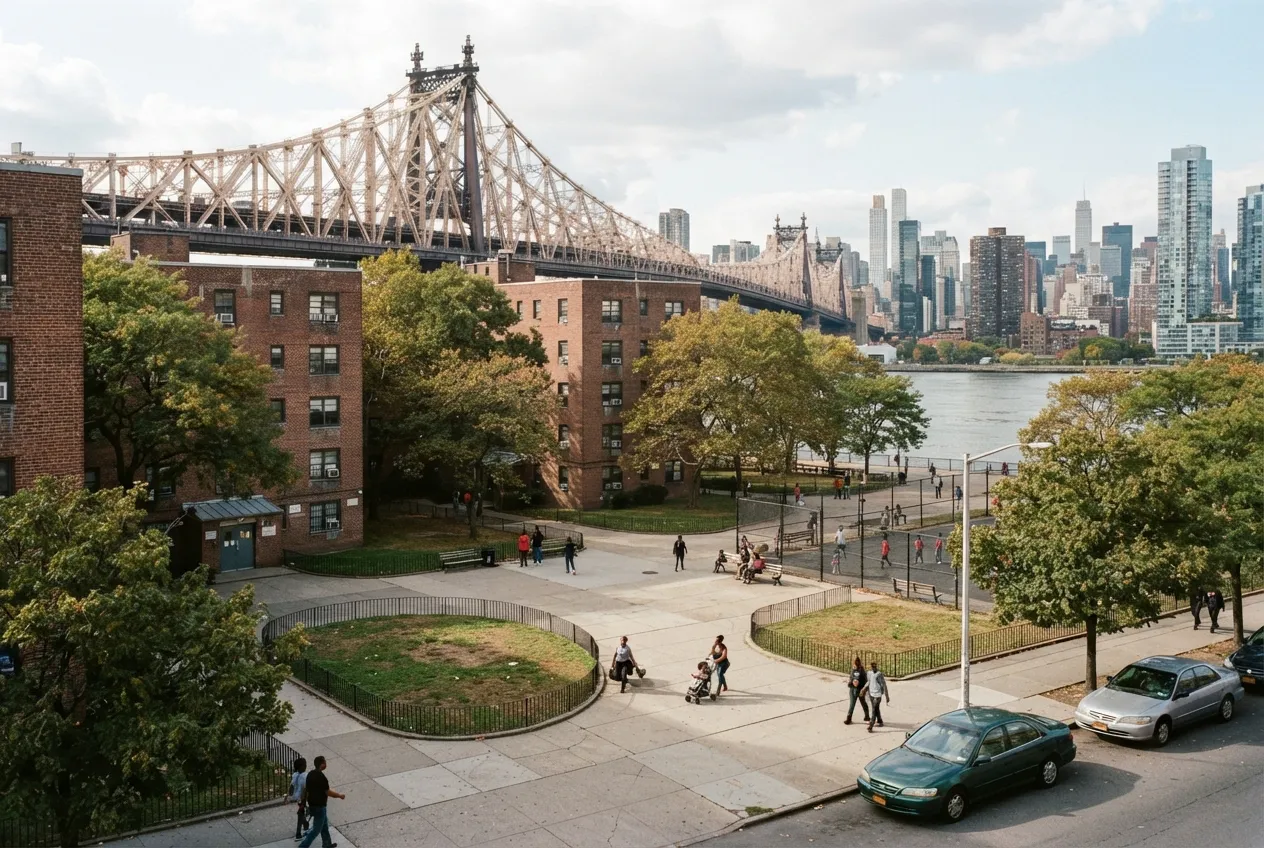
Chimneys in Queensbridge take a beating. Brick stacks on older apartment buildings and rowhouses sit exposed to wind off the East River, freeze-and-thaw winters, and decades of heating exhaust. When mortar washes out, a crown cracks, or a flue liner starts to break down, the damage usually grows quietly until water shows up on a ceiling or a heating contractor flags a problem. PrimeFlue Chimney Services repairs chimneys throughout Queensbridge and the 11106 ZIP code, a short trip from our Manhattan office. Our certified technicians start with an honest look at the chimney and explain what needs fixing now and what can wait.
Common Chimney Problems in Queensbridge Buildings
Housing in and around Queensbridge is mostly masonry: pre-war and mid-century apartment buildings, brick rowhouses, and two- and three-family homes. These chimneys were built to last, but brick and mortar are porous. Water soaks in, freezes, expands, and slowly pushes the masonry apart. On taller buildings, the chimney often stands well above the roofline, where it gets the worst of the weather.
The repairs we see most often in this part of Queens include:
- Repointing eroded or missing mortar joints
- Replacing spalled or crumbling brick near the top of the stack
- Rebuilding or resealing cracked chimney crowns
- Resealing or replacing leaking flashing where the chimney meets the roof
- Replacing rusted or missing chimney caps that let in rain and animals
- Repairing or relining cracked, gapped or corroded flue tiles
Liner Repair After an Oil-to-Gas Conversion
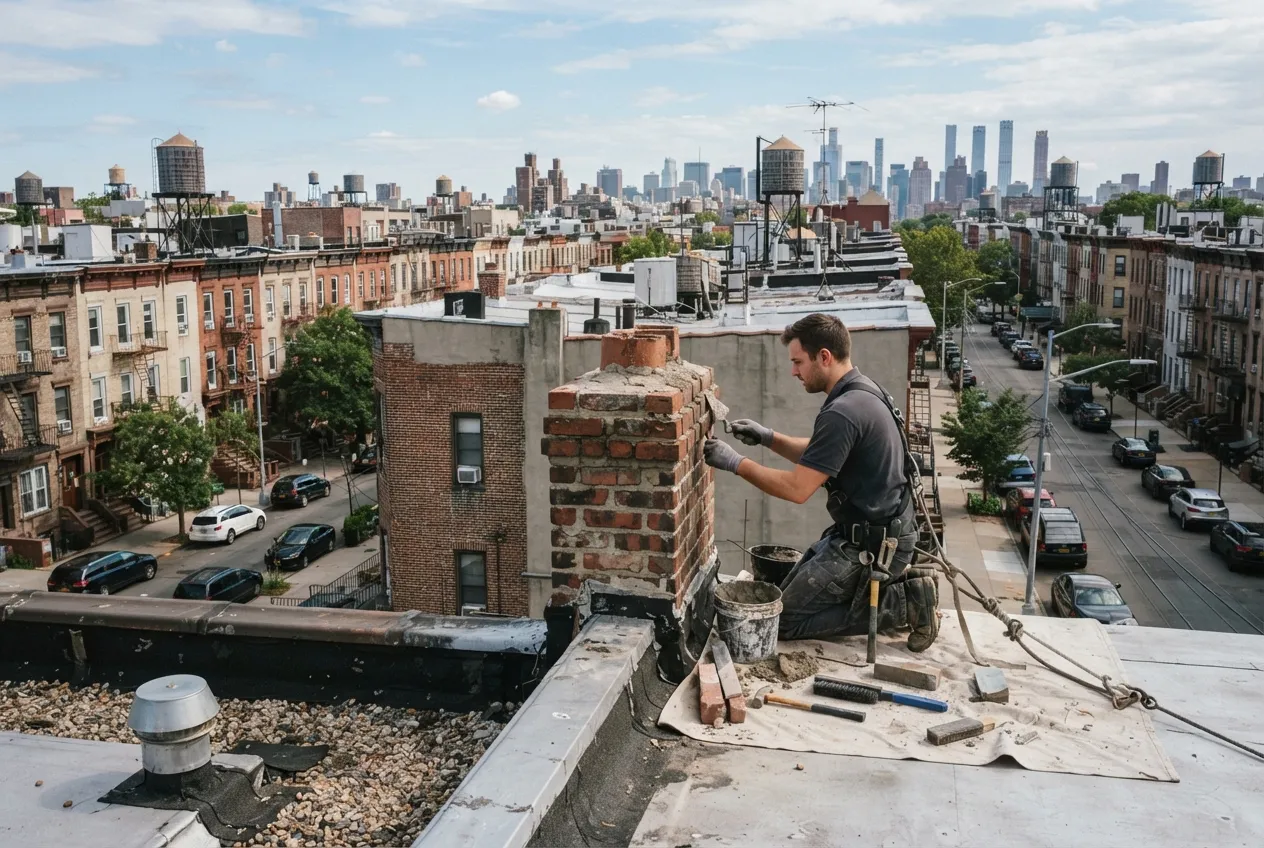
Many buildings in this area once burned heating oil. When a New York City building converts its boiler from oil to gas, the chimney has to be evaluated as part of the work. A new liner is often needed, because gas exhaust produces acidic condensate that can corrode an old masonry flue from the inside.
If your building has already converted and the chimney was never relined, watch for loose tile fragments at the base of the flue, white staining on the exterior brick, or damp spots on walls near the chimney. We can inspect the flue, tell you whether the existing liner suits the current appliance, and install a properly sized replacement if it doesn't.
Planning Repairs Around Heat Season
New York City's heat season runs from October 1 through May 31. During those months, building owners must keep apartments heated to the city's minimum temperatures, which means the boiler and its chimney need to be working. A chimney that has to be taken out of service in January creates real problems for owners and tenants alike.
The easiest time to handle masonry rebuilding, crown work and relining is late spring through early fall, when the heating system can be shut down without hardship. If a problem turns up mid-winter, we focus first on making the system safe and keeping heat running, then schedule larger repairs for warmer months when that's an option.
Time for your annual chimney check?
How We Approach a Chimney Repair
We don't quote repairs from the sidewalk. The NFPA 211 standard calls for chimneys, fireplaces and vents to be inspected once a year, and it describes three inspection levels. A Level 1 inspection fits a system where nothing has changed. A Level 2 inspection is called for when the system changes, such as a new boiler or a switch from oil to gas, or when the home is sold. A Level 3 inspection is used when a hidden hazard can only be reached by opening part of the chimney or building.
After the inspection, we show you photos of what we found, explain what is causing the damage, and lay out the repair in plain terms. If a smaller fix will solve the problem, we'll say so. We keep the work area clean and protect floors and roofing around the chimney.
Signs Your Chimney Needs Repair
Call us for an inspection if you notice any of the following:
- Water stains on ceilings or walls near the chimney
- Pieces of brick, mortar or tile on the roof or at the base of the flue
- A chimney stack that looks tilted or has visible cracks
- Rust on the cap, damper or firebox
- Smoke or odors entering the living space
- A heating contractor recommending a chimney evaluation
More services in Queensbridge
- Chimney Sweep in Queensbridge
- Chimney Inspection in Queensbridge
- Air Duct Cleaning in Queensbridge
- Chimney Liner Installation in Queensbridge