The short answer
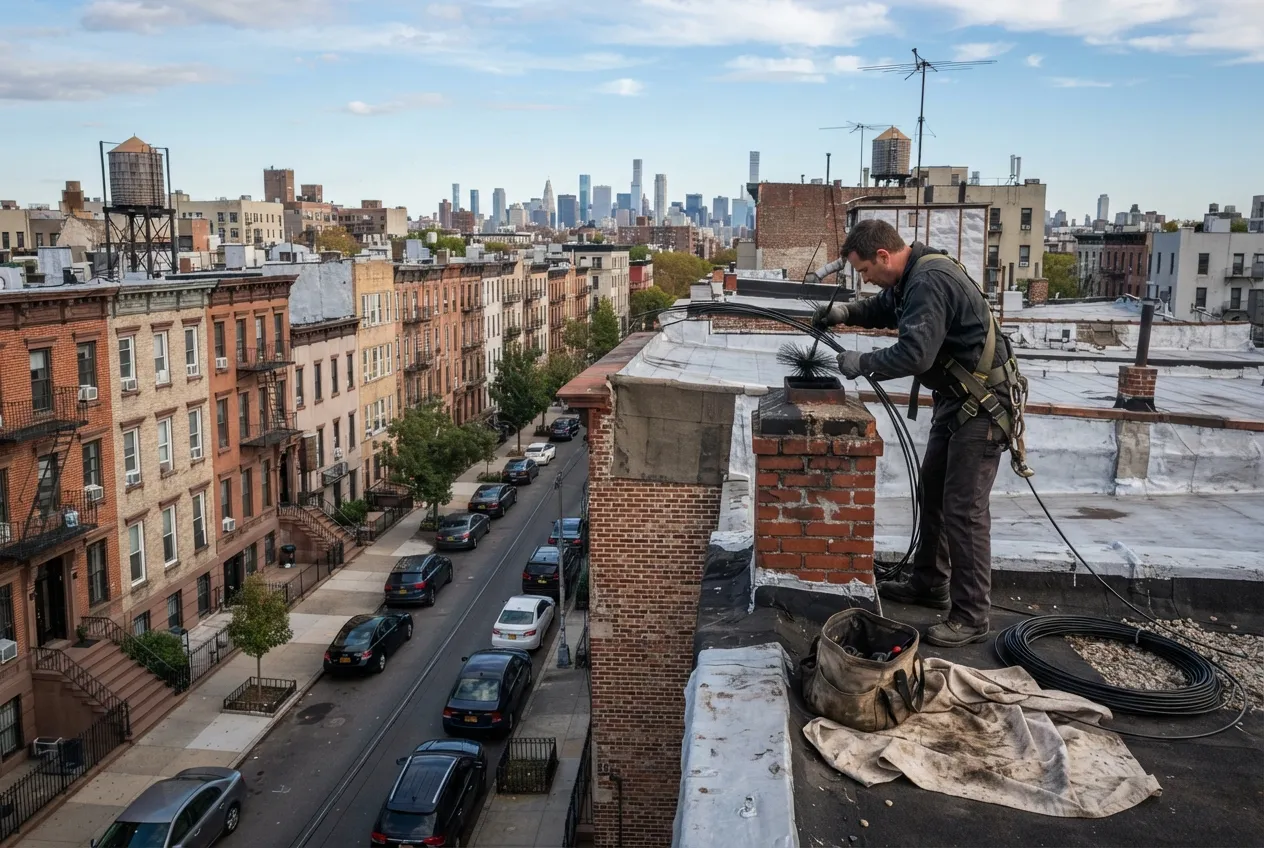
Queensbridge chimneys often need a new liner when the old clay tile is cracked or when a boiler is converted from oil to gas, because gas exhaust creates acidic condensate that can damage a masonry flue. PrimeFlue inspects the chimney, matches a liner to your appliance and installs it so your heating system can vent safely.
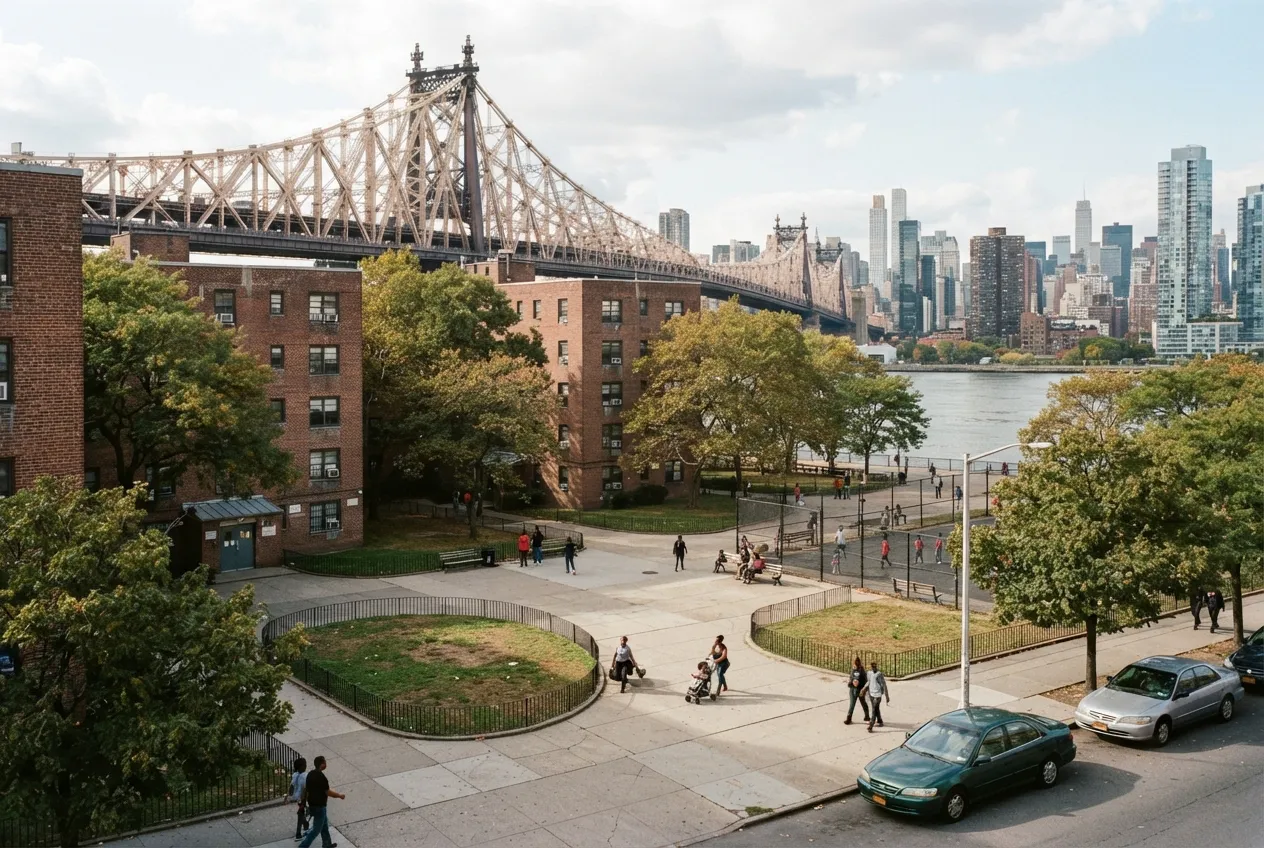
A chimney liner keeps hot exhaust and combustion byproducts inside the flue and away from the brick, mortar and framing around it. In Queensbridge, many homes and buildings were built decades ago with clay tile flues or bare masonry, and many have since changed fuel or heating equipment. Either can leave a liner cracked, undersized or no longer suited to the appliance it serves. PrimeFlue Chimney Services is based in Manhattan, about a mile from Queensbridge. Our certified technicians inspect, size and install chimney liners for apartment buildings, rowhouses and smaller multifamily homes throughout the 11106 ZIP code.
Signs a Queensbridge Chimney Needs a New Liner
Most homeowners don't see their liner, so problems usually turn up during an inspection or after a change to the heating system. The NFPA 211 standard calls for chimneys, fireplaces and vents to be inspected once a year. That yearly check is often when we find a liner that needs replacing.
In older masonry chimneys around Queensbridge, these are the most common findings:
- Cracked, shifted or missing clay flue tiles
- Gaps in the mortar joints between tile sections
- Flaking or crumbling masonry inside the flue, often a sign of condensate damage
- White staining or moisture on walls next to the chimney
- A flue that is too large or too small for the boiler, water heater or stove connected to it
- Smoke or exhaust odors indoors, or a backdraft when the appliance runs
Oil-to-Gas Conversions and Why Liners Matter
Many buildings in Queens have switched boilers from oil to gas. When a New York City building converts its boiler from oil to gas, the chimney has to be evaluated as part of the work. A new liner is often needed because gas exhaust produces acidic condensate that can corrode a masonry flue.
An old flue that worked for decades with oil heat can start to break down within a few heating seasons once gas exhaust runs through it. A switch of fuel or a new appliance also calls for a Level 2 inspection, a more detailed look than the routine Level 1 check. If you are planning a conversion, bring us in early. Then the chimney evaluation and any relining can be scheduled alongside the boiler work instead of holding it up.
How We Install a Chimney Liner
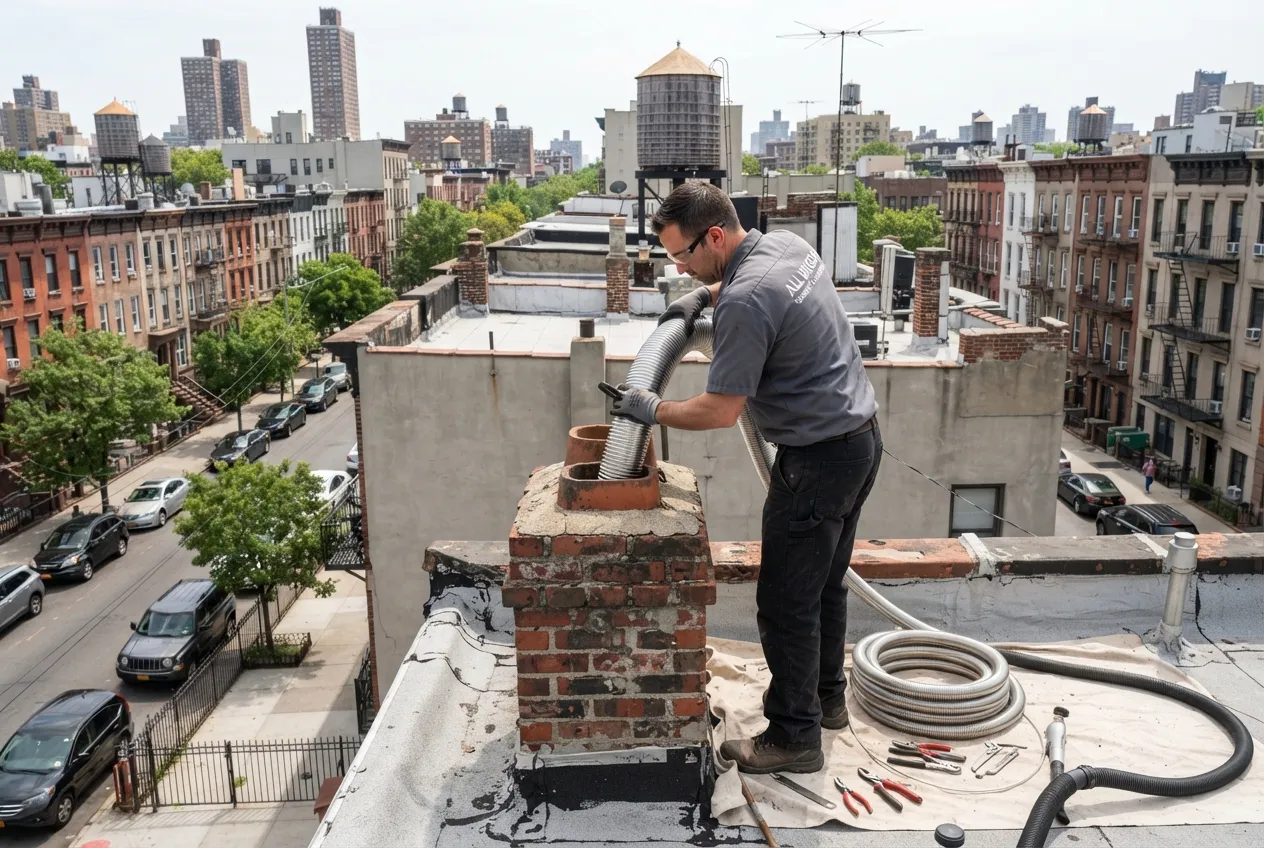
Every chimney is a little different, but a typical liner job follows the same basic steps:
- Inspect the flue with a camera to check its condition, measure its size and look for obstructions
- Confirm the appliance type, fuel and venting needs so the liner is sized correctly
- Clean the existing flue to remove soot, scale and loose debris
- Lower the liner from the roof and connect it to the appliance at the base
- Install a top plate and cap to keep out rain, debris and animals
- Test the draft and review the finished work with you
Time for your annual chimney check?
Choosing the Right Liner for Your Building
The right liner depends on what it is venting. Gas boilers and water heaters, oil-burning equipment and wood-burning fireplaces each produce different exhaust temperatures and byproducts. Stainless steel liners are the most common choice for relining existing masonry chimneys, and the grade and diameter have to match the appliance. A liner that is too large can lead to poor draft and heavy condensation. One that is too small can restrict exhaust.
Older Queensbridge chimneys sometimes have offsets or tight spots that call for a flexible liner. Straighter flues may take a rigid one. We explain the options for your chimney before any work starts.
Planning Around Heat Season
New York City's heat season runs from October 1 through May 31. During those months, building owners must keep apartments heated to the city's minimum temperatures. If you own a multifamily building, a liner problem found in the middle of winter can put you in a difficult position. Late spring and summer are the easiest times to inspect and reline. Your boiler can be off for the work without affecting tenants.
Serving Queensbridge and Nearby Neighborhoods
Besides Queensbridge, we install chimney liners in Ravenswood, Dutch Kills and Old Astoria in Queens, and across the river in Roosevelt Island and Lenox Hill. Because our office is close by, scheduling an inspection or follow-up visit is straightforward.
More services in Queensbridge
- Chimney Sweep in Queensbridge
- Chimney Inspection in Queensbridge
- Chimney Repair in Queensbridge
- Air Duct Cleaning in Queensbridge