The short answer
PrimeFlue repairs chimney masonry, crowns, flashing, caps and flue liners for Hallets Point homes and buildings. Every repair starts with an inspection, and we explain what we found and what it needs before any work begins.
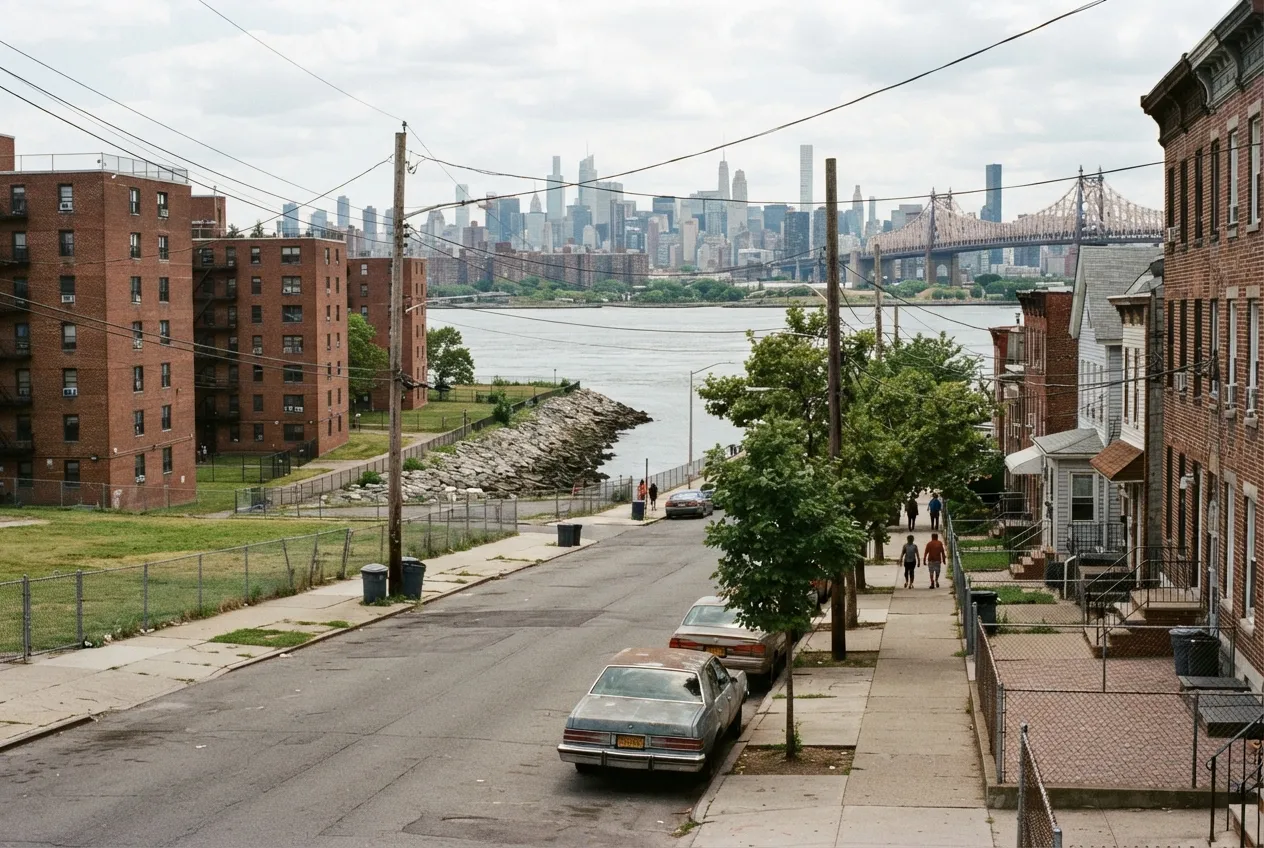
Hallets Point sits on the Queens side of the East River, about a mile east of our Manhattan office. The neighborhood mixes older rowhouses and small multifamily buildings with pre-war apartment buildings and newer construction. Many of these chimneys have worked through decades of New York winters, and repairs are often overdue by the time someone notices a stain on a ceiling or bits of mortar on the hearth. PrimeFlue Chimney Services repairs masonry chimneys, crowns, flashing and flue liners for homeowners and building owners in Hallets Point. We work from what an inspection shows, so the repair addresses the actual problem.
What wears out on chimneys in Hallets Point
Older Queens chimneys tend to fail in the same few places. Brick and mortar take in water, and repeated freezing and thawing pushes joints apart over time. Being close to the river means more wind-driven rain against exposed chimney faces than on more sheltered blocks. On attached rowhouses, one chimney can sit on or near a shared party wall, so a leak may show up in a neighbor's home before it shows up in yours.
These are the problems we see most often:
- Crumbling or recessed mortar joints that need repointing
- Cracked or broken crowns that let water run straight into the masonry
- Failed flashing where the chimney meets the roof, a common cause of attic and top-floor leaks
- Missing or rusted caps that let in rain, debris and animals
- Spalling brick, where the surface flakes or pops off
- Cracked, deteriorated or missing flue liners
Repairs for rowhouses and pre-war buildings
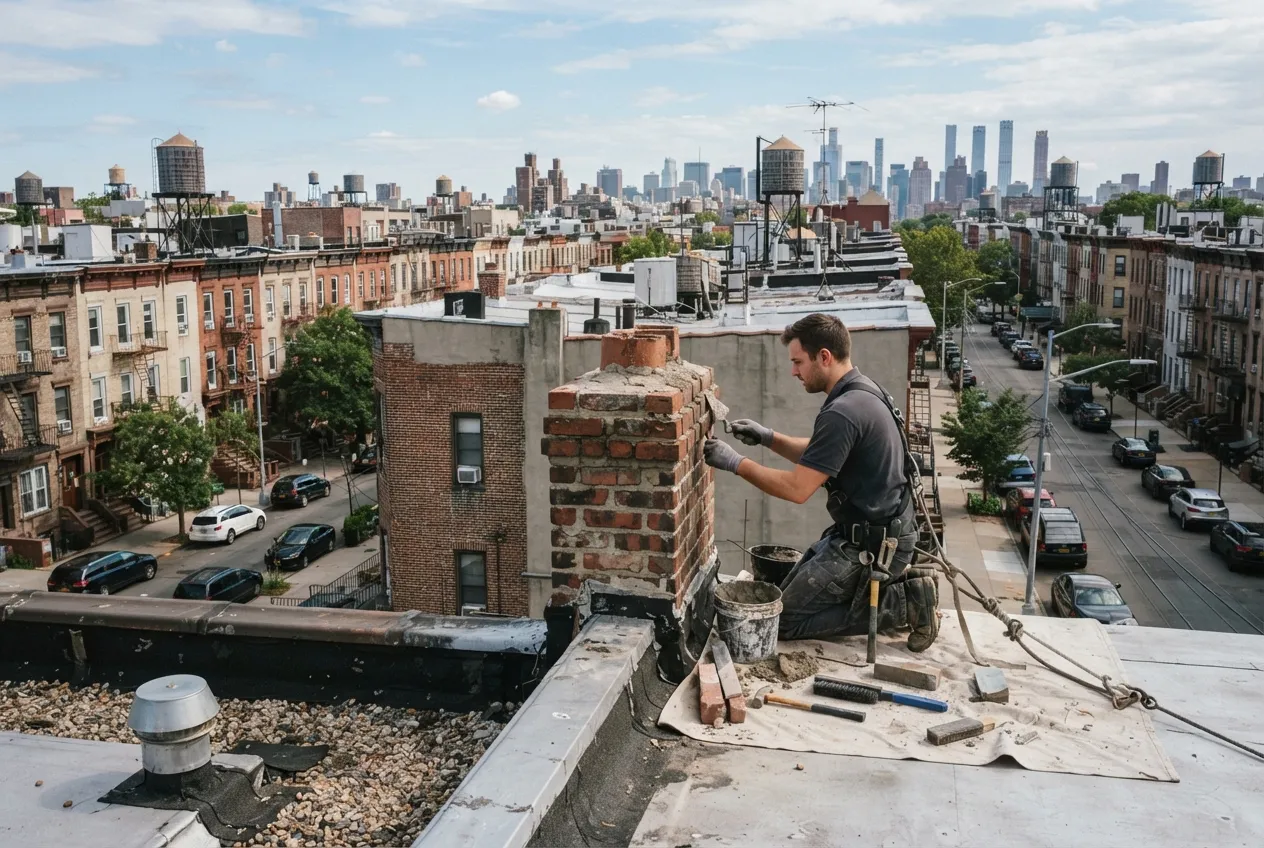
A single-family rowhouse and a pre-war apartment building need different approaches. On a rowhouse, we check the chimney from the roof and from inside, and we look at how it ties into adjoining walls and rooflines. Flashing on shared roofs needs care so a fix on your side doesn't create a gap at the neighbor's.
Larger buildings often have taller masonry stacks serving a central boiler, and sometimes several flues inside one chimney. Repairs there can mean rebuilding the top courses of brick, replacing a crown, or relining a flue that serves the heating plant. We set up the work to fit the building, including access to the roof and boiler room, and we tell you ahead of time what each step involves.
Oil-to-gas conversions and flue liners
Many Queens buildings have switched or are switching their boilers from oil to gas. In New York City, the chimney has to be evaluated as part of that conversion, and a new liner is often needed. Gas exhaust produces acidic condensate, and over time it can eat into a masonry flue built for oil.
If your building is planning a conversion, or has already converted without relining, our certified technicians can look at the flue and tell you whether it needs a liner. Under the NFPA 211 standard, a change of fuel or appliance calls for a Level 2 inspection, which goes beyond a routine check. That inspection shows whether the existing flue can safely carry the new appliance's exhaust.
Time for your annual chimney check?
Timing repairs around heat season
New York City's heat season runs from October 1 through May 31. During that time, building owners must keep apartments heated to the city's minimum temperatures. A chimney problem that takes the boiler offline in January is far harder to deal with than one fixed in summer.
For buildings with central heat, the warmer months are the practical time for masonry rebuilding, crown replacement and relining. Homeowners with fireplaces or wood stoves also benefit from finishing repairs before the first cold night. Late spring and summer usually give the best weather for mortar work and the most flexibility in scheduling.
How a repair visit works
We start with an inspection. NFPA 211 calls for chimneys, fireplaces and vents to be inspected once a year. When nothing about the system has changed, a Level 1 inspection is usually enough. A Level 2 applies after a fuel or appliance change or when a home is sold. A Level 3 is only used when a hidden problem can't be reached without opening part of the chimney or building.
After the inspection, we explain what we found, show you photos where we can, and describe the repair we recommend. You can decide what to do before any work begins. We also serve nearby Old Astoria, Ravenswood, Queensbridge, Dutch Kills and, across the river, Yorkville.
More services in Hallets Point
- Chimney Sweep in Hallets Point
- Chimney Inspection in Hallets Point
- Air Duct Cleaning in Hallets Point
- Chimney Liner Installation in Hallets Point