The short answer
Chimney repair in East Midtown usually means fixing weathered masonry and crowns, replacing damaged flue liners, or relining a chimney after an oil-to-gas boiler conversion. Have the chimney inspected first, then schedule repairs outside the heating season when you can.
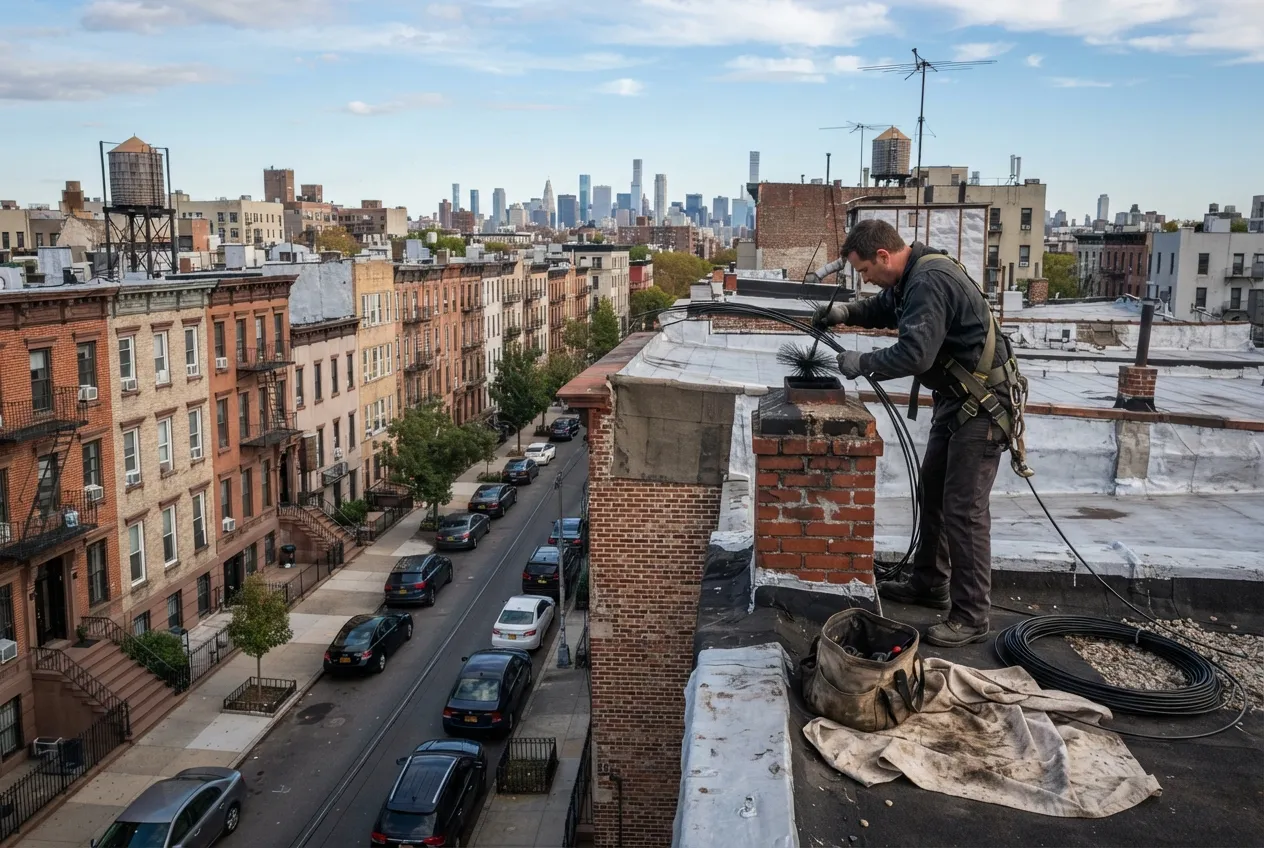
East Midtown chimneys work hard. Many serve pre-war apartment buildings, co-ops and townhouses, where one masonry stack may vent a boiler, a fireplace, or both. PrimeFlue Chimney Services is about a mile from the neighborhood, at our Manhattan office. Our certified technicians repair the chimneys that run through these buildings, from the crown at the roofline down to the flue liner. This page covers the repairs we see most often in East Midtown and how to plan the work around the heating season.
Common Chimney Problems in East Midtown Buildings
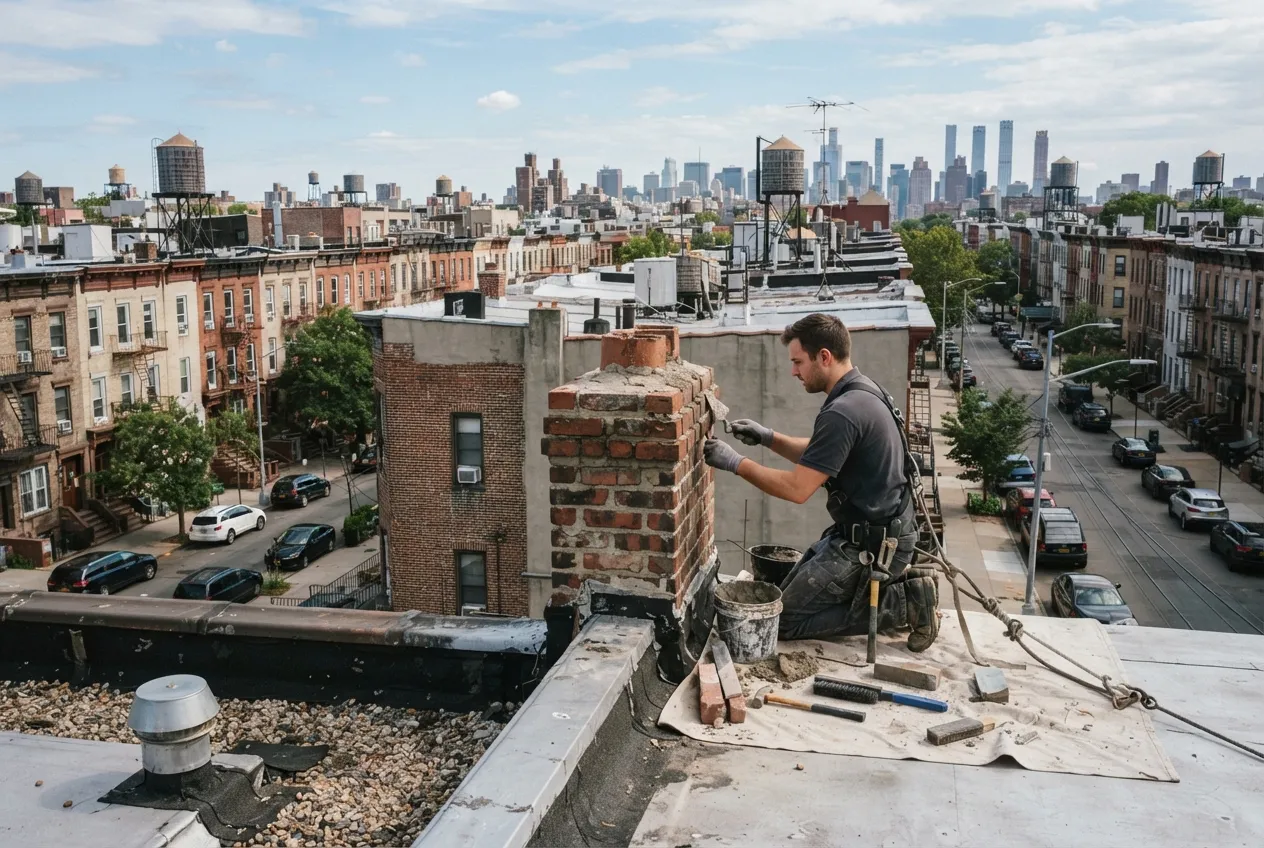
Most chimneys in East Midtown are tall masonry stacks on older buildings, often exposed on the roof to wind, rain and freeze-thaw cycles. Over decades, mortar joints wear away, bricks spall and crack, and the concrete crown at the top develops gaps that let water into the flue. Water that gets inside can rust dampers, stain interior walls, and loosen the flue tiles.
Inside the chimney, a different kind of damage builds up. Heat, combustion byproducts and moisture break down clay tile liners and mortar over time. A cracked or gapped liner can let heat and exhaust reach the surrounding masonry, so liner condition matters as much as the brickwork you can see from the street.
- Crumbling or missing mortar joints (repointing)
- Spalled, cracked or loose bricks
- Cracked or failing chimney crowns
- Missing or rusted chimney caps
- Leaking flashing where the chimney meets the roof
- Cracked, shifted or deteriorated flue liners
- Damaged dampers and smoke chambers in fireplaces
Oil-to-Gas Conversions and Chimney Relining
Many East Midtown buildings have converted, or plan to convert, their boilers from oil to gas. When a New York City building makes that switch, the chimney has to be evaluated as part of the work. A new liner is often needed, because gas exhaust produces acidic condensate that can corrode a masonry flue that was built for oil.
If your building is planning a conversion, bring the chimney into the conversation early. We can inspect the existing flue, explain whether relining is likely, and coordinate with the boiler contractor so the venting is ready when the new equipment is. Because a change of fuel counts as a change to the system, this is the kind of situation that calls for a more detailed inspection than a routine annual check.
How We Approach a Repair
Every repair starts with an inspection. The NFPA 211 standard calls for chimneys, fireplaces and vents to be inspected once a year, and it describes three levels. A Level 1 inspection fits when nothing about the system has changed. A Level 2 inspection applies when the system changes, such as a new appliance or a fuel switch, or when the home is sold, and often includes a camera look down the flue. A Level 3 inspection is for cases where a hidden hazard can only be reached by opening part of the chimney or building.
Once we know what's wrong, we explain the findings in plain terms, show you photos where we can, and describe the repair options. For buildings with a super, managing agent or co-op board, we can share the same information with them so decisions don't stall.
- Inspect the chimney and identify the cause, not just the symptom
- Review findings and repair options with you or building management
- Schedule the work, including any roof access the building requires
- Complete the repair and walk you through what was done
Time for your annual chimney check?
Planning Repairs Around the Heat Season
New York City's heat season runs from October 1 through May 31. During those months, building owners must keep apartments heated to the city's minimum temperatures, so taking a boiler chimney out of service is harder to arrange. Late spring and summer are usually the easiest times for relining and major masonry work on boiler flues.
For fireplace chimneys in townhouses and brownstones, early fall is a common choice, so repairs are done before the first fire of the season. If you notice a leak, falling debris or a smoke problem mid-winter, don't wait for a convenient window. Call us so we can assess whether it needs attention right away.
Areas We Serve Near East Midtown
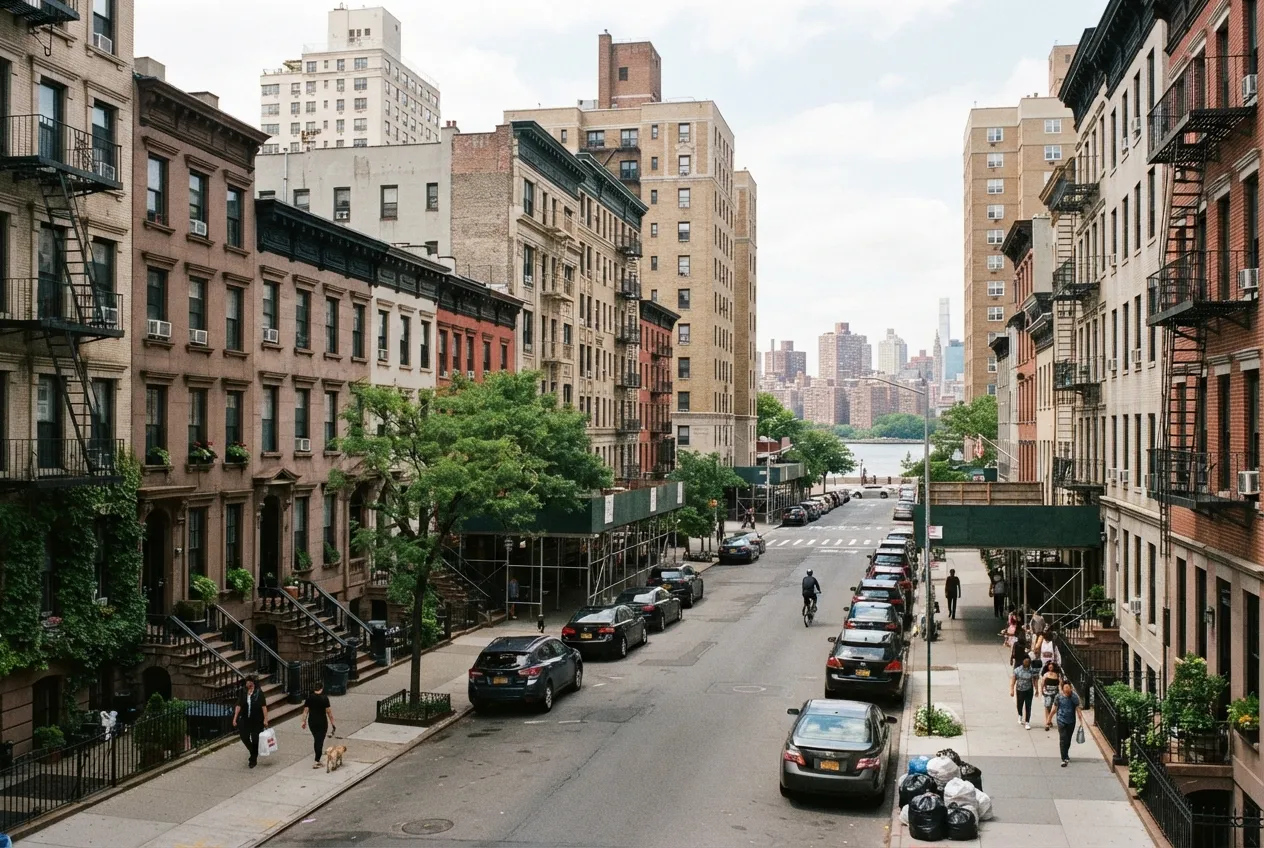
We handle chimney repair throughout East Midtown, including ZIP codes 10017, 10022, 10152, 10154, 10167, 10169, 10170, 10171, 10172 and 10174. We also work in the nearby neighborhoods of Turtle Bay, Lenox Hill, Roosevelt Island, the Upper East Side and Carnegie Hill, where the housing mix of pre-war buildings and townhouses brings many of the same repair needs.
More services in East Midtown
- Chimney Sweep in East Midtown
- Chimney Inspection in East Midtown
- Air Duct Cleaning in East Midtown
- Chimney Liner Installation in East Midtown