The short answer
If your chimney's liner is cracked, missing, or the wrong size for your heating appliance, a new liner protects the masonry and helps exhaust vent safely. In Ravenswood, the most common reason is a boiler conversion from oil to gas, which usually requires the chimney to be evaluated and often relined.
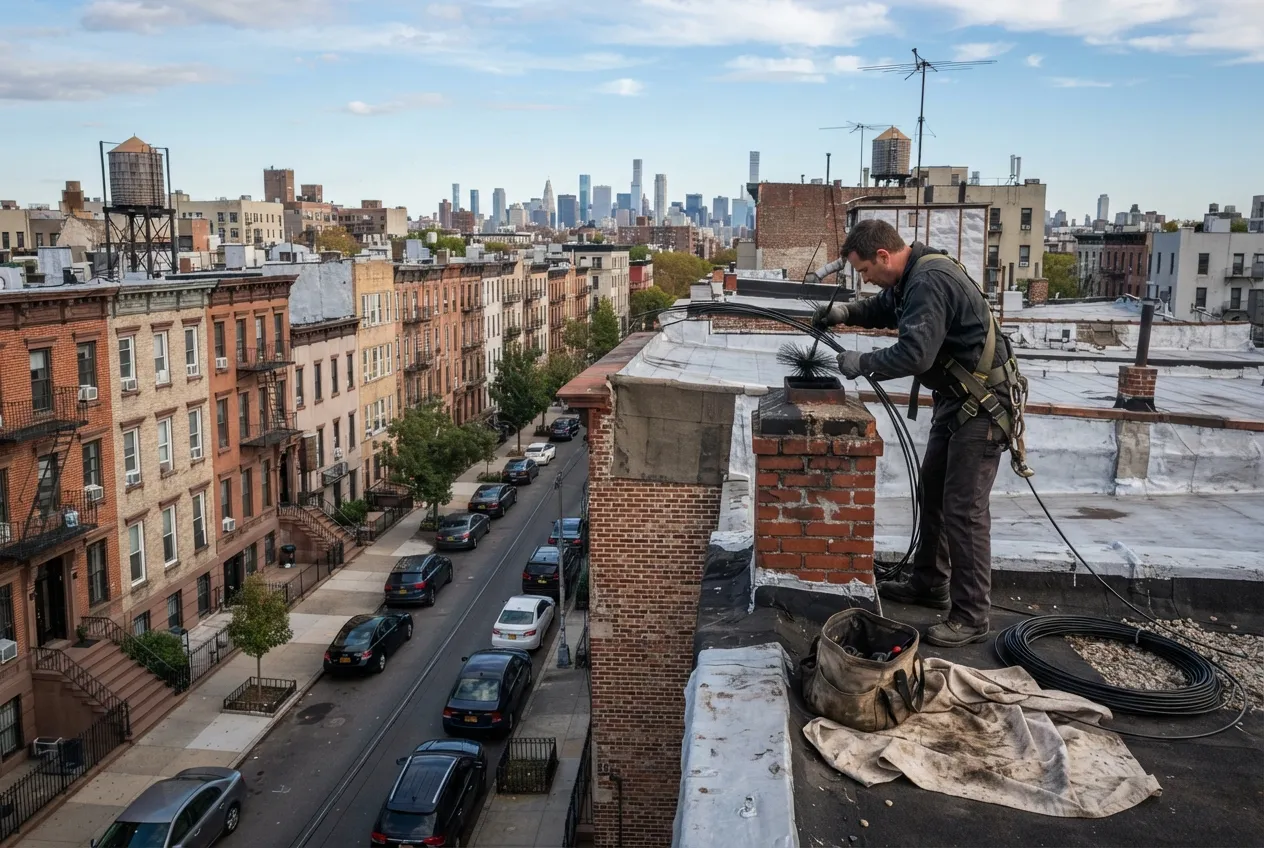
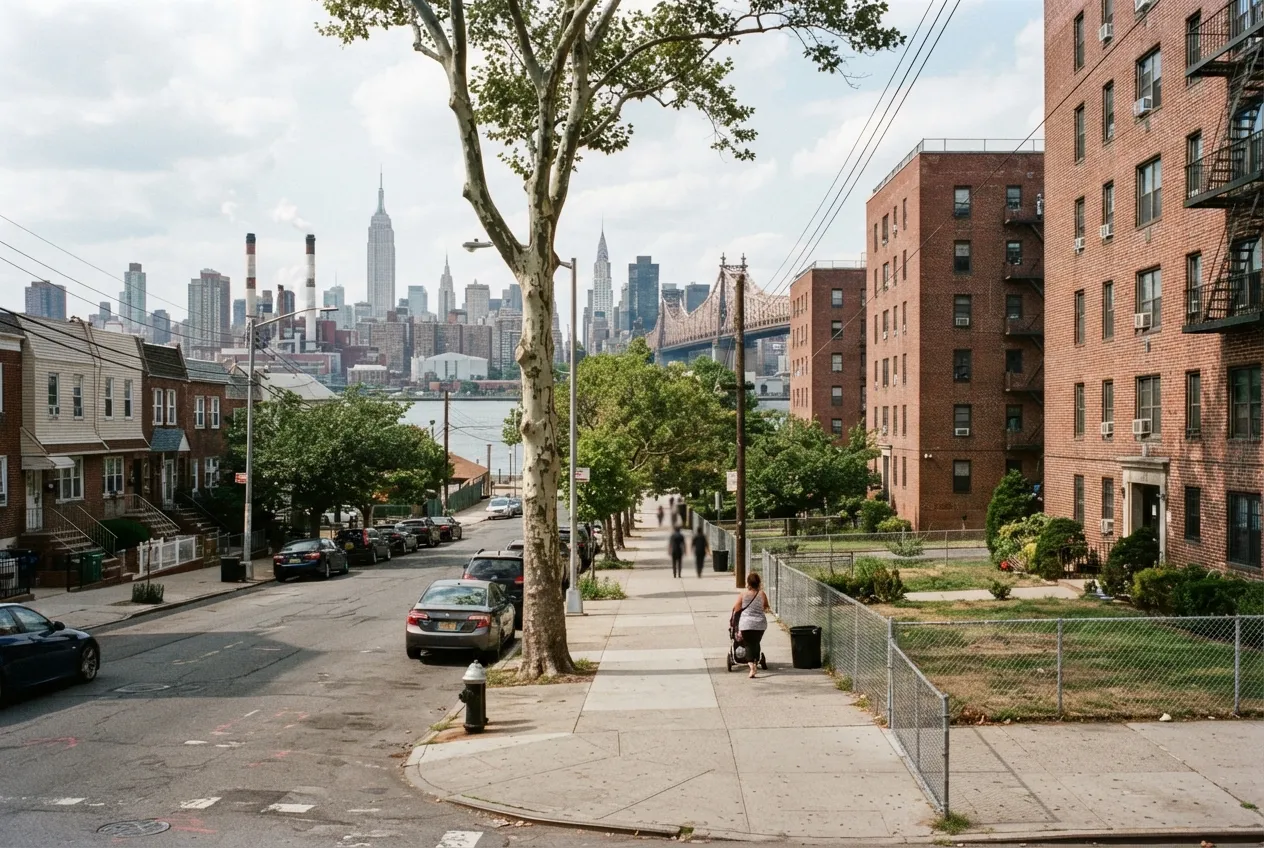
A chimney liner is the protective channel inside a flue. It carries smoke and exhaust gases up and out of the house and keeps heat and corrosive byproducts away from the surrounding brick and framing. In Ravenswood, many homes and buildings are older masonry construction: rowhouses, small multifamily houses, and pre-war apartment buildings. Many of their flues were built long before modern boilers, water heaters, and gas conversions were common. PrimeFlue Chimney Services installs and replaces chimney liners for homes in Ravenswood and ZIP code 11106. We are about a mile southeast of our Manhattan office, so this area is close to home for our crews. This page explains when a liner is needed, what the work involves, and how to plan it around the heating season.
Why Liners Matter in Ravenswood's Older Masonry Chimneys
Many chimneys in older Queens rowhouses and pre-war buildings were lined with clay tile, or in some cases not lined at all. Over decades, clay tiles can crack, joints can erode, and mortar can wash out. Once that happens, heat and exhaust can reach the brick and nearby wood. Combustion gases can also leak into living spaces instead of venting outside.
A liner also has to fit the appliance it serves. A flue that is too large for a modern, efficient boiler or water heater may not draft well. Cooler exhaust can then linger and condense inside the chimney. A properly sized liner helps the system draft the way the appliance manufacturer intended.
- Cracked, shifted, or missing clay flue tiles
- Flaking or crumbling masonry inside the flue
- Water stains, white staining, or moisture around the chimney
- Backdrafting, odors, or soot near the appliance
- A new boiler, furnace, or water heater connected to an old flue
Oil-to-Gas Conversions and Relining
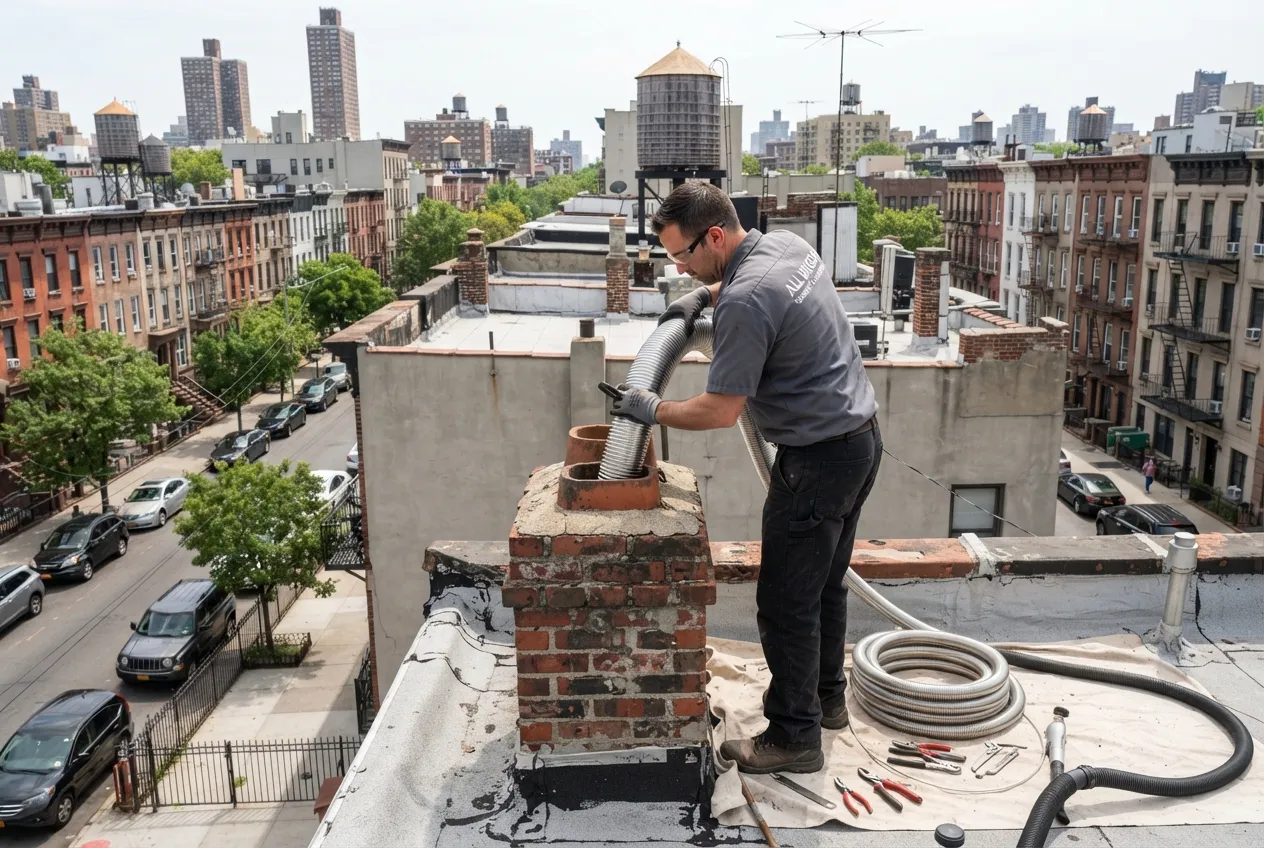
Many Ravenswood buildings once heated with oil and have since switched, or plan to switch, to gas. When a New York City building converts its boiler from oil to gas, the chimney has to be evaluated as part of the work. Gas exhaust produces acidic condensate, and that moisture can corrode a masonry flue over time. For that reason, a new liner is often needed.
If you are planning a conversion, involve us early so the chimney evaluation is not a last-minute surprise. We can inspect the flue and report on its condition. We can also coordinate with your heating contractor so the liner is sized and installed to match the new equipment.
What Liner Installation Involves
Every chimney is different, but most relining jobs in Ravenswood follow the same general sequence. Our certified technicians walk you through each step before work begins.
- Inspection of the existing flue, often with a camera, to document its condition
- Confirming which appliances connect to the chimney and what fuel they use
- Selecting a liner material and diameter suited to the appliance, most often stainless steel for gas and oil systems
- Cleaning the flue and removing loose debris or broken tile where needed
- Lowering and securing the liner from the roof, then connecting it at the appliance
- Installing a cap to keep out rain, debris, and animals
- A final check of draft and connections, with photos of the completed work
Time for your annual chimney check?
Access, Rooftops, and Multifamily Buildings
Relining is mostly done from the roof, so access matters. In attached rowhouses and small apartment buildings, roof access may be through a hatch or bulkhead. Chimneys may also sit close to a neighbor's. We will ask about access ahead of time and plan the work to keep disruption to a minimum.
In buildings with several units, one chimney may serve a shared boiler or more than one appliance. We confirm exactly what vents into each flue before recommending a liner. That way the new system matches how the building actually heats.
Planning Around Heat Season and Annual Inspections
New York City's heat season runs from October 1 through May 31. During that period, building owners must keep apartments heated to the city's minimum temperatures. Because relining usually means taking the heating system offline for a time, late spring and summer are the easiest months to schedule. If a liner problem turns up in winter, we will talk through your options so heat is not interrupted longer than necessary.
The NFPA 211 standard calls for chimneys, fireplaces, and vents to be inspected once a year. When the system changes, such as a new appliance or a switch of fuel, a more thorough Level 2 inspection is appropriate. That makes a conversion or appliance replacement a natural time to review the liner. We also serve nearby Queensbridge, Dutch Kills, Old Astoria, Roosevelt Island, and Lenox Hill.
More services in Ravenswood
- Chimney Sweep in Ravenswood
- Chimney Inspection in Ravenswood
- Chimney Repair in Ravenswood
- Air Duct Cleaning in Ravenswood