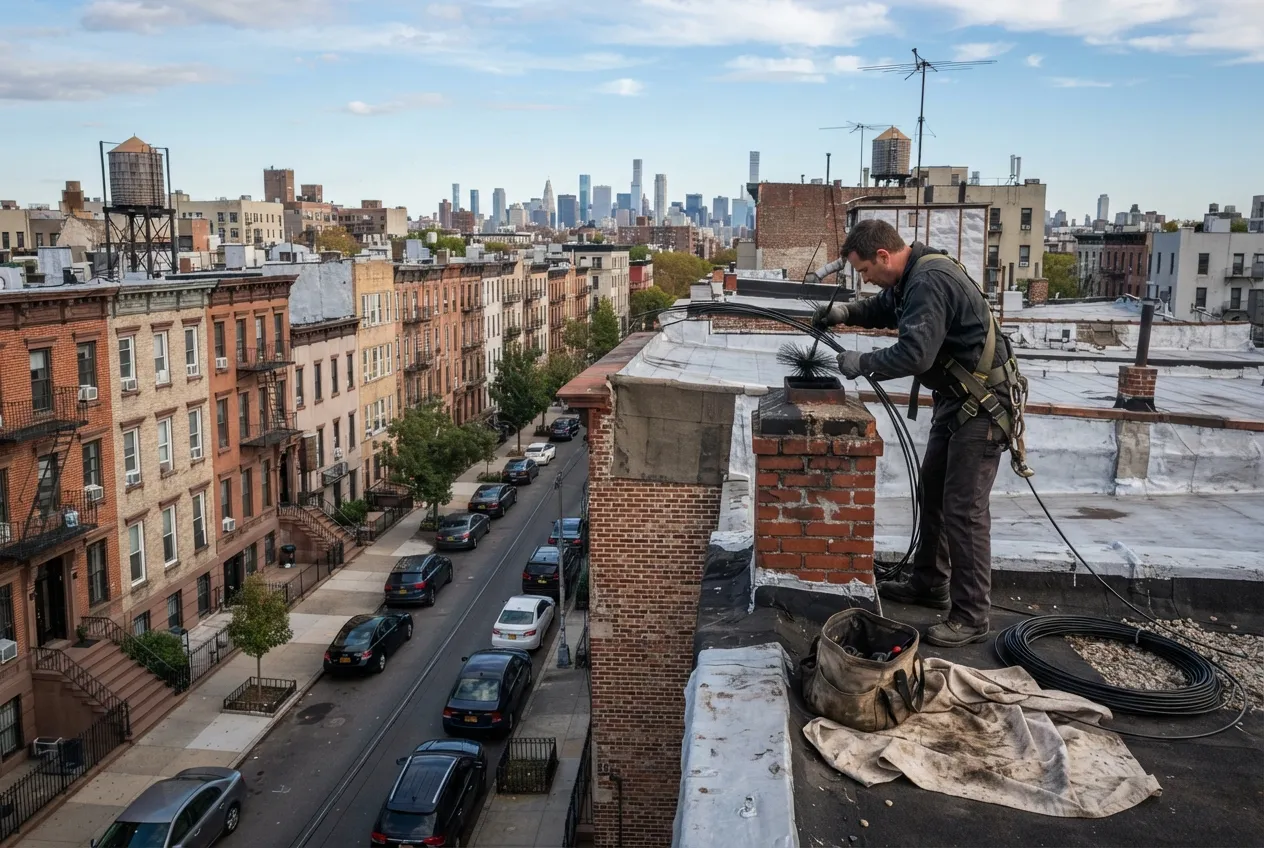
The short answer
PrimeFlue repairs chimneys in Old Astoria, including masonry, crowns, flashing, dampers and flue liners, for rowhouses, detached homes and pre-war buildings. We start with an inspection to find the cause, then explain the repair options before any work begins.
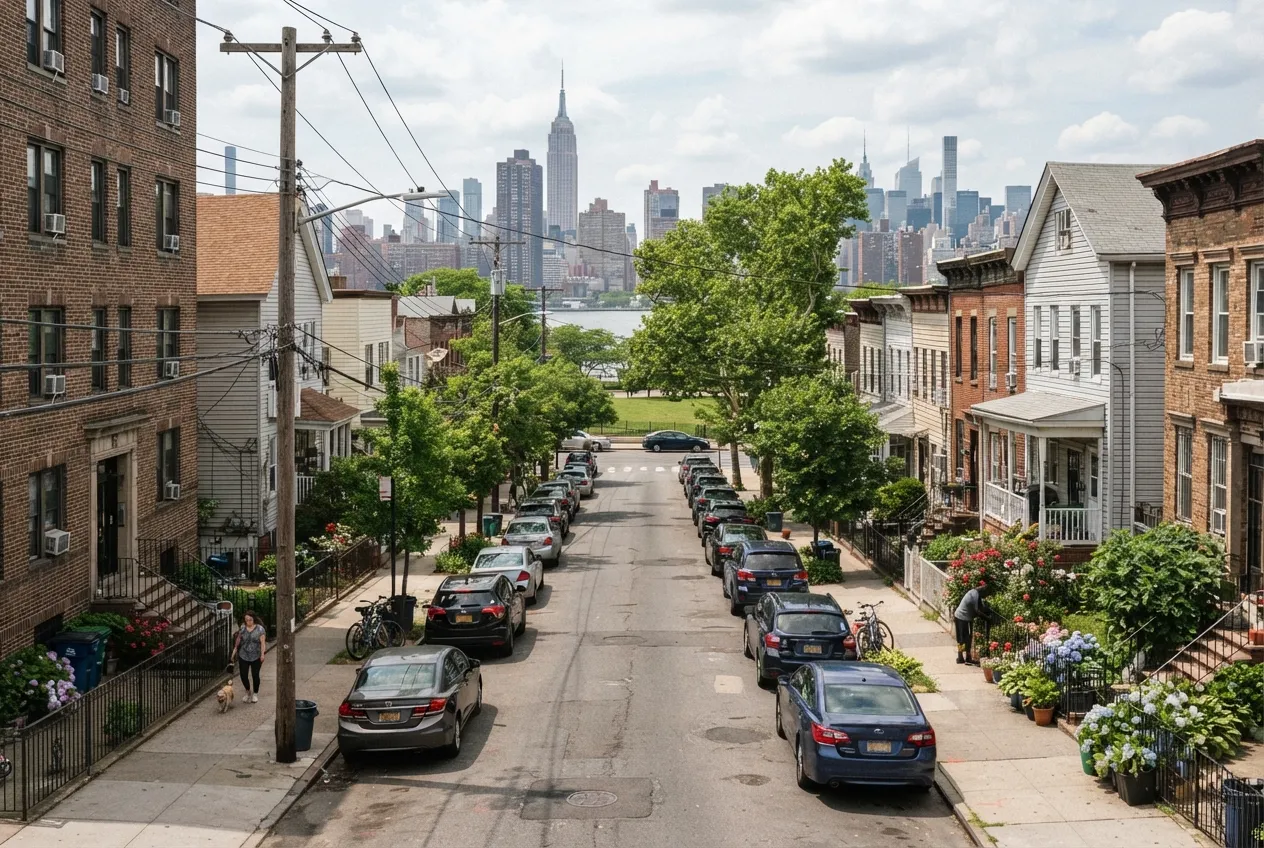
Old Astoria has many older rowhouses, attached brick homes, detached houses and pre-war apartment buildings. Their chimneys have taken decades of freeze-thaw cycles, wind and rain blowing in off the East River, and long heating seasons. PrimeFlue Chimney Services repairs chimneys across the neighborhood, about a mile east of our Manhattan office. Our certified technicians find out why a chimney is failing, explain what they see in plain terms and fix the problem so your fireplace, boiler or furnace can vent safely. Below is how we approach chimney repair for Old Astoria homes and what to expect when you call us out.
Chimney Problems We See in Old Astoria Homes
Most chimneys in Old Astoria are brick, and many have been standing a long time. Water is the most common cause of damage. Water soaks into worn mortar and cracked crowns. In winter it freezes and expands, and over time bricks loosen, spall or shift. On attached rowhouses the chimney often sits close to a neighbor's roofline, so flashing and roof-to-chimney joints need careful attention.
Inside the flue, older clay tile liners can crack or separate. Homes that have switched heating fuel sometimes have liners that no longer suit the appliance. These problems are often invisible from the street, so a chimney that looks fine can still need repair.
- Crumbling or missing mortar joints
- Cracked or deteriorated chimney crowns
- Leaking or lifted flashing where the chimney meets the roof
- Spalling, flaking or loose bricks
- Damaged or missing chimney caps
- Cracked clay flue tiles or corroded metal liners
- Stuck, rusted or poorly sealing dampers
Inspection Comes Before Repair
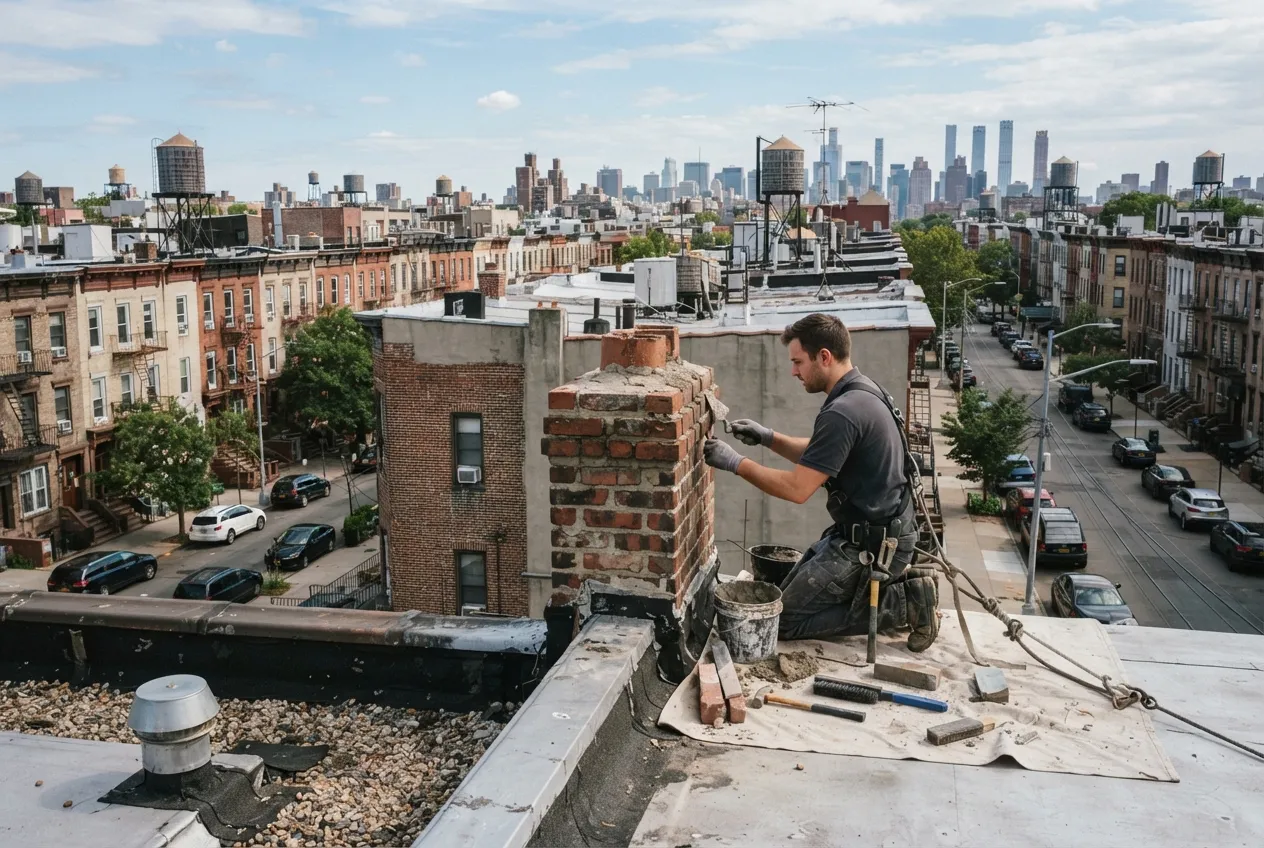
We don't guess at repairs. The NFPA 211 standard calls for chimneys, fireplaces and vents to be inspected once a year. It also defines three inspection levels, and we use the one that fits your situation. A Level 1 inspection fits when nothing about the system has changed. A Level 2 inspection applies when the system changes, such as a new appliance or a switch of fuel, or when the home is being sold. A Level 3 inspection is for cases where a suspected hidden hazard can only be reached by opening part of the chimney or building.
After the inspection, we walk you through what we found. You'll know which issues need prompt attention, which can be planned for later, and what each repair involves. Then you decide how to proceed.
Chimney Repairs We Handle
Repairs are matched to the cause of the problem, not just the symptom. Repointing a few joints won't help if a broken crown keeps sending water into the brick below. Our technicians look at the whole chimney from cap to firebox so the repair holds up.
- Tuckpointing and repointing of worn mortar joints
- Crown repair and rebuilding to shed water away from the flue
- Flashing repair and replacement at the roofline
- Brick replacement and partial rebuilds of damaged sections
- Chimney cap installation to keep out rain, debris and animals
- Flue liner repair and relining for fireplaces and heating appliances
- Damper repair and replacement, including top-sealing dampers
- Firebox and smoke chamber repairs
Time for your annual chimney check?
Oil-to-Gas Conversions and Chimney Liners
Many buildings in this part of Queens once heated with oil. In New York City, when a building converts its boiler from oil to gas, the chimney has to be evaluated as part of the work. A new liner is often needed. Gas exhaust produces acidic condensate, and that condensate can corrode a masonry flue that was never built to handle it.
If you own a rowhouse, a detached home or a small pre-war building and you're planning a conversion, bring us in early. We can assess the existing flue and explain whether relining is likely. That way the chimney work fits into your conversion schedule instead of holding it up.
Planning Repairs Around the Heat Season
New York City's heat season runs from October 1 through May 31. During that time, building owners must keep apartments heated to the city's minimum temperatures. If your boiler vents through a damaged chimney, a repair that takes the heating system offline is much harder to schedule in January than in June.
For most homeowners and small building owners in Old Astoria, late spring and summer are the easiest times for masonry and liner work. Mortar and crown repairs also cure better in milder weather. If an inspection turns up a safety problem in the middle of winter, we'll explain your options and the safest way forward.
Serving Old Astoria and Nearby Neighborhoods
Along with Old Astoria, we repair chimneys in nearby Hallets Point, Ravenswood, Queensbridge and Dutch Kills, and across the river in Yorkville. Housing in these areas ranges from older attached homes to larger apartment buildings. Our technicians are familiar with the chimney types common to each.
More services in Old Astoria
- Chimney Sweep in Old Astoria
- Chimney Inspection in Old Astoria
- Air Duct Cleaning in Old Astoria
- Chimney Liner Installation in Old Astoria