The short answer
Most chimney repairs in Lenox Hill involve masonry, crowns, flashing, dampers or flue liners on older brownstones, rowhouses and pre-war buildings. We start with an inspection to find the cause, then repair or reline as needed. Buildings switching a boiler from oil to gas usually need the chimney evaluated and often relined.
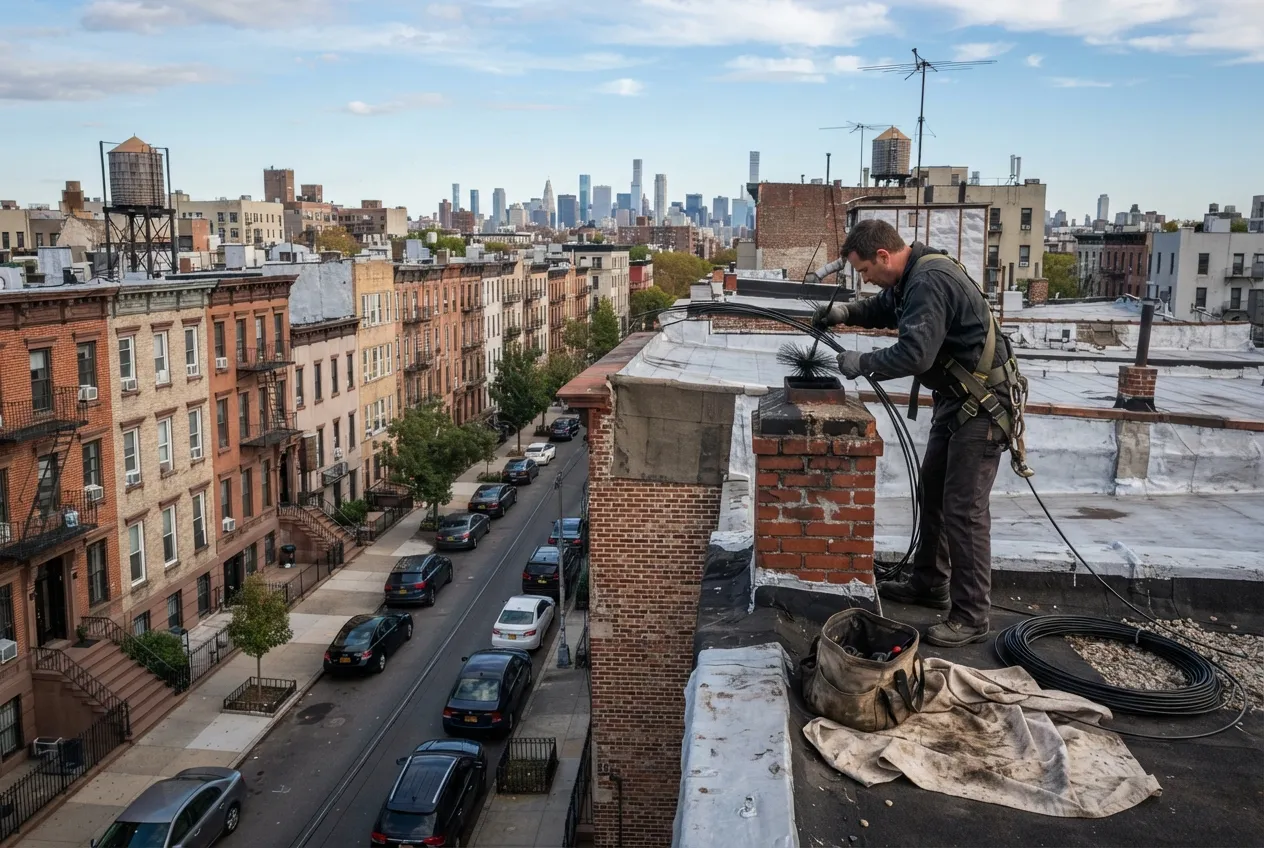
Chimneys on Lenox Hill brownstones, rowhouses and pre-war apartment buildings take a steady beating from freeze-thaw cycles, wind-driven rain and decades of use. Small problems like a cracked crown, loose bricks or failing flashing tend to grow quietly until they show up as a water stain on a ceiling, a smoky fireplace or a draft that won't behave. PrimeFlue Chimney Services handles chimney repair from our office at 18 E 75th St, so we work in this neighborhood every week. Our certified technicians find the actual cause of the problem, explain what they see in plain terms, and fix what needs fixing without selling you work you don't need.
Common Chimney Repairs in Lenox Hill Homes
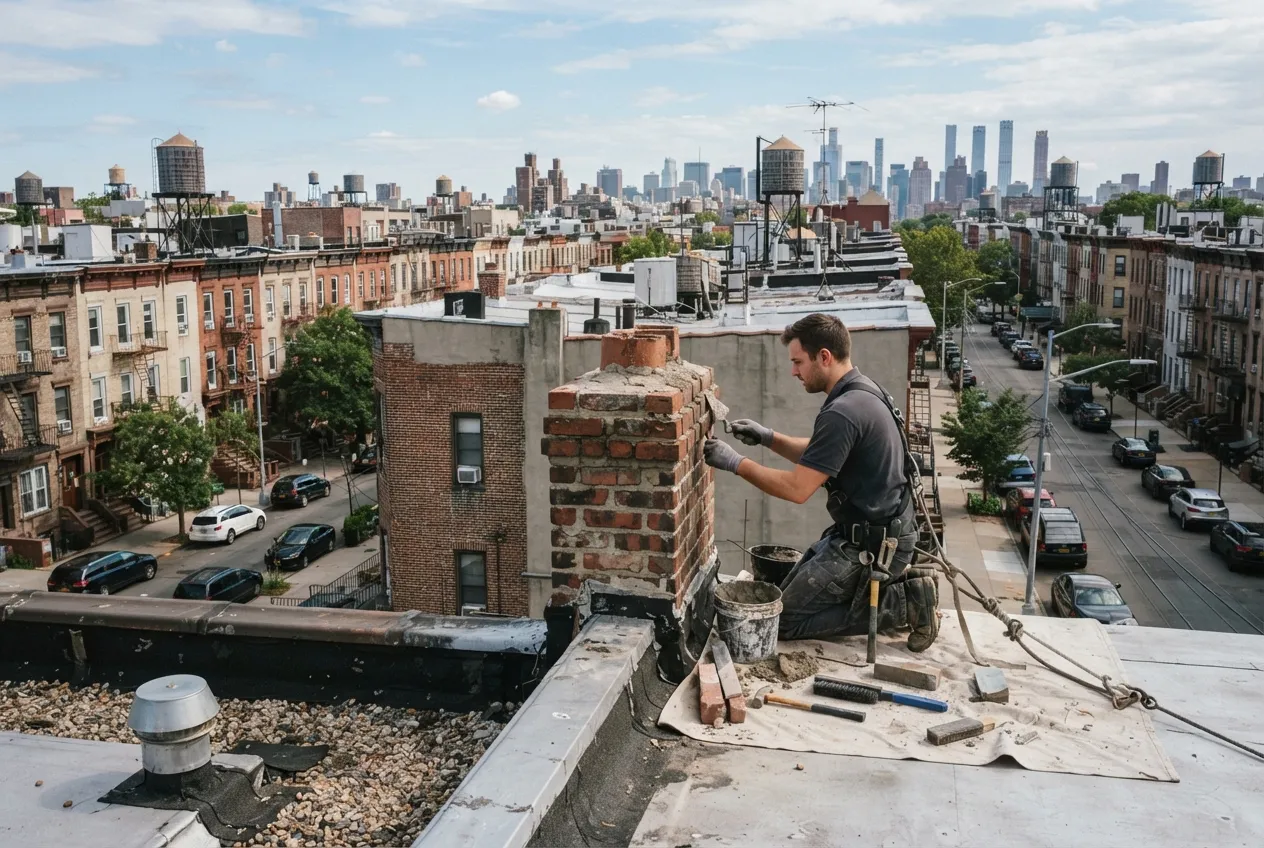
Most chimneys in Lenox Hill are masonry, and many have been in service for generations. Brick and mortar wear down over time, and repairs made long ago don't always hold up. Water does most of the damage. Once it gets into the brick, winter freezing pushes joints apart and speeds up decay inside the flue.
These are the repairs we're asked about most often:
- Repointing: replacing cracked or missing mortar joints so water stays out of the masonry
- Crown repair or rebuilding: fixing the concrete cap on top of the chimney that sheds rain and snow
- Flashing repair: resealing the joint between the chimney and the roof, a frequent source of leaks
- Chimney caps: installing or replacing caps that keep out rain, debris and animals
- Damper repair or replacement: fixing dampers that are stuck, warped or won't seal
- Firebox and smoke chamber repair: restoring cracked firebrick and rough or damaged interior masonry
- Flue liner repair and relining: fixing cracked clay tiles or installing a new liner
Flue Liners and Oil-to-Gas Conversions
Many buildings in the neighborhood have moved, or are moving, from oil heat to gas. When a New York City building converts its boiler from oil to gas, the chimney has to be evaluated as part of the work. A new liner is often needed. Gas exhaust produces acidic condensate, and that moisture can corrode a masonry flue that was built for oil.
We look at the condition of the existing flue, whether it is the right size for the new appliance, and whether relining is the sensible choice. If your building is planning a conversion, it helps to bring us in early so the chimney work fits the project schedule instead of holding it up.
How a Chimney Repair Visit Works
Every repair starts with an inspection. The NFPA 211 standard calls for chimneys, fireplaces and vents to be inspected once a year. Chimney professionals use three levels of inspection. Level 1 applies when nothing about the system has changed. Level 2 applies when something has changed, such as a new appliance or a switch of fuel, or when the home is being sold. Level 3 applies when a hidden hazard can only be reached by opening part of the chimney or building.
After the inspection, we walk you through what we found and what we recommend, and we separate urgent repairs from items that can wait. In brownstones and rowhouses, rooftop access and shared walls with neighboring buildings can affect how the work is done. We plan for that up front and protect your interior while we work.
Time for your annual chimney check?
Timing Repairs Around Heat Season
New York City's heat season runs from October 1 through May 31. During those months, building owners must keep apartments heated to the city's minimum temperatures. For a pre-war apartment building with a boiler flue, that means you can't take the chimney out of service in the middle of winter without a plan.
The easiest time to handle masonry, crown and liner work is late spring through early fall. If a problem shows up during heat season, we'll help you figure out what has to be fixed right away and what can safely wait for warmer weather.
Areas We Serve Near Lenox Hill
Our office is in Lenox Hill, and we cover the surrounding Manhattan ZIP codes 10021, 10044, 10065, 10075 and 10162. We also serve homeowners and buildings in Roosevelt Island, the Upper East Side, Carnegie Hill, Yorkville and East Midtown.
More services in Lenox Hill
- Chimney Sweep in Lenox Hill
- Chimney Inspection in Lenox Hill
- Air Duct Cleaning in Lenox Hill
- Chimney Liner Installation in Lenox Hill