The short answer
You need a new chimney liner when the existing flue is damaged, missing, or no longer suited to the appliance or fuel venting through it, which is common after an oil-to-gas boiler conversion in New York City. PrimeFlue inspects the flue, sizes a liner for your fireplace, boiler or water heater, and installs it in Lenox Hill homes and buildings.
A chimney liner is the inner wall of the flue that carries smoke and exhaust gases out of your home. In Lenox Hill, many chimneys run through brownstones, townhouses and pre-war apartment buildings, and plenty of those flues were built for a different fuel or a different appliance than the one in use today. When a liner is cracked, missing or the wrong size, heat and combustion gases can reach the masonry and nearby framing, and exhaust may not draft properly. PrimeFlue Chimney Services installs new liners from our office at 18 E 75th St, so our certified technicians are close by when you need a flue evaluated and relined.
Why Liners Matter in Lenox Hill Homes
Older masonry chimneys in this neighborhood often have clay tile flues, unlined brick, or patched sections from past repairs. Over decades, freeze-thaw cycles, settling and heat can crack tiles or open mortar joints. A liner that has failed can let heat move into the surrounding structure and let exhaust leak where it should not.
Liners also have to match the appliance. A flue sized for an old oil burner or an open fireplace may be too large for a modern, efficient boiler or water heater, which can lead to weak draft and condensation inside the chimney.
- Cracked, spalling or missing flue tiles found during an inspection
- Water stains, crumbling mortar or flaking masonry inside the firebox or near the chimney
- Draft problems, smoke spillage or odors when an appliance runs
- A new appliance, a fuel switch, or reopening a fireplace that has sat unused
Oil-to-Gas Conversions and Relining
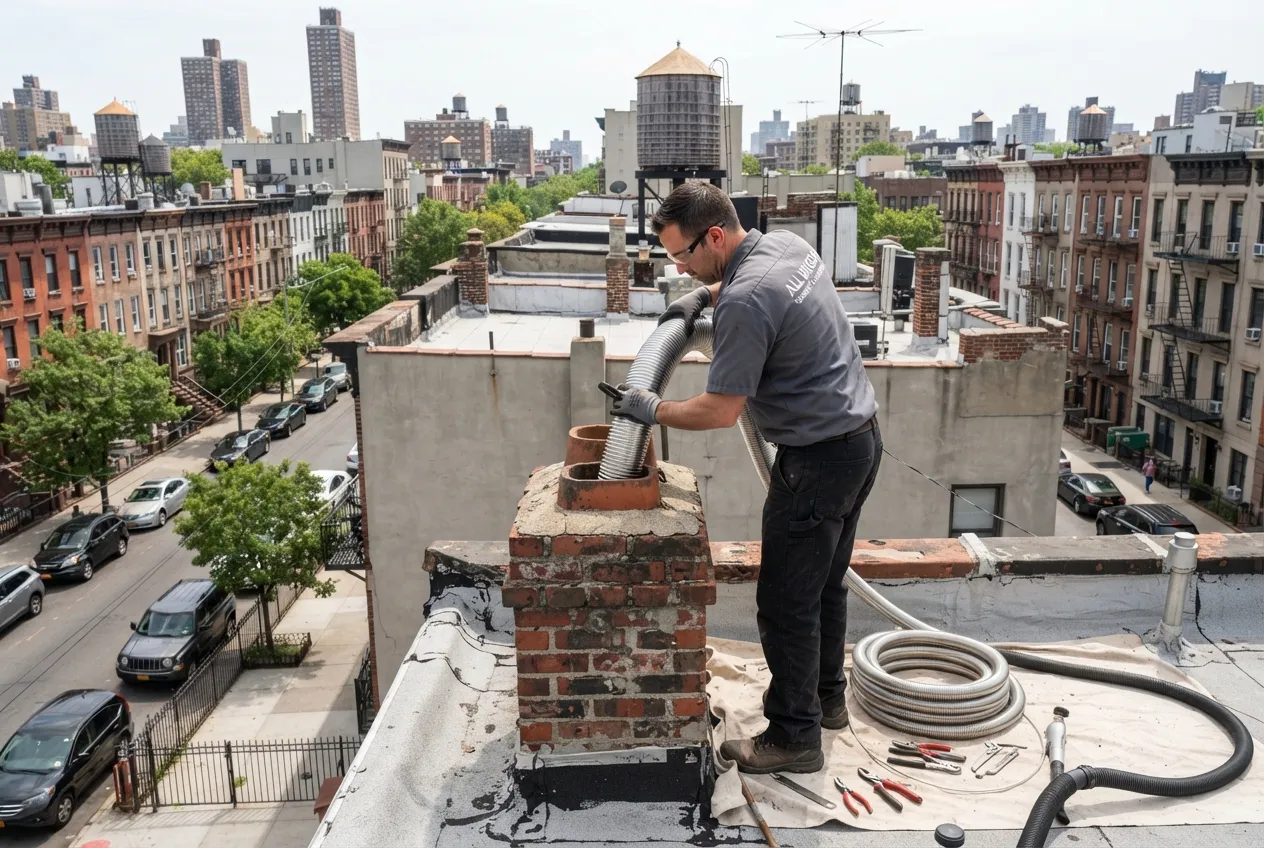
When a New York City building converts its boiler from oil to gas, the chimney has to be evaluated as part of the work. A new liner is often needed because gas exhaust produces acidic condensate that can corrode a masonry flue. This applies to brownstones and townhouses with their own boilers as well as to larger pre-war buildings.
We coordinate with the owner, building manager or heating contractor so the liner is sized to the new equipment and installed in step with the conversion schedule.
Choosing the Right Liner
There is no single liner that fits every chimney. We recommend a type based on the appliance, the fuel, the shape and condition of the flue, and how much access the building allows.
- Stainless steel liners: common for gas and oil appliances and for relining flues that are offset or irregular
- Insulated stainless liners: often used with wood-burning fireplaces and where added protection for nearby materials is needed
- Cast-in-place liners: a poured lining that can help restore an older masonry flue
- Clay tile replacement: an option in some straight, accessible chimneys
Time for your annual chimney check?
How Installation Works
The NFPA 211 standard calls for chimneys, fireplaces and vents to be inspected once a year, and it describes three inspection levels. A Level 2 inspection applies when the system changes, such as a new appliance or a fuel switch, or when a home is sold. If a hidden problem has to be reached by opening part of the chimney or building, a Level 3 inspection may be needed.
After the inspection, we measure the flue, confirm the liner size for the connected appliance, and plan roof and interior access. In apartment buildings, that usually means scheduling with management and protecting common areas. We then install the liner, connect it to the appliance, cap the top, and check draft before we finish. You get a clear explanation of what we found and what we did.
Timing Around Heat Season
New York City's heat season runs from October 1 through May 31, when building owners must keep apartments heated to the city's minimum temperatures. Relining a boiler flue in the middle of winter means shutting down heat, so many owners and managers plan liner work for late spring or summer. If a problem turns up during the heating months, we work with you to keep downtime as short as practical.
Serving Lenox Hill and Nearby Neighborhoods
We install chimney liners throughout Lenox Hill, including ZIP codes 10021, 10065, 10075 and 10162, and on Roosevelt Island in 10044. We also serve the Upper East Side, Carnegie Hill, Yorkville and East Midtown.
More services in Lenox Hill
- Chimney Sweep in Lenox Hill
- Chimney Inspection in Lenox Hill
- Chimney Repair in Lenox Hill
- Air Duct Cleaning in Lenox Hill