The short answer
PrimeFlue Chimney Services provides chimney sweeping, inspection, repair, relining and rebuilding, plus dryer vent and air duct cleaning, across Long Island City (11101 and 11109). Our certified technicians work in rowhouses, pre-war apartment buildings and newer homes. We also serve nearby Queensbridge, Ravenswood, Dutch Kills, East Midtown and Turtle Bay.
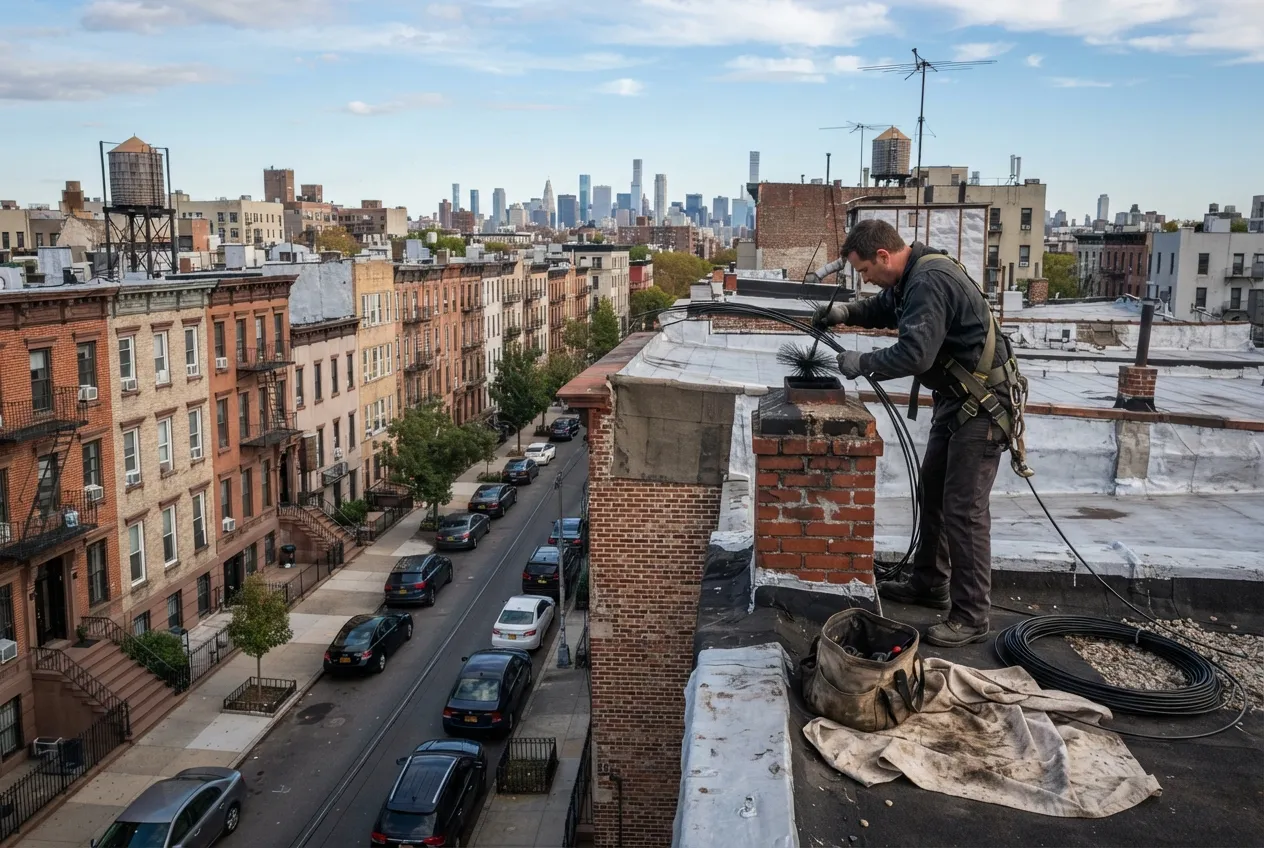
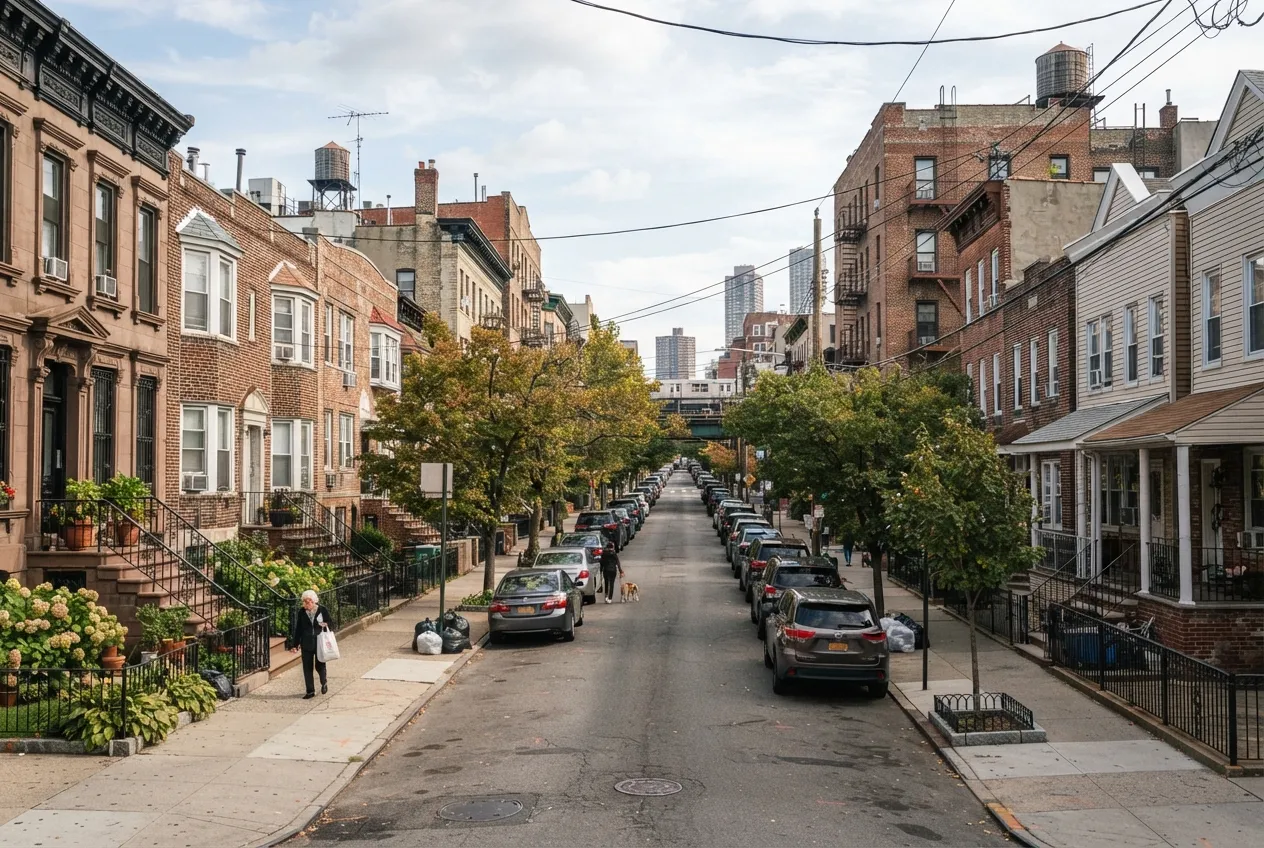
PrimeFlue Chimney Services works throughout Long Island City, Queens, including ZIP codes 11101 and 11109. The neighborhood is about 2 miles from our Manhattan office, so our certified technicians can get to homes and buildings here without a long trip across the city. Long Island City has older rowhouses, pre-war apartment buildings, mixed-use buildings with shops below and apartments above, and newer residential buildings. Each type vents differently, from a single fireplace flue in a rowhouse to a tall masonry chimney serving a building's boiler. We sweep, inspect, repair, reline and rebuild chimneys, and we clean dryer vents and air ducts. Here is what owners and residents should know about keeping those systems working safely.
How Long Island City Housing Affects Your Chimney
Many rowhouses in the neighborhood have masonry chimneys that are decades old. Some flues were built without liners, and others have clay tile liners that crack over time. A cracked or missing liner lets heat and exhaust reach the surrounding brick and framing, so it is one of the first things we check.
Pre-war apartment buildings usually send boiler exhaust up one tall masonry chimney. That chimney works hard all winter, and problems such as loose brick, blockages or a deteriorating liner affect every apartment in the building. Newer buildings often have no fireplace at all, but they still depend on dryer vents and ductwork that need regular cleaning.
Queens Weather and Masonry Wear
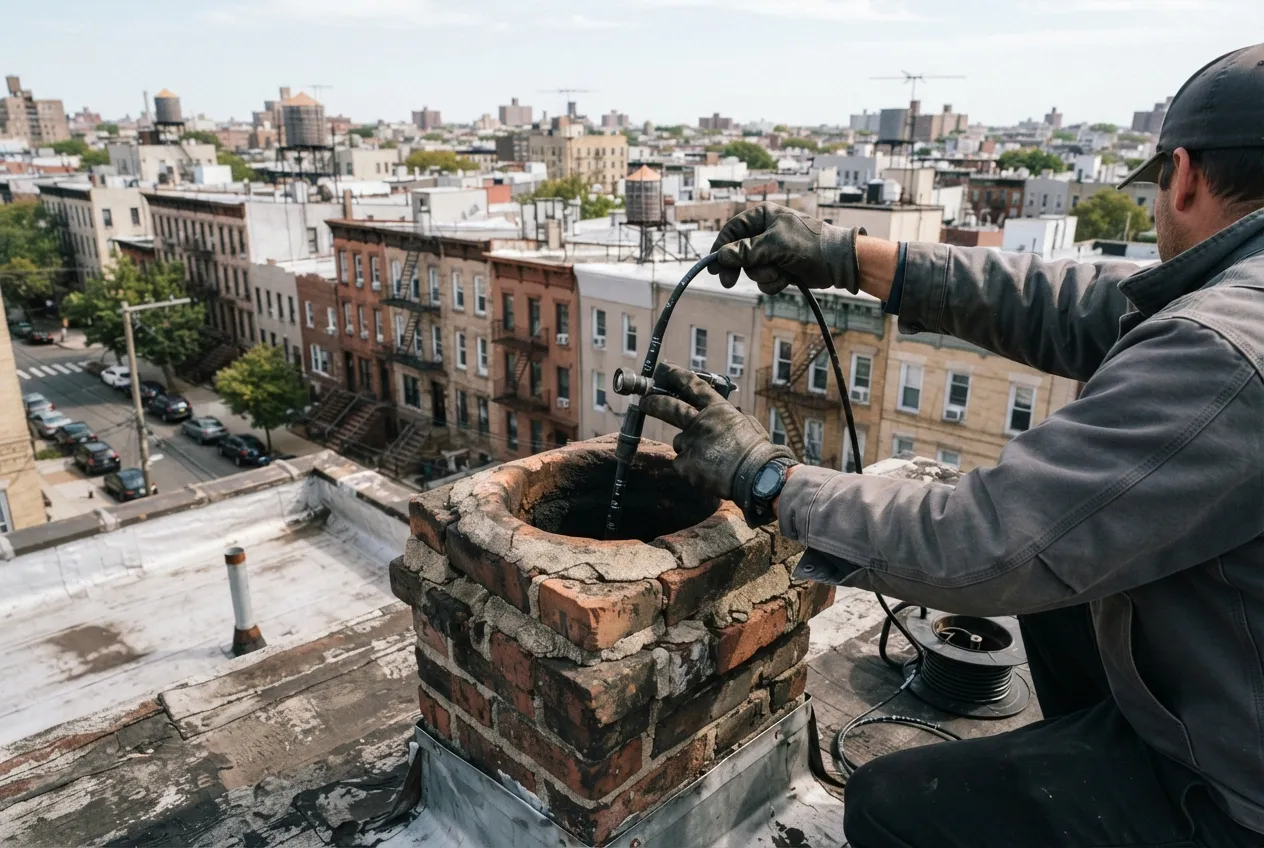
New York winters bring repeated freeze-thaw cycles. Water soaks into brick and mortar, freezes, expands and slowly breaks the masonry apart. Wind-driven rain from coastal storms pushes more water into chimney crowns and joints. Humid summers can leave fireplaces with a musty or smoky smell when moisture mixes with old creosote.
Most of this damage starts at the top of the chimney, which is why we focus on keeping water out:
- Chimney caps to block rain, debris and animals
- Chase covers for framed chimneys on newer additions
- Waterproofing that lets masonry breathe while shedding water
- Crown and mortar repair before small cracks grow
- Rebuilding the upper courses when brick is too far gone
Heat Season and Oil-to-Gas Conversions
New York City's heat season runs from October 1 through May 31. During those months, building owners must keep apartments heated to the city's minimum temperatures, so a blocked or damaged boiler chimney in January becomes an urgent problem. We suggest scheduling inspections and repairs in late summer or early fall, before the boiler is running full time.
Many older buildings have switched or plan to switch their boilers from oil to gas. When a city building makes that change, the chimney has to be evaluated as part of the work. A new liner is often needed because gas exhaust produces acidic condensate that can corrode a masonry flue. We inspect the existing flue and install a properly sized liner when the evaluation calls for one.
Time for your annual chimney check?
Yearly Inspections Under NFPA 211
The NFPA 211 standard calls for chimneys, fireplaces and vents to be inspected once a year. A Level 1 inspection fits when nothing about your system has changed. A Level 2 inspection is used when the system changes, such as a new appliance or a switch in fuel, or when the home is sold. A Level 3 inspection is needed when a hidden hazard can only be reached by opening part of the chimney or building. We explain which level applies and why before any work begins.
Dryer Vents and Air Ducts
According to the U.S. Fire Administration, failure to clean is the leading factor contributing to clothes dryer fires in homes. In apartments and rowhouses, dryer vents often run long distances through walls or ceilings, where lint builds up out of sight. We clean the full run and check that it vents outdoors properly.
For air ducts, we follow the U.S. EPA's guidance: cleaning makes sense when there is substantial visible mold, vermin, or excessive dust and debris. The EPA notes that duct cleaning has not been shown to prevent health problems, so we will tell you plainly whether your ducts need it.
Neighborhoods We Serve Near Long Island City
Along with Long Island City, we work in nearby Queensbridge, Ravenswood and Dutch Kills, and across the river in East Midtown and Turtle Bay. Our crews handle the same range of services in each neighborhood, from a single fireplace sweep to a full chimney rebuild.
ZIP codes we serve
- 11101
- 11109